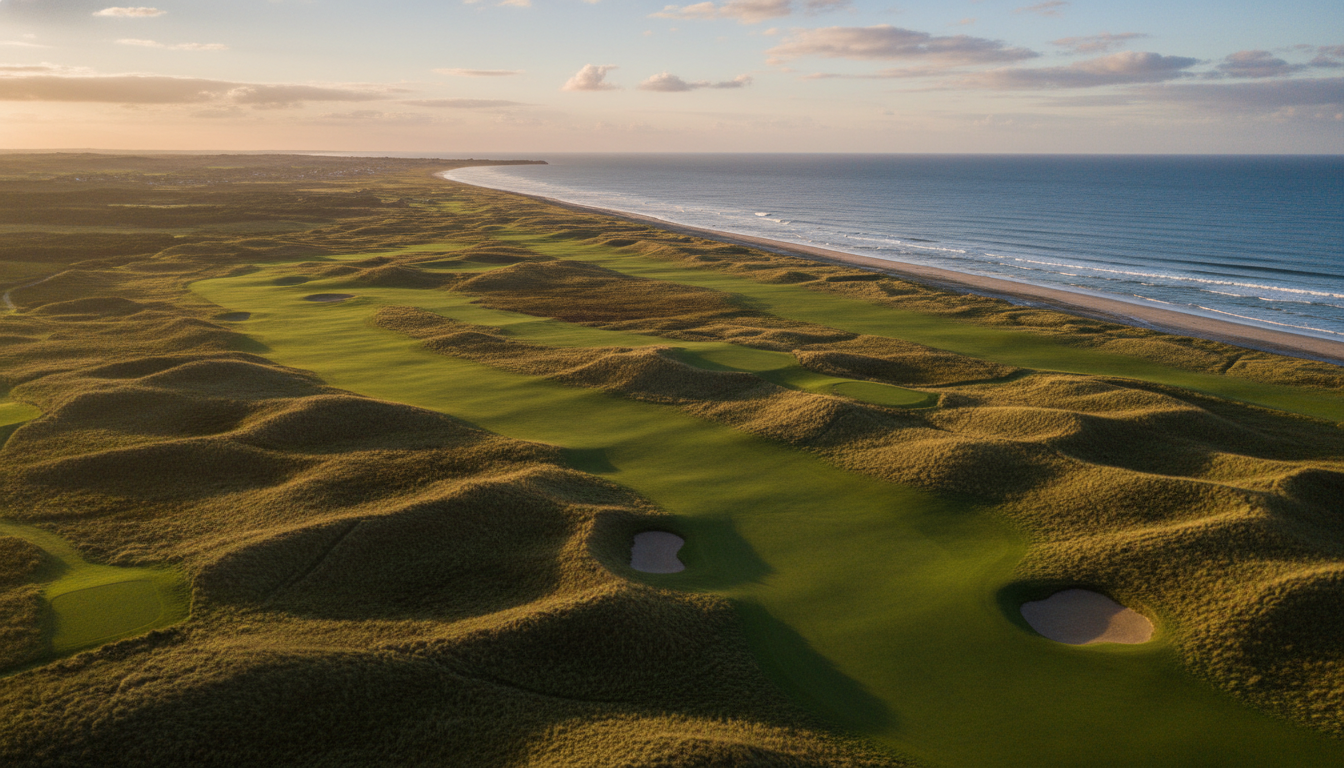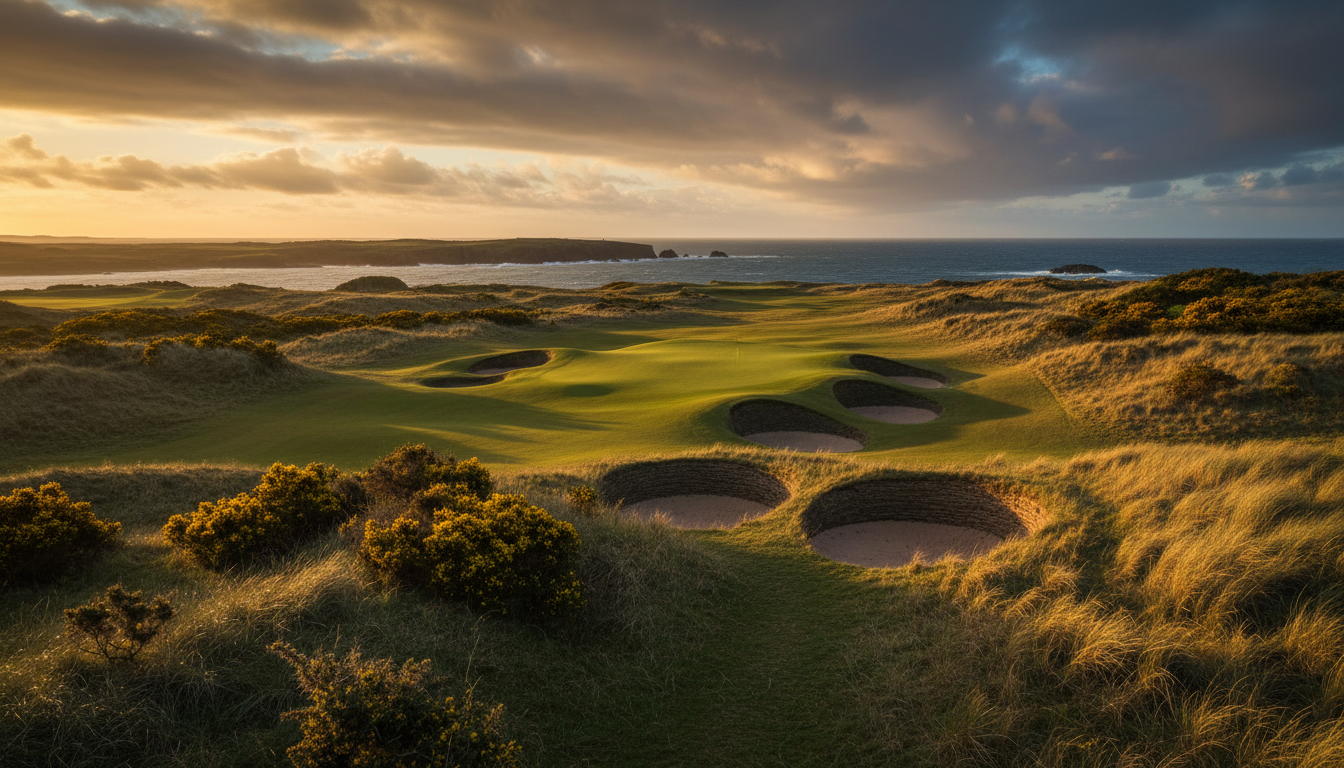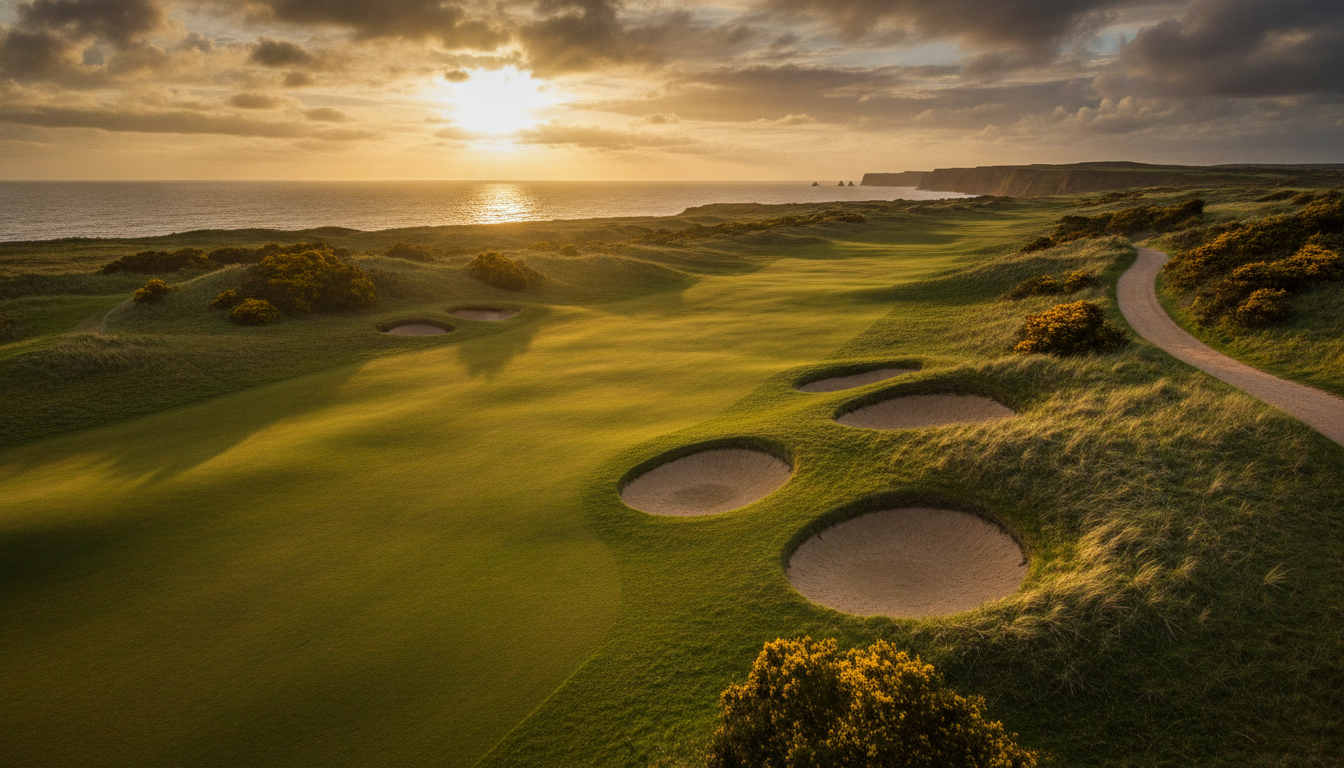


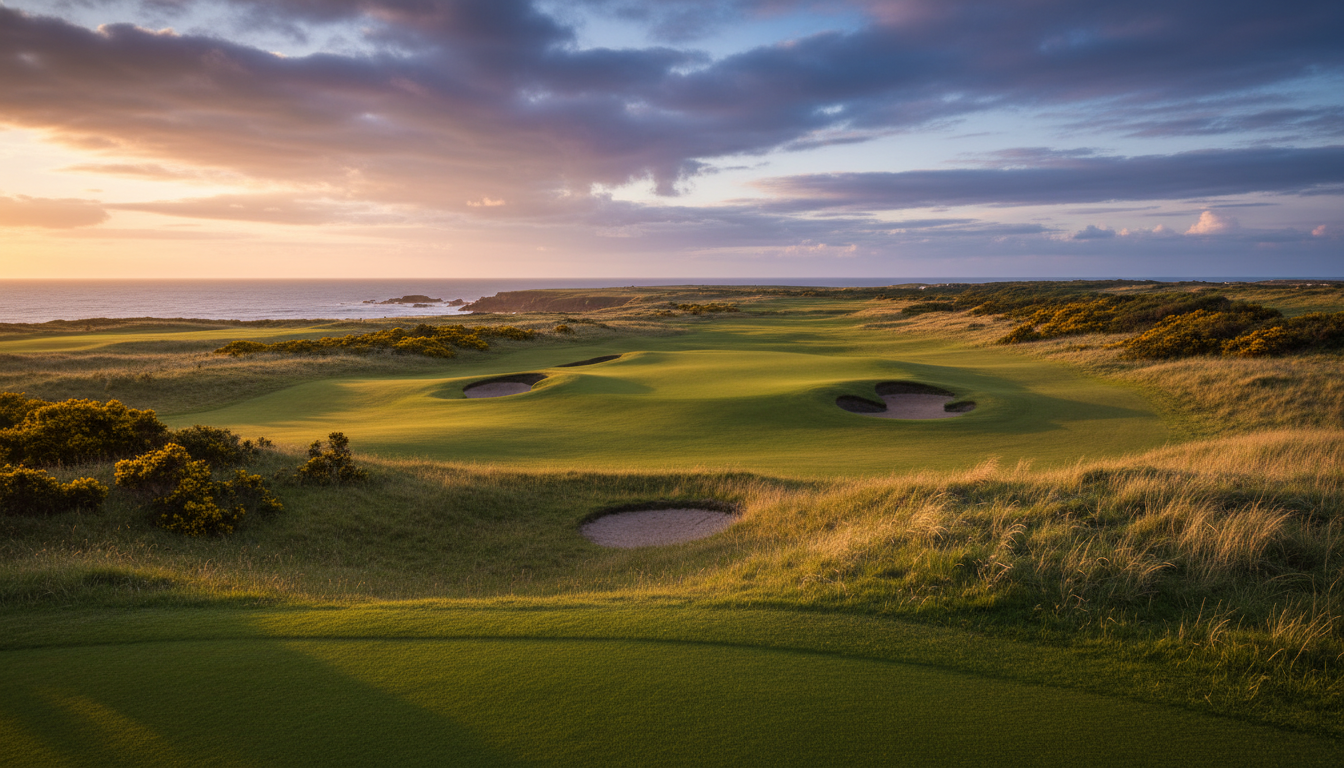
Standing on the Ayrshire coast with the iconic lighthouse perched on the rocks below, you understand immediately why Turnberry’s Ailsa course ranks among the world’s elite links. The views stretch across the Firth of Clyde to the volcanic plug of Ailsa Craig and the mountains of Arran beyond, while below you, the routing follows the clifftops in a way that feels both dramatic and inevitable. What struck me most on my first visit was how the course uses its spectacular setting not as decoration but as an integral part of the golfing challenge, similar to how Augusta National Golf Club integrates its natural features into championship play.
The Ailsa has hosted four Open Championships and given the golfing world some of its most memorable moments. But what I believe makes this course truly world-class is how Martin Ebert’s 2016 redesign honored that championship pedigree while creating something even better, maximizing the coastal drama and strategic interest of nearly every hole.
History and Design
Willie Fernie laid out the original Turnberry courses in 1901, but the property’s modern golf history really begins after World War I, when the Hotel Turnberry Company commissioned Mackenzie Ross to rebuild courses that had been converted to military use. Ross created the Ailsa (named after the distinctive rock offshore) and the Arran courses, with the Ailsa opening in 1951 and quickly establishing itself as championship caliber.
The R&A brought The Open to Turnberry four times between 1977 and 2009, each championship cementing the course’s reputation. But it was Donald Trump’s 2014 purchase and subsequent $200 million renovation that transformed the Ailsa into what many now consider the finest links course in Scotland. Trump enlisted Martin Ebert, who has worked on eight of the ten Open rota courses, to reimagine the routing.
Ebert’s brief was ambitious: move more holes to the coast, create more memorable moments, and raise the architectural quality throughout. The 2016 reopening revealed holes 9 through 11 completely reimagined along the clifftops, with several other holes significantly enhanced. A further £1 million enhancement in 2025 refined additional holes, including dramatic changes to the 7th green and strategic improvements to the closing stretch.
Course Layout and Signature Holes
The Ailsa plays to 7,489 yards at par 71 from the championship tees, though most resort guests will find the course plenty challenging from the 6,800-yard markers. The routing divides naturally into thirds: an opening stretch that climbs away from the hotel, a spectacular middle section along the cliffs, and a dramatic finish back toward the iconic white hotel.
The par-4 1st plays 354 yards toward Ailsa Craig, easing you into the round before the test begins in earnest at the 428-yard 2nd. But it’s the completely rebuilt stretch from 4 through 11 that defines the Ailsa’s world-class status. The 4th is now a short but demanding par-3 of 168 yards where the tee shot must carry a deep gully to a clifftop green.
The 9th hole might be the most dramatic par-3 in championship golf. At 202 yards, the hole plays from an elevated tee to a green perched beside the lighthouse, with the rocks and sea immediately right and bunkers guarding the left. Standing on that tee with the wind whipping off the Firth of Clyde, you’re playing one of golf’s iconic shots.
What I love about the 10th is how it uses the coastline as both hazard and strategic element. This par-4 of 452 yards bends around Turnberry Bay, asking you to decide how much of the corner to cut with your drive. The 11th continues the coastal magic, a 175-yard par-3 to a green that sits precariously close to the rocky shore.
The inward nine turns away from the water but maintains the drama. The 14th, at 440 yards uphill, frames the lighthouse and Arran in the distance. The finishing hole plays 432 yards directly toward the hotel, providing a spectacular backdrop and a worthy conclusion to one of golf’s great rounds.
This walkthrough of the redesigned holes shows just how dramatically Ebert’s work enhanced the coastal section. The difference between the old routing and the new is night and day, particularly on the stretch from 9 to 11.
What Makes It World-Class
I’d argue that three elements separate the Ailsa from other elite links courses. First, the setting is simply unmatched. While courses like Pebble Beach and Cypress Point offer equally dramatic ocean views, few links courses can claim such consistent proximity to dramatic cliffs and such spectacular backdrop mountains.
Second, Ebert’s redesign achieved something remarkable: it made a championship course that had hosted four Opens significantly better. That’s not common. Most redesigns of major championship venues involve tweaks and lengthening. Ebert reimagined entire sections while respecting the property’s history and championship credentials.
Third, the variety of holes is exceptional. You face long par-4s, drivable par-4s, reachable par-5s, and four distinct par-3s ranging from 168 to 231 yards. The greens are consistently interesting without being unfair, with subtle slopes and strategic bunkering that reward good approach shots and penalize poor ones.
The course challenges every aspect of your game. You’ll need to flight the ball in the wind, execute half-shots into elevated greens, shape drives around corners, and read putts on fast, firm surfaces. It’s comprehensive in its demands, which is exactly what you want from a top-tier championship venue.
Playing Experience
Playing the Ailsa feels like stepping onto hallowed ground, but without the stuffiness that can accompany elite resort courses. The service is impeccable, the practice facilities are world-class, and the attention to conditioning is evident from the moment you reach the 1st tee. I was particularly impressed by the firmness and speed of the greens, which rolled true even in autumn conditions when some links courses can get shaggy.

Get the Edge on Every Tournament
AI-powered predictions, data-driven analysis, and expert picks delivered before every PGA Tour event.
Try Golf Agent ProThe caddie program here deserves special mention. The local caddies know every bounce and break, and their knowledge of how the wind affects each hole is invaluable. On the 9th, my caddie pointed out exactly where Tom Watson’s ball finished in the 1977 playoff against Jack Nicklaus, adding a layer of history to an already memorable hole.
What makes the Ailsa special beyond its architecture is how the course reveals itself. The opening holes prepare you for what’s coming, the middle stretch delivers the dramatic coastal golf you came for, and the finish tests your nerve and skill with the hotel and lighthouse always in view. It’s masterfully paced.
The hotel itself is spectacular, recently renovated to luxury standards while maintaining its historic character. After your round, you can relax in the clubhouse with views over the 18th green and the Firth of Clyde beyond. For those staying on property, the King Robert the Bruce course provides an excellent second round, while spa facilities and dining options complete the resort experience.
Access to the Ailsa requires staying at the resort or booking a golf package. Full details and booking are available on the official website. Green fees typically run £395-495 depending on season, which positions Turnberry at the premium end of Scottish golf but below some English resort courses.
Notable Tournaments and Moments
The 1977 Open Championship gave golf its “Duel in the Sun,” one of the sport’s most celebrated competitions. Tom Watson and Jack Nicklaus separated themselves from the field through 36 holes, then traded birdies and brilliant shots over the final two rounds. Watson’s birdie on 18 in the final round, followed by Nicklaus’s missed putt, gave Watson his second Open title by a single stroke. They finished ten shots clear of third place.
Greg Norman won at Turnberry in 1986, his first major championship, shooting a final-round 63 in benign conditions. The 1994 Open saw Nick Price claim his second major of the year with steady play in difficult weather. But perhaps the most unexpected victory came in 2009 when 59-year-old Tom Watson nearly won his sixth Open, leading into the final holes before a playoff loss to Stewart Cink.
The course has also hosted the Women’s British Open and numerous amateur championships. Each event has added to the legend, with the coastal holes providing dramatic backdrops for television coverage that showcases Scottish links golf at its finest.
The Open hasn’t returned since 2009, largely due to the course’s association with Donald Trump, but the R&A’s decision doesn’t diminish the Ailsa’s championship credentials. The course remains in peak condition and ready to host major championships should circumstances change.
Visitor Information
Playing Turnberry requires either staying at the resort or booking a package that includes accommodation nearby. Multi-night golf packages represent the best value, often including rounds on both the Ailsa and King Robert the Bruce courses. Rates vary seasonally, with peak summer months commanding premium prices and shoulder seasons offering better value.
The best time to visit is May through September when the weather is most reliable and the course plays firm and fast. That said, I’ve played spectacular rounds in April and October when the crowds thin and rates drop. Spring can be magical, with gorse blooming yellow across the dunes.
For those planning a Scotland golf trip, Turnberry pairs naturally with other Ayrshire courses. Royal Troon is 20 minutes north, Prestwick is nearby, and Western Gailes and Glasgow Gailes provide excellent supporting rounds. The nearby town of Ayr offers additional accommodation options and good restaurants.
Booking well in advance is essential, particularly for summer dates. The resort’s package deals typically include breakfast, which makes the premium pricing more palatable. Consider adding a spa treatment or dining at the resort’s restaurants to maximize your stay.
This player’s perspective captures what it’s like to experience the Ailsa’s drama firsthand. The lighthouse holes, the views across to Arran, the challenge of the closing stretch, it all comes through in a way that photos can’t quite capture.
The Verdict
The Ailsa at Trump Turnberry stands among the world’s great links courses, combining spectacular scenery with brilliant strategic design and impeccable conditioning. Martin Ebert’s redesign elevated an already excellent championship course to new heights, creating a routing that maximizes coastal drama while maintaining championship credentials. Whether you’re a serious golfer seeking to test yourself against a top-tier links or a bucket-list traveler wanting to experience Scottish golf at its finest, the Ailsa delivers an unforgettable round.
Frequently Asked Questions
- Can the public play Trump Turnberry Ailsa?
- The Ailsa is accessible to resort guests and those booking golf packages. Daily fee access without accommodation is limited. Green fees range from £395-495 depending on season.
- What is the signature hole at Trump Turnberry?
- The par-3 9th hole is the course's signature, playing 202 yards to a green beside the iconic lighthouse with the sea immediately right. It's one of golf's most photographed and dramatic holes.
- Has Trump Turnberry hosted The Open Championship recently?
- The Ailsa last hosted The Open in 2009. While the course remains championship-ready, political considerations have affected future Open hosting prospects.
- What is the best time of year to play Turnberry?
- May through September offers the most reliable weather and firmest conditions. Shoulder seasons (April and October) provide excellent value with fewer crowds and still good playing conditions.
- What other courses can I play near Trump Turnberry?
- Royal Troon, Prestwick, Western Gailes, and Glasgow Gailes are all within 30 minutes. The resort's second course, King Robert the Bruce, offers an excellent companion round.
Looking for an edge on the PGA Tour? Golf Agent Pro delivers AI-powered insights for every tournament.