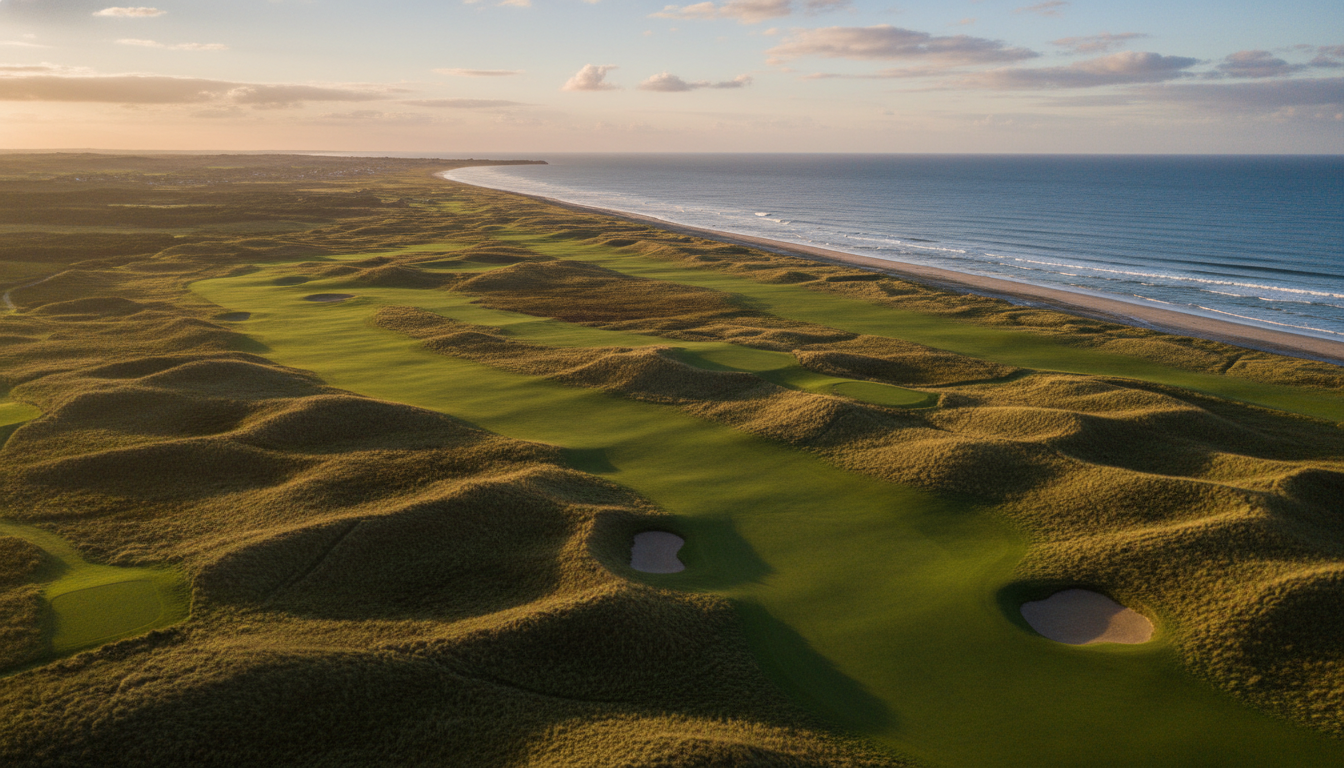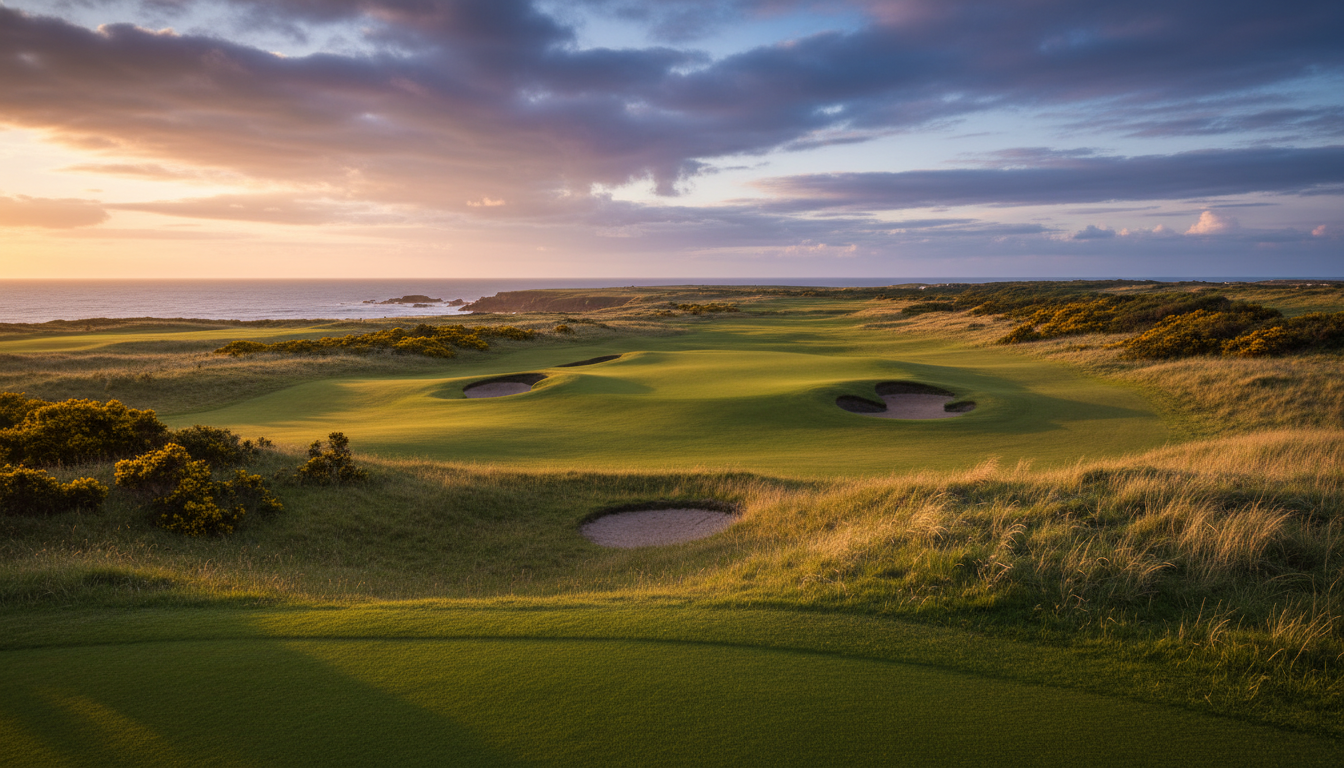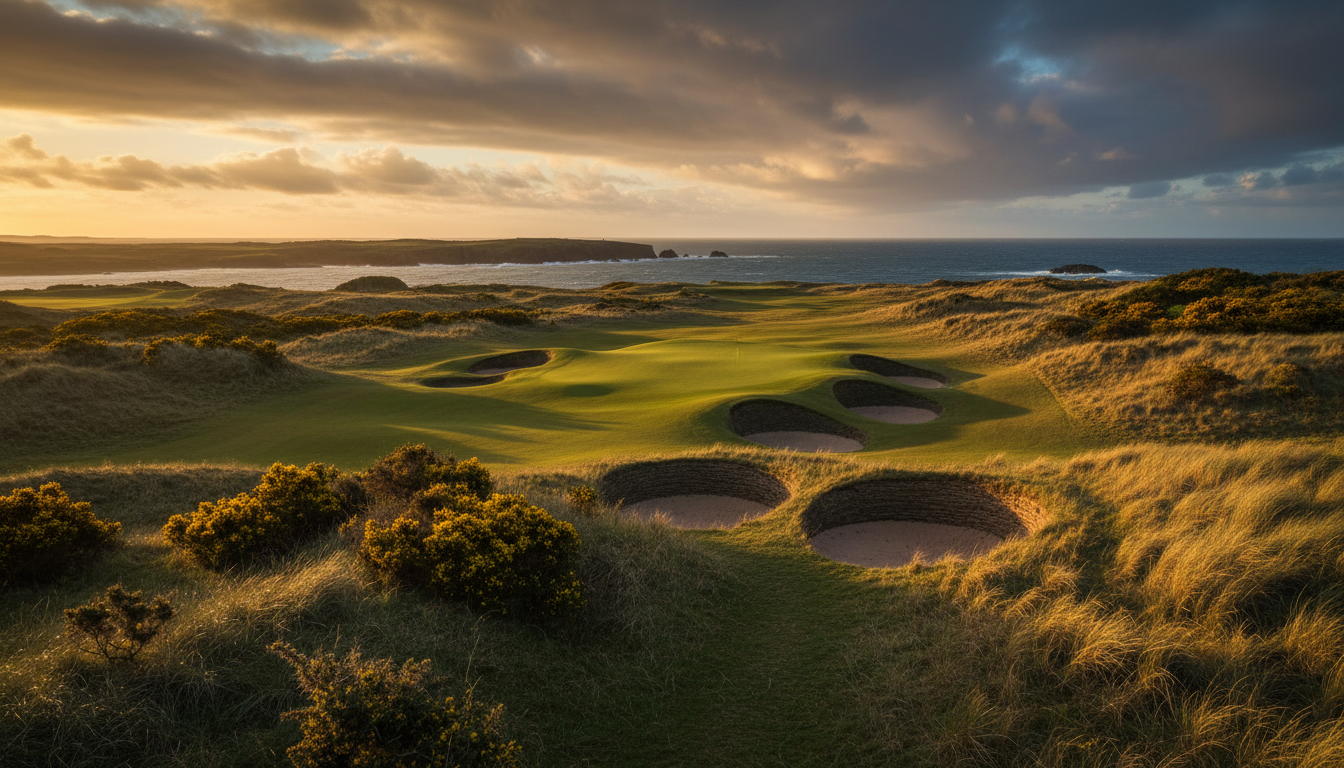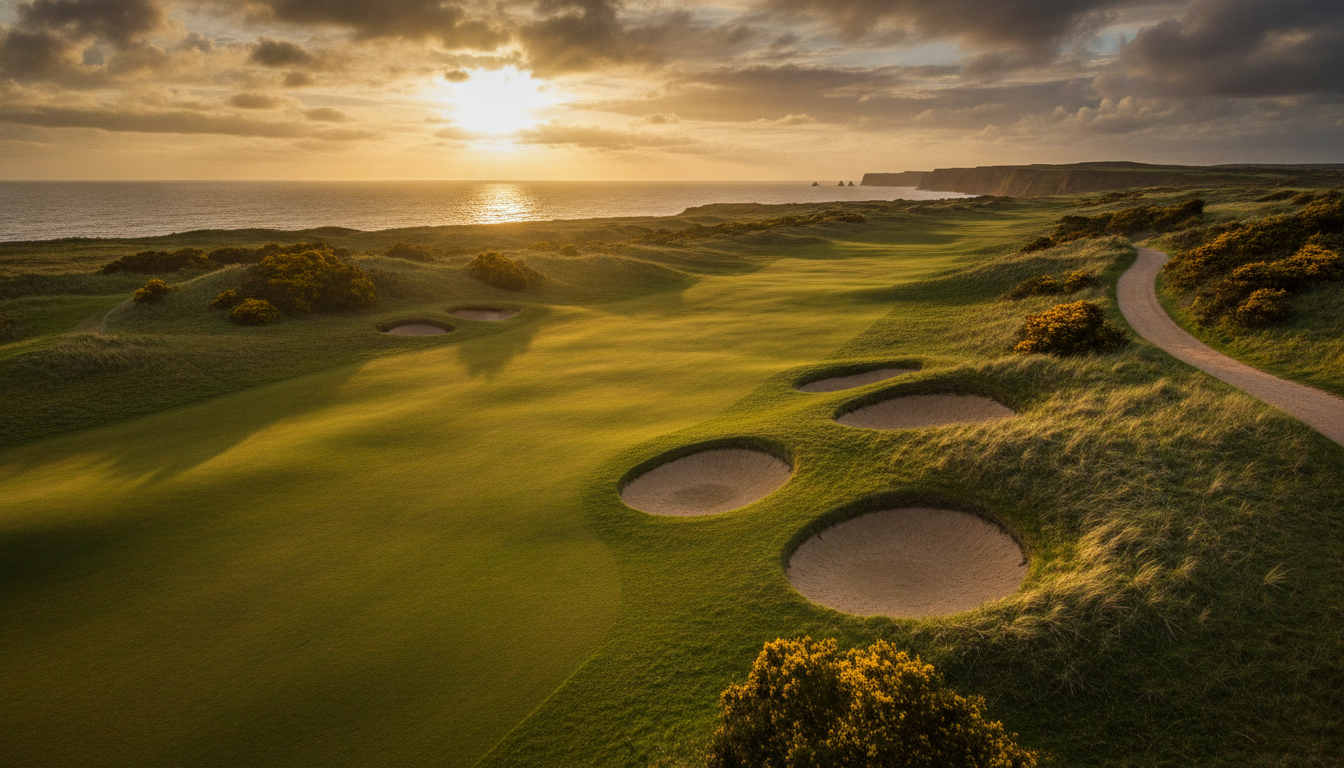


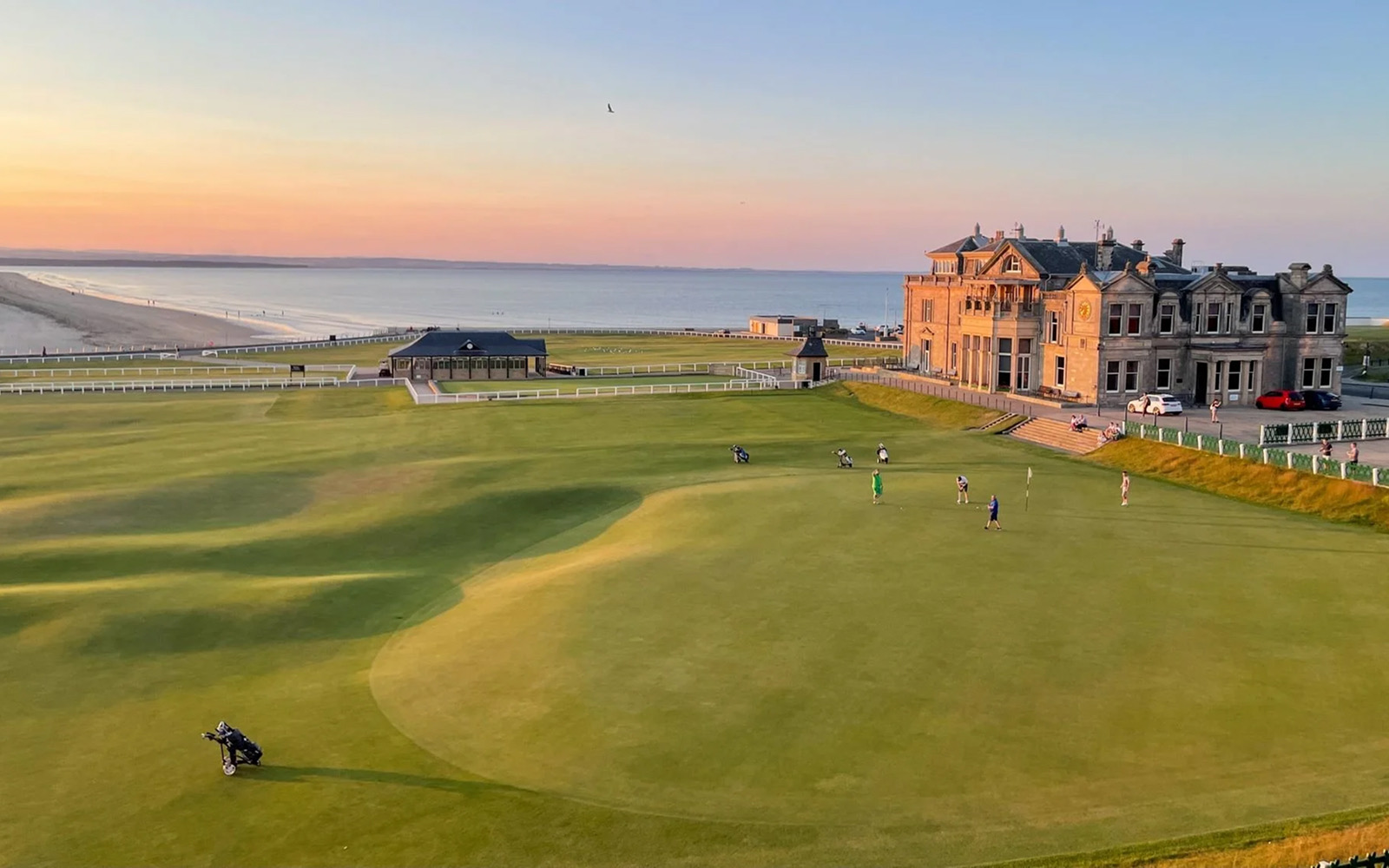
Standing on the first tee of the Old Course at St Andrews, you’re not just beginning a round of golf. You’re stepping into more than 600 years of history, following in the footsteps of every champion who has defined the sport. What strikes me most isn’t the grandeur, it’s the deceptive simplicity of the opening hole stretching before you, the ancient gray town behind, and the knowing sense that this ground has witnessed every conceivable moment the game can produce.
History and Design
The Old Course predates the very concept of golf course architecture. Play here dates to at least the early 15th century, making it not just old but positively ancient by any measure. The layout evolved naturally over centuries, shaped by sheep, wind, golfers, and greenkeepers rather than any single designer’s vision.
What we recognize today took form in 1764 when the course was reduced from 22 holes to 18, a change that would eventually define the standard for the entire game. Old Tom Morris, four-time Open Championship winner and legendary greenkeeper, refined the course through the late 1800s, creating many of the features that now torment and delight modern players. His influence is everywhere, from bunker placement to green contours, though he was working with terrain that had already shaped itself over hundreds of years.
The genius of the Old Course is that it was never designed in the modern sense. It simply exists, a product of the land meeting the sea meeting the game itself. That organic quality gives it a character no modern architect could replicate, no matter their skill or budget.
Course Layout and Signature Holes
The Old Course plays to a par of 72 at roughly 7,300 yards from the championship tees, though yardage hardly tells the story. The routing follows a distinctive out-and-back pattern, running north along the Eden Estuary before turning home parallel to the outward nine. Seven massive double greens are shared by two holes each, with numbers always adding up to 18 (the 2nd and 16th share a green, as do the 3rd and 15th, and so on).
This golf course drone tour provides the perfect bird’s-eye perspective of how the routing works and why the landscape itself dictates strategy:
The video reveals what you can’t fully grasp from ground level: how the bunkers are positioned not just as hazards but as navigation markers across this vast, rumpled terrain. Each bunker has a name and a purpose, carved into the collective memory of the game.
The opening stretch eases you in, relatively speaking. The 1st hole (Burn) plays 376 yards with the Swilcan Burn crossing just short of the green, a simple introduction that masks what’s coming. By the time you reach the par-4 7th (High-Out) at 371 yards, you’re navigating the furthest point from town, exposed to whatever wind the North Sea decides to send.
But it’s the closing run where the Old Course shows its teeth. The 17th (Road Hole) is arguably golf’s most famous par 4, playing 495 yards with the Old Course Hotel hugging the tee shot line and the Road Hole Bunker guarding the front left of a green that tilts wickedly toward the road itself. I’ve watched more dreams die on this hole than any other in golf. The angle off the tee, the shallow green, the penalty for being slightly off, it all combines into something genuinely fearsome.
The 18th (Tom Morris) brings you home past the Royal and Ancient Clubhouse, 357 yards that would be a birdie chance anywhere else but here asks you to avoid the Valley of Sin fronting the green. Miss just a fraction short and you’ll face one of golf’s cruelest short game tests, a putt that can roll 30 feet back down the slope if you’re not careful.

Get the Edge on Every Tournament
AI-powered predictions, data-driven analysis, and expert picks delivered before every PGA Tour event.
Try Golf Agent ProWhat Makes It World-Class
What separates the Old Course from other elite layouts isn’t dramatic elevation or pristine conditioning. It’s the strategic depth hidden beneath what appears, at first glance, almost rudimentary. The course punishes precise misses while sometimes rewarding wild ones, depending on wind, ground conditions, and bounce. That randomness frustrates modern golfers raised on target golf, but it’s precisely what makes links golf the purest test.
The double greens create approach shots unlike anything else in the game. You might be hitting to the same putting surface as a hole playing the opposite direction, meaning the green complex is massive (the 5th and 13th share a green measuring roughly 38,000 square feet). Knowing where the pin is located matters less than understanding the ground game, how the ball will release and roll across ancient turf.
I’d argue the bunkers are what truly elevate this course to world-class status. There are 112 of them, each with a name and a story. The Hell Bunker on the 14th can swallow a man whole, literally requiring a ladder to climb out if you catch the wrong spot. The Principal’s Nose on the 16th juts into the fairway at the exact distance where good drives land. These aren’t penal hazards, they’re strategic features demanding course management and acceptance of risk.
Playing Experience
Playing the Old Course feels like stepping into a living museum where the exhibits fight back. The first surprise is the sheer width of the place, fairways that can stretch 100 yards across in spots, offering endless angles and endless ways to mess up. The second surprise is how firm and fast the ground plays, demanding imagination over power in ways that comparing game improvement irons versus players distance irons only begins to address when choosing the right equipment for links conditions.
Booking a tee time requires planning. Full details about the ballot system and booking windows are available on the official website, but expect to enter the daily lottery or book well in advance. Singles and pairs have better odds of getting drawn. Green fees hover around £300-400 depending on season, which feels like a bargain for what you’re experiencing.
The caddies here know lines you’d never see yourself, reads that defy logic until the ball does exactly what they predicted. I believe taking a caddie isn’t optional, it’s essential to understanding what you’re playing. They’ve seen every wind, every bounce, every heartbreak this course can produce.
Walking off the 18th green, you’ll cross the Swilcan Bridge, the same stone path golfers have crossed since the 18th century. That moment, with the R&A Clubhouse watching and the town of St Andrews surrounding you, transcends sport. It’s pilgrimage, pure and simple.
Notable Tournaments and Moments
The Old Course has hosted The Open Championship 30 times, more than any other venue. The first Open here was in 1873, won by Tom Kidd. Every historic moment in links golf seems to trace back to these fairways eventually.
Jack Nicklaus won here in 1970 and 1978, calling it his favorite course in the world. His final Open appearance in 2005 saw him wave goodbye from the Swilcan Bridge, a moment so iconic it now defines how champions say farewell. Tiger Woods won here in 2000 and 2005, never hitting into a single bunker across eight rounds in 2000, a feat of precision that still seems impossible given how the course plays.
The Road Hole has produced more drama than any single hole in championship golf. Tommy Nakajima took four shots to escape the Road Hole Bunker in 1978. Doug Sanders missed a three-foot putt on 18 in 1970 that would have won him the Open, a miss that haunted him forever. More recently, in 2022, Cam Smith navigated brutal conditions to claim the Claret Jug, proving the Old Course still crowns only the most complete players.
This deep dive into the Road Hole’s secrets from a course expert shows exactly why the 17th remains golf’s ultimate test:
The video breaks down the optical illusions, the hidden slopes, and the reason even the world’s best players treat this hole with such respect. It’s not just difficult, it’s psychologically demanding in ways that separate champions from contenders.
Visitor Information
The Old Course is public, though demand far exceeds supply. The daily ballot opens online two days in advance, with winners notified the evening before play. Advanced bookings open roughly one year ahead for prime times. Singles have the best chance, groups of four face longer odds.
Summer months (June through August) offer the longest days and best weather, though wind remains a constant companion. Shoulder seasons in May and September bring fewer crowds and arguably better conditions as the course firms up. Winter golf is possible but cold, wet, and sometimes brutal.
St Andrews Links manages seven courses total, meaning if you can’t secure an Old Course time, the New Course, Jubilee, Eden, and Castle courses all offer world-class links golf within walking distance. I’d particularly recommend the Jubilee as an Old Course alternative, featuring similarly testing links conditions without the same booking pressure.
The town itself lives and breathes golf history. The British Golf Museum sits adjacent to the 1st tee. Countless pubs and hotels cater to pilgrims, with The Dunvegan and The Jigger Inn being particular favorites for post-round pints. Budget at least two days in town, both to increase your Old Course chances and to experience the other layouts, though if you’re looking for instruction to prepare for the challenge ahead, mastering short game techniques like chipping and pitching will serve you well on these ancient greens.
The Verdict
The Old Course at St Andrews isn’t perfect by modern standards, and that’s exactly why it remains perfect by every standard that matters. This is where golf learned to be golf, and playing here reminds you that the game’s fundamental questions (about risk, strategy, and humility) haven’t changed in 600 years. Every serious golfer needs to make this pilgrimage at least once, not to conquer the course but to understand what the game truly is at its ancient, wind-blown, stubbornly brilliant core.
Frequently Asked Questions
- How much does it cost to play the Old Course at St Andrews?
- Green fees range from approximately £300-400 depending on the season, with peak summer rates at the higher end. This represents exceptional value for what many consider golf's most important course.
- Can anyone play the Old Course at St Andrews?
- Yes, the Old Course is public, but access requires either winning the daily ballot (entered two days in advance) or booking well ahead through the official reservation system. Singles have better odds than groups.
- What is the hardest hole at St Andrews Old Course?
- The 17th hole (Road Hole) is widely considered not just the hardest at St Andrews but one of the most difficult par 4s in all of golf. The combination of a blind tee shot, narrow green, Road Hole Bunker, and out-of-bounds road creates a hole where even professionals struggle to make par.
- Do I need a caddie at the Old Course?
- While not mandatory, taking a caddie is strongly recommended at the Old Course. The shared greens, blind shots, and strategic nuances are difficult to navigate alone, and local caddies provide insights that can save you multiple shots per round.
- When is the best time to play the Old Course?
- May, June, and September offer the best combination of weather, firm conditions, and slightly better availability than peak summer. The course is open year-round, but winter brings harsher conditions and shorter days.
Looking for an edge on the PGA Tour? Golf Agent Pro delivers AI-powered insights for every tournament.