

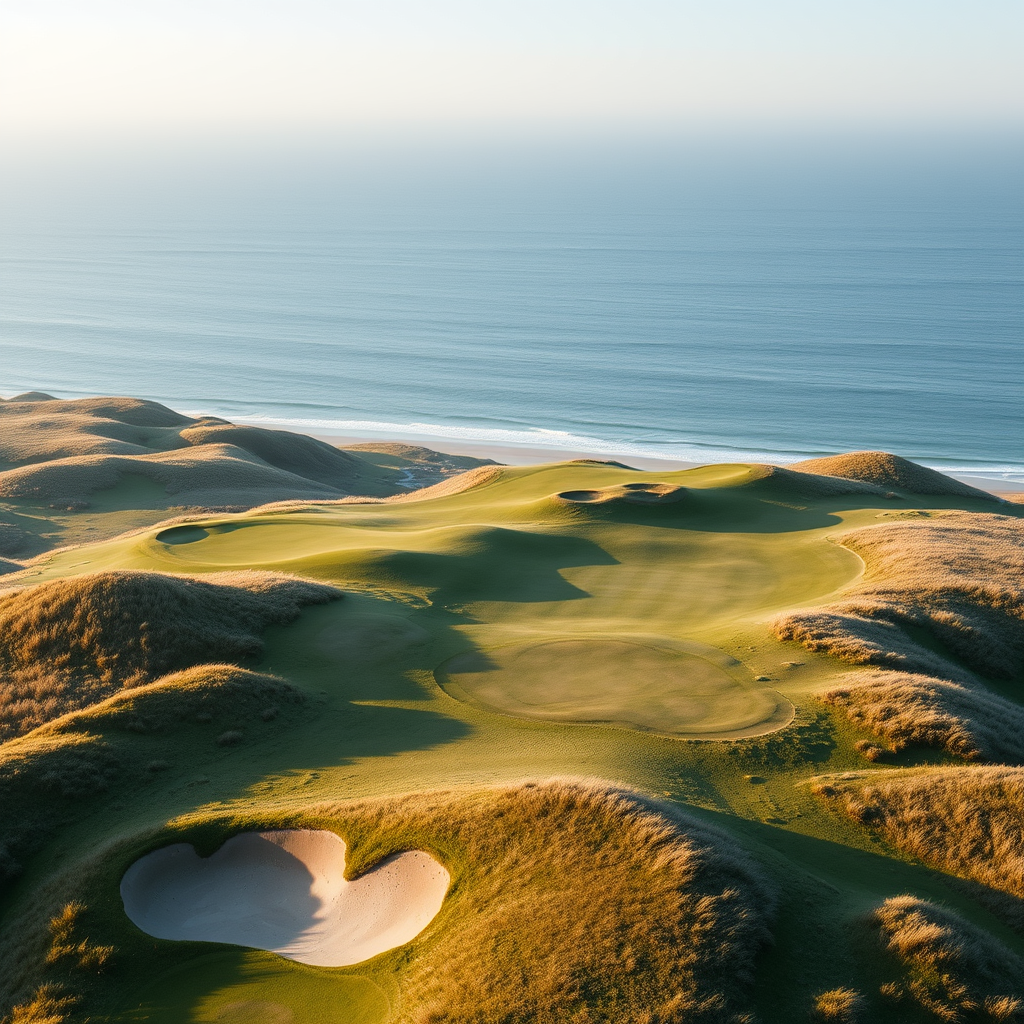
There are golf courses that test your game, and then there’s Cypress Point Club, a place so transcendent it exists in its own category. Perched on the rocky tip of California’s Monterey Peninsula, this 6,524-yard masterpiece weaves through towering Monterey cypress forests before exploding onto jagged oceanside cliffs in a sequence so breathtaking it defies golf course architecture convention. Where other elite courses might showcase one spectacular setting, Cypress Point offers three distinct landscapes in a single round, each more memorable than the last.
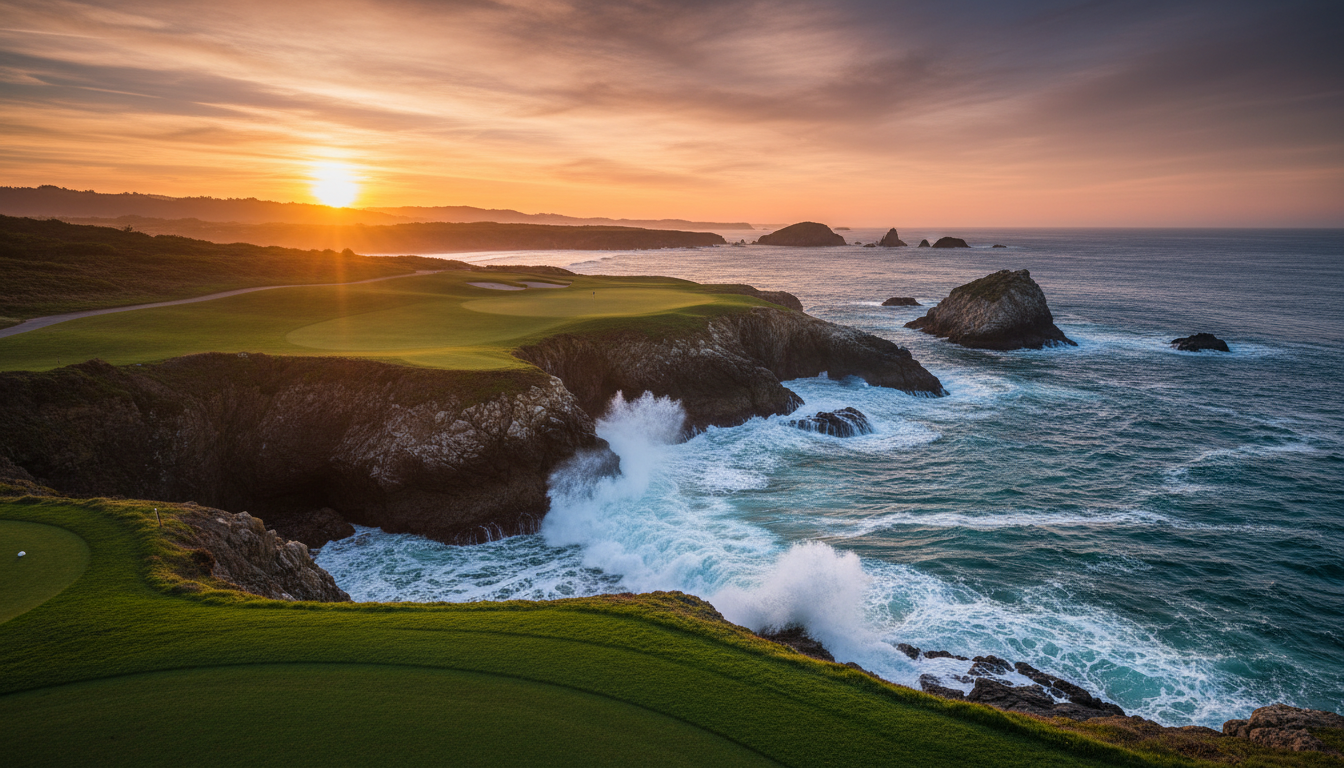
The club sits at the base of the Santa Lucia Mountains, where wind-sculpted cypress trees frame views of Carmel Bay and the Pacific crashes against granite outcroppings 100 feet below. This is not manufactured drama or artificial beauty, but raw California coastline that happens to host 18 of the finest golf holes ever conceived.
History and Design
Alister MacKenzie designed Cypress Point in 1928, at the peak of his creative powers and just before embarking on Augusta National with Bobby Jones. The Scottish-born architect had carte blanche from club founder Marion Hollins, herself a former U.S. Women’s Amateur champion who understood great golf architecture. Hollins purchased 175 acres of untouched coastal property in 1926, recognizing its potential to host something extraordinary.
MacKenzie spent months studying the property, ultimately deciding to route the course through three distinct ecosystems. The opening holes wind through dense cypress forest inland, the middle stretch explores sandy dune country reminiscent of Scottish links, and the legendary oceanside sequence from the 15th through 17th holes delivers pure coastal magnificence. The course opened to immediate acclaim in 1928 and has barely changed since, a testament to MacKenzie’s genius and the membership’s restraint.
Unlike many Golden Age courses that have been lengthened and modified, Cypress Point remains virtually untouched. The greens MacKenzie sculpted in 1928 still challenge modern golfers, and the strategic options he presented remain as relevant today as they were nearly a century ago.
Course Layout and Signature Holes
This par-72 layout measures just 6,524 yards from the championship tees, a reminder that great golf architecture isn’t about brute length. The opening holes ease you into the round through cathedral-like corridors of cypress, with the par-4 2nd hole featuring one of MacKenzie’s trademark diagonal bunkering schemes that rewards aggressive lines.
The par-3 5th hole introduces dune terrain, playing 161 yards to a green protected by deep bunkers that seem to swallow timid shots. The 9th hole, a 292-yard par 4, epitomizes risk-reward design with drivable distance for bold players willing to challenge the bunkers guarding a small green.
But Cypress Point truly reveals itself on the back nine. The par-4 13th plays along the cliff edge at 365 yards, where the fairway tilts toward the ocean and approach shots must carry a chasm to reach safety. The 15th, a 143-yard par 3, plays downhill to a green perched above Seal Rock with the Pacific as backdrop.
Then comes the 16th hole, arguably golf’s most photographed and debated par 3. This 231-yard beast demands a heroic carry over churning ocean to a promontory green, with no bailout except a small alternate green cut into the cliff face to the left. It’s the ultimate risk-reward hole, where courage is rewarded and caution accepted without judgment.
The 233-yard 17th continues the ocean drama, playing along the cliff edge to a green tucked against the rocks. These three consecutive holes (15-16-17) form what many consider the greatest closing stretch in golf, a relentless sequence of beauty and challenge that leaves players breathless.
What Makes It World-Class
Cypress Point consistently ranks as the world’s number one golf course because it achieves something nearly impossible: perfection across multiple measures. The routing flows naturally through varied terrain without a single weak hole. MacKenzie’s strategic architecture rewards thoughtful play while punishing foolish aggression. The conditioning is impeccable without feeling manufactured or sterile.
This Golf Digest video walks through every hole at Cypress Point, revealing how MacKenzie’s routing builds drama while maintaining perfect flow and balance throughout the round.
What separates Cypress Point from other elite courses is its emotional resonance. Playing here isn’t just a test of golf skill but an almost spiritual experience, where the combination of natural beauty, strategic architecture, and golf history creates something transcendent. The course never feels forced or artificial; every hole seems inevitable, as if MacKenzie simply discovered what was already there.
The club’s fiercely private nature adds to its mystique. With fewer than 250 members and no professional tournaments, Cypress Point exists outside the modern golf industrial complex. This exclusivity isn’t about pretension but preservation, keeping the course in pristine condition and maintaining an unhurried pace of play.

Get the Edge on Every Tournament
AI-powered predictions, data-driven analysis, and expert picks delivered before every PGA Tour event.
Try Golf Agent ProPlaying Experience
Walking onto Cypress Point’s first tee feels like entering golf’s inner sanctum. The atmosphere is reverent but not stuffy, with a sense that everyone present understands they’re experiencing something rare. The caddie program here is legendary, with loopers who know every subtle break and wind current that might affect your shot.
The opening holes through the cypress forest create an almost meditative mood, with dappled sunlight filtering through ancient trees and the sound of the ocean building in the distance. These inland holes would be the highlight of most courses, featuring MacKenzie’s brilliant green complexes and strategic bunkering, but here they’re merely prologue.
When you reach the oceanside stretch, the wind typically picks up and the scale shifts dramatically. Standing on the 16th tee with the Pacific spread before you is one of golf’s defining moments, a shot that tests nerve as much as technique. The sound of waves crashing on rocks 100 feet below adds auditory drama to the visual spectacle.
Course conditioning is pristine year-round, with firm, fast fairways and greens that roll pure while maintaining receptiveness. The maintenance crew works with nature rather than against it, preserving the wild character that makes Cypress Point special. This is a private club with one of golf’s longest waiting lists and most restrictive guest policies.
Notable Tournaments and Moments
Cypress Point’s tournament history is notably sparse, which somehow adds to its legend. The course hosted the Bing Crosby Pro-Am (now the AT&T Pebble Beach Pro-Am) as part of a rotation with Pebble Beach and Spyglass Hill from 1947 to 1990. Tour professionals regularly called it their favorite venue despite its short length, praising the strategic variety and pure quality of the golf holes.
The club withdrew from the tournament rotation in 1991, preferring privacy over publicity. The 1981 Walker Cup remains the most significant competition held here, with the United States defeating Great Britain and Ireland 15-9. That biennial amateur team competition showcased Cypress Point to an international audience while maintaining appropriate reverence for the venue.
Countless memorable moments have occurred in casual rounds and member competitions. The 16th hole alone has produced thousands of dramatic stories, from holes-in-one to balls lost in the Pacific, each shot carrying the weight of the hole’s reputation. Bobby Jones called his round at Cypress Point one of the most enjoyable experiences of his life, high praise from golf’s greatest amateur.
The course’s influence on golf architecture cannot be overstated. Nearly every modern architect studies MacKenzie’s work here, particularly his use of natural terrain and his three-dimensional green complexes that create strategic options from every angle.
Visitor Information
Here’s the difficult truth: unless you’re a member or know one intimately, playing Cypress Point ranks among golf’s most elusive experiences. The club has approximately 250 members with a waiting list measured in decades, and guest privileges are tightly controlled. There are no public tee times, no resort packages, and no amount of money guarantees access.
Your best realistic chance involves building relationships within the golf industry or hoping for a member connection through business or family ties. Some successful approaches include working in golf course architecture, earning distinction in amateur golf, or developing friendships with members through other clubs or business relationships.
For golfers visiting the Monterey Peninsula, Pebble Beach and Spyglass Hill offer world-class alternatives with public access. The Links at Spanish Bay and Monterey Peninsula Country Club (Shore Course) also deliver exceptional coastal golf. Pacific Grove Municipal Golf Links, while more modest, traces oceanside land adjacent to Cypress Point and offers glimpses of what makes this stretch of coastline so special, much like the experience at Pine Valley Golf Club delivers in New Jersey.
The best time to visit the Monterey Peninsula runs from April through October, when weather is most reliable and courses show their best conditions. Winter brings rain and occasional closure, though mild temperatures persist year-round.
The Verdict
Cypress Point Club sits atop golf’s hierarchy because it represents the absolute peak of what golf course architecture can achieve when genius design meets perfect land. Every serious golfer should dream of experiencing this course, even knowing the odds remain long. For those fortunate enough to play here, it’s a round that reshapes your understanding of what golf can be at its highest level, and for those working to improve their game before such an opportunity arises, resources like how to increase your golf swing speed can help prepare you for world-class challenges.
Looking for an edge on the PGA Tour? Golf Agent Pro delivers AI-powered insights for every tournament.
Frequently Asked Questions
- Can you play Cypress Point Golf Club?
- No, Cypress Point Club is strictly private with no public access. The club has approximately 250 members and only accepts guests when accompanied by a member, making it one of the world's most exclusive golf courses.
- What is so special about Cypress Point?
- Cypress Point features three distinct landscapes in one round - towering Monterey cypress forests, dramatic oceanside cliffs, and coastal views. The course sits on raw California coastline with holes perched 100 feet above the Pacific, creating the most scenic golf experience in the world.
- Who designed Cypress Point Golf Club?
- Alister MacKenzie designed Cypress Point in 1928, working with club founder Marion Hollins. MacKenzie created the course at the peak of his career, just before designing Augusta National with Bobby Jones.
- How long is Cypress Point Golf Course?
- Cypress Point measures 6,524 yards from the championship tees. Despite its relatively short length by modern standards, the dramatic cliffside holes and strategic design make it consistently ranked as the world's number one golf course.