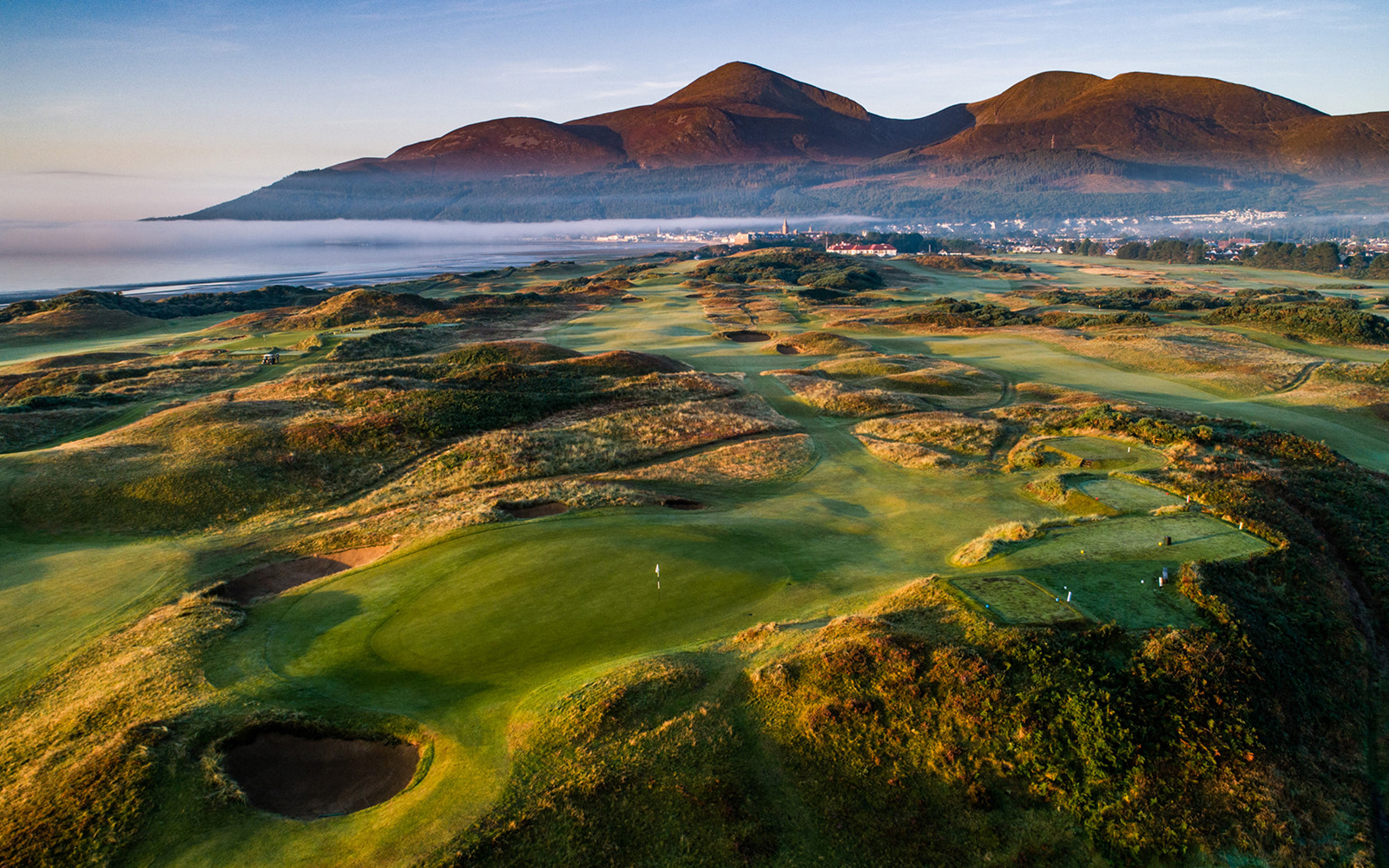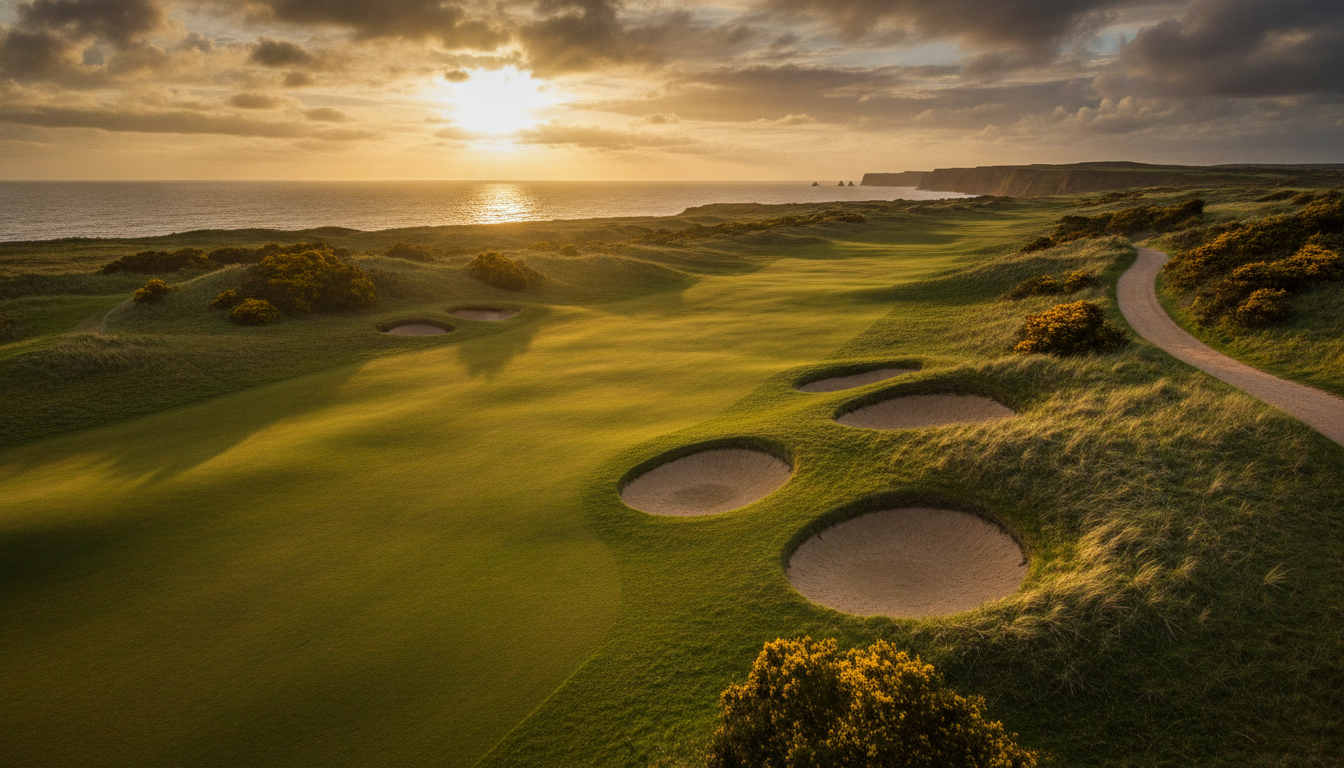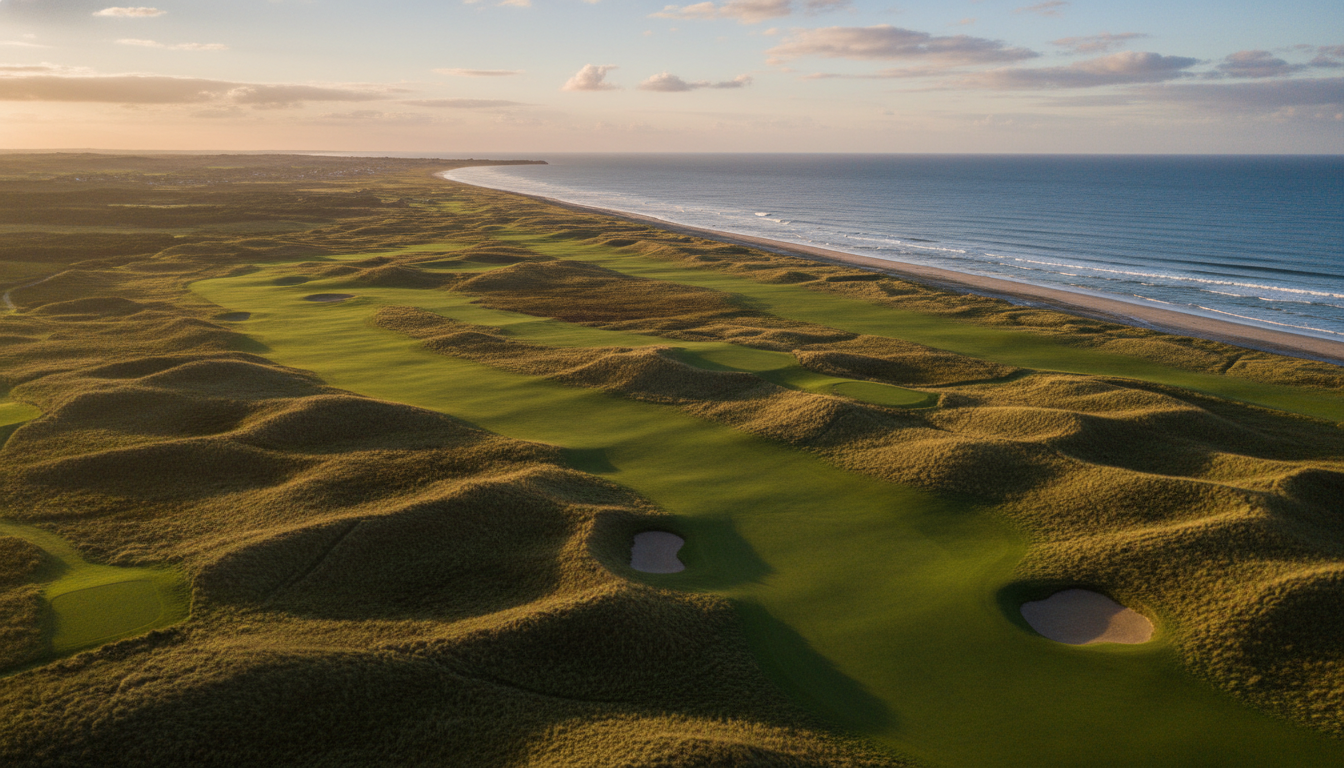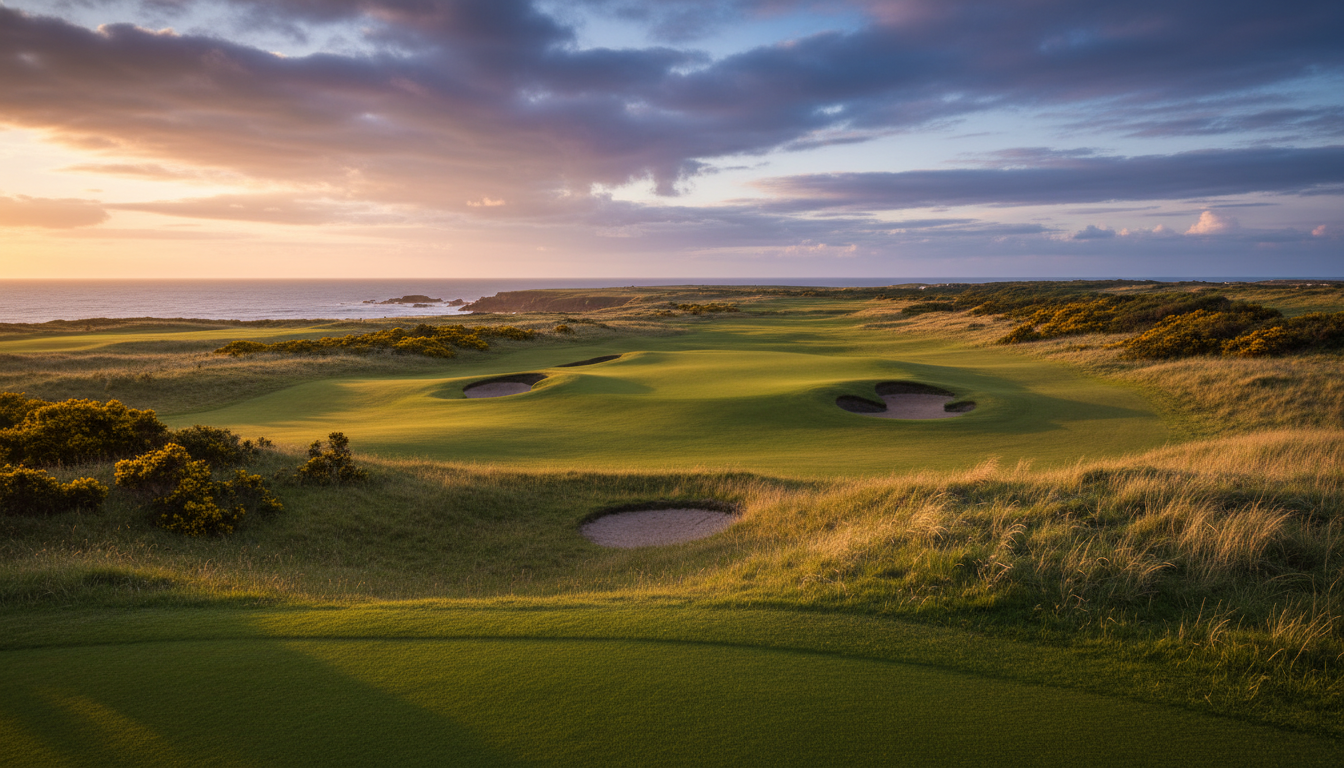


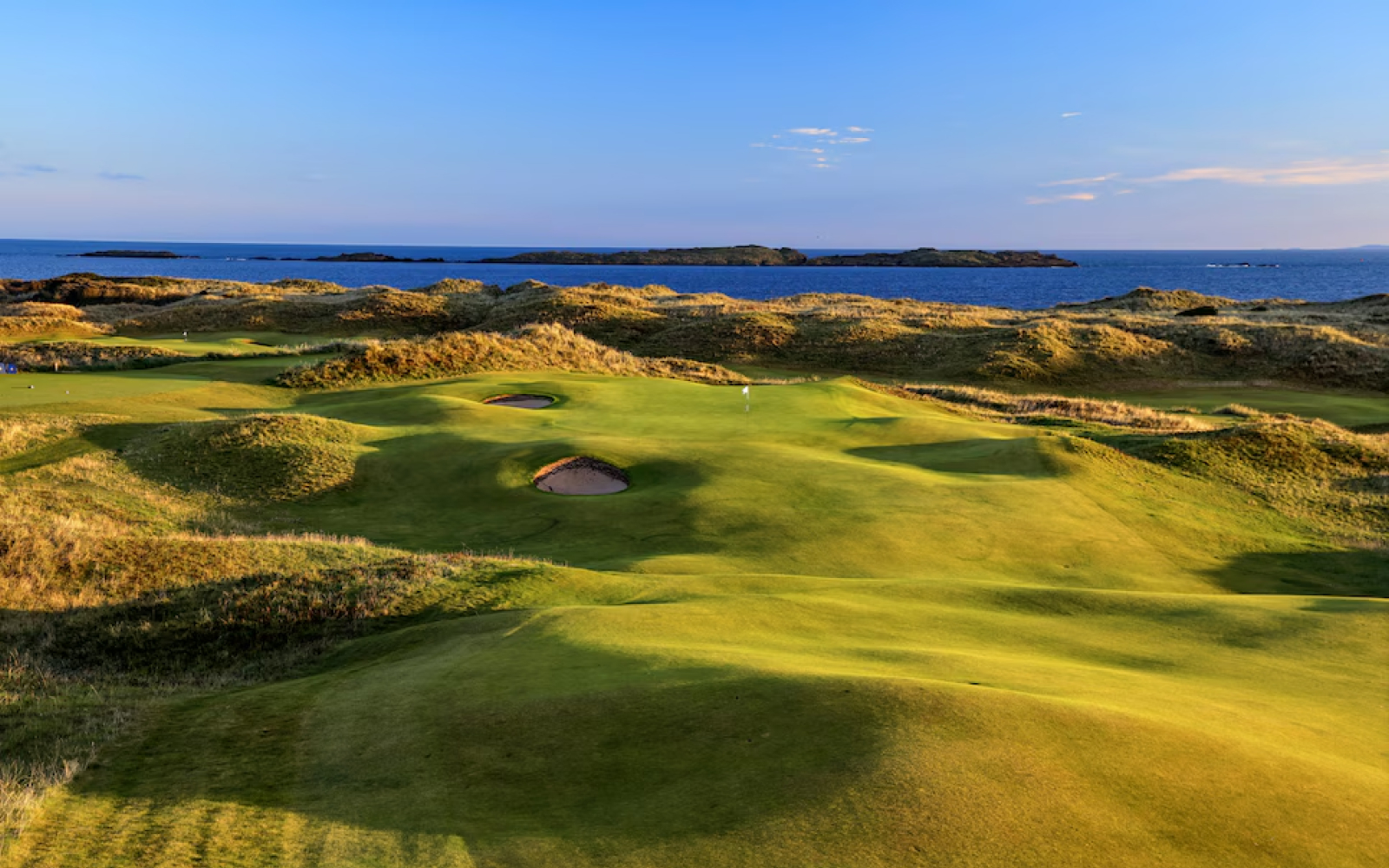
Standing on the first tee at Royal Portrush, you’re immediately struck by the sheer scale of the landscape. Massive sand dunes rise around you like ancient fortifications, their slopes carpeted in wild grasses that shift colors with the changing light. The Atlantic Ocean crashes against the Causeway Coast just beyond the property line, sending salt spray into the air on windy days.
What makes the Dunluce Links special isn’t just its dramatic beauty, though that would be enough. It’s how the course uses this extraordinary piece of land, weaving a routing through valleys and over ridges that feels both strategic and spontaneous. This is links golf in its purest, most challenging form, and it’s why Dunluce ranks 9th in the world and 3rd in Britain and Ireland.
History and Design
Royal Portrush was founded in 1888, making it one of Ireland’s oldest golf clubs. The club received its Royal designation in 1892, granted by the Duke of York, who would later become King George V. But the course we play today took shape in 1932 when Harry Colt redesigned the layout, creating the Dunluce Links that would become legendary.
Colt’s work here represents some of his finest routing, taking full advantage of the property’s natural contours. He named the course after the ruins of Dunluce Castle, which stands dramatically on a rocky outcrop overlooking the sea just north of the golf course. The castle’s dramatic perch mirrors the course itself, a bold presence on rugged coastal terrain.
In 2017, Martin Ebert undertook significant modifications to prepare Dunluce for the 2019 Open Championship. These changes included introducing two entirely new holes (the 7th and 8th), replacing the beloved but potentially problematic 17th and 18th. The work proved controversial among purists but ultimately created a stronger championship finish while preserving Colt’s strategic principles throughout the rest of the course.
Course Layout and Signature Holes
The Dunluce Links plays to 7,317 yards from the championship tees, a par 71 that demands both length and precision. What I love about this routing is how it moves through three distinct sections of terrain, each presenting unique challenges.
The opening stretch plays relatively flat through linksy terrain, giving you a chance to find your rhythm before things get serious. The 2nd hole, “Giant’s Grave,” is a 502-yard par 4 that immediately establishes the course’s difficulty. Your approach must avoid a huge crater-like bunker that dominates the fairway approach, and the green sits atop a plateau that rejects anything less than a precisely struck shot.
The stretch from holes 5 through 11 represents links golf at its most exhilarating. The 5th, “White Rocks,” is a 411-yard par 4 that plays along the highest ground on the property. From the tee, you can see the famous White Rocks beach and the Skerries islands offshore. The hole turns sharply right around massive dunes, and club selection depends entirely on wind direction and your nerve.
Then comes “Calamity Corner,” the par-3 14th that may be the most famous hole at Portrush. At 213 yards from the back tees, it plays to a shallow green perched on a shelf with a massive chasm running along the entire left side. Miss left and your ball plummets into a ravine filled with gorse and despair. I’ve seen single-digit handicappers make 7 here without hitting a terrible shot.
This walkthrough from Golf Digest showcases every hole at Royal Portrush, giving you a sense of the dramatic elevation changes and strategic complexity that define the course. Pay special attention to how the routing uses the natural dunes.
The closing stretch features Ebert’s additions. The 7th and 8th holes, while controversial when first introduced, have grown into their place in the routing. The drivable par-4 8th plays just 318 yards but tempts big hitters to take a line over massive dunes toward the green. It’s risk-reward golf that creates drama in tournament play.
What Makes It World-Class
Royal Portrush earns its top-10 world ranking through a combination of natural drama, strategic variety, and championship pedigree that few courses can match. The raw landscape provides bones that golf architecture dreams are made of, massive dunes and natural plateaus that Colt shaped into golf holes rather than manufacturing.
What separates Dunluce from merely great links courses is its relentless demand for precision. This isn’t a course where you can bomb-and-gouge your way around. The fairways are generous enough, but approach angles matter enormously here. Miss in the wrong spot and you’re facing recovery shots from knee-high rough or dune slopes where just advancing the ball becomes an achievement.
The green complexes showcase Colt’s genius for creating multiple pin positions that fundamentally change how a hole plays. The 13th green, for instance, features three distinct tiers. A front pin position makes the hole play two clubs shorter than a back pin, and the putting surface’s severe slopes mean getting close to tucked pins requires both nerve and touch.
I’d argue that what truly elevates Portrush is how it tests every aspect of your game without ever feeling unfair. You need length off the tee, certainly, but also the control to work the ball both ways around doglegs. Your iron play must be precise, your short game creative, and your putting stroke confident on greens that feature more contour than most modern courses dare to build.

Get the Edge on Every Tournament
AI-powered predictions, data-driven analysis, and expert picks delivered before every PGA Tour event.
Try Golf Agent ProPlaying Experience
Playing Royal Portrush is simultaneously exhilarating and humbling. The course conditioning is immaculate, with firm, fast fairways that produce the ground game links golf demands. The greens run true and quick, typically around 11 on the stimpmeter for regular play, faster for championships.
The atmosphere here feels different from other elite links venues. There’s an energy to the place, perhaps because golf in Northern Ireland carries added significance as a unifying force in a region with complicated history. The members are welcoming, the staff professional, and the sense that you’re playing somewhere truly special permeates every moment.
What struck me most was the course’s ability to remain interesting regardless of conditions. In calm weather, the course becomes scorable but demands precision. When the wind blows off the Atlantic, as it often does, Portrush transforms into one of the most difficult tests in golf. Suddenly that generous-looking fairway requires perfect distance control as the wind pushes shots toward dunes or rough.
The walk itself is spectacular, with views of the Causeway Coast, the Skerries islands, and Donegal’s mountains visible from various points on the course. Between shots, you’re treated to one of the finest walks in golf, climbing through dunes and descending into valleys on a journey that feels almost epic in scale.
Royal Portrush welcomes visitors throughout the year, though booking well in advance is essential given the course’s worldwide reputation. Full details and booking are available on the official website. The club also features the Valley Links, a superb second course that would be the crown jewel at most facilities.
Notable Tournaments and Moments
Royal Portrush hosted The Open Championship in 1951, marking the only time the championship ventured outside Scotland or England in its first 160 years. Max Faulkner won that championship, famously signing autographs as “1951 Open Champion” before the final round, a display of confidence that proved prophetic.
The course’s return to The Open rota in 2019 created one of modern golf’s most memorable championships. Shane Lowry’s victory, achieved in wind and rain that showcased Dunluce at its most demanding, felt like destiny. His final round 72 in brutal conditions, featuring several crucial putts and up-and-downs, demonstrated exactly the kind of links golf mastery that Portrush demands.
The 2019 championship also featured one of The Open’s most dramatic moments when Rory McIlroy, Northern Ireland’s favorite son playing in front of a home crowd, opened with a quadruple-bogey 8 after driving out of bounds at the 1st. The agony of that moment, captured on camera as McIlroy walked off the first green, underscored the pressure and difficulty of championship golf at Portrush.
The course hosted its first Senior Open Championship in 1995, won by Brian Barnes. It’s also been the venue for multiple Irish Opens and numerous amateur championships. Each event has added to the course’s competitive legacy while demonstrating its ability to challenge the world’s best players across different eras.
Visitor Information
Green fees at Royal Portrush vary by season, ranging from approximately £290 in peak summer months to around £180 during shoulder seasons. These rates include access to both the Dunlace and Valley courses on the same day, exceptional value for two championship-caliber layouts.
The best time to visit is May through October when weather is most favorable and daylight extends well into the evening. That said, I’ve played Portrush in April when the course was firm and fast, with fewer visitors and lower rates making for an ideal experience. Just pack layers and waterproofs regardless of the forecast.
Booking can be done through the club’s website, typically opening for the coming season in late autumn. Popular tee times, particularly weekend morning slots and summer dates, fill quickly. Weekday play offers better availability and slightly lower rates while providing the same world-class experience.
The town of Portrush itself is charming, with excellent accommodations ranging from the luxury Bushmills Inn to comfortable B&Bs within walking distance of the course. The area is rich with attractions beyond golf, including the Giant’s Causeway (a UNESCO World Heritage site), Old Bushmills Distillery, and Carrick-a-Rede rope bridge.
For golfers planning a Northern Irish golf trip, nearby Portstewart Golf Club and Royal County Down (90 minutes south) represent must-play venues that combine with Portrush for one of the world’s great golf pilgrimages. The region offers remarkable links golf density unmatched anywhere outside Scotland.
The Verdict
Royal Portrush’s Dunluce Links belongs on every serious golfer’s bucket list, full stop. This is championship links golf at its finest, a course that tests every aspect of your game while providing one of golf’s most spectacular settings. Whether you’re a scratch player seeking a legitimate challenge or a mid-handicapper wanting to experience where golf history happens, Dunluce delivers an unforgettable round.
Frequently Asked Questions
- Can the public play Royal Portrush Golf Club?
- Yes, Royal Portrush welcomes visitors year-round. Advance booking is essential, with tee times available through the club's official website. Green fees range from £180-£290 depending on season.
- What is the best hole at Royal Portrush?
- The par-3 14th, known as 'Calamity Corner,' is the signature hole. At 213 yards with a massive ravine guarding the left side, it's one of the most intimidating one-shotters in championship golf.
- How difficult is Royal Portrush for average golfers?
- Portrush is challenging but playable for mid-handicappers from appropriate tees. The course plays to 6,273 yards from the forward championship tees, making it more accessible while maintaining strategic interest.
- What is the difference between Dunluce and Valley at Royal Portrush?
- Dunluce is the championship course and hosts major events, while Valley is the shorter second course. Both are excellent links layouts, and green fees typically include access to both courses on the same day.
- When will The Open return to Royal Portrush?
- The Open Championship returned to Royal Portrush in 2025, just six years after its successful 2019 hosting. The R&A has indicated the course will remain in the championship rotation going forward.
Looking for an edge on the PGA Tour? Golf Agent Pro delivers AI-powered insights for every tournament.