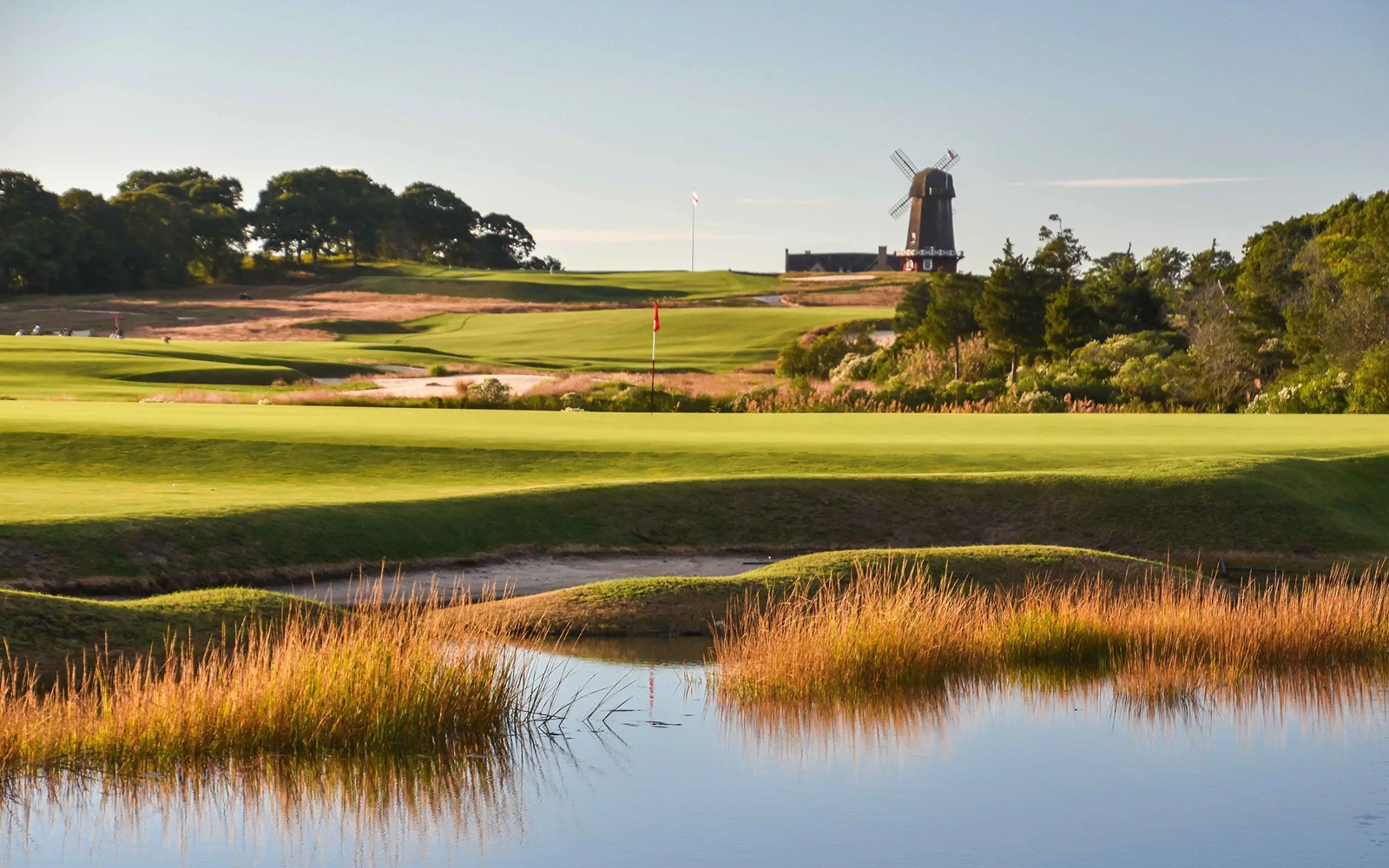



Perched atop the windswept dunes of Southampton, Long Island, Shinnecock Hills Golf Club represents American golf at its most elemental and pure. The stark white clubhouse watches over rolling fairways that tumble through sandy terrain, where fescue grasses bend in the Atlantic wind and strategic decisions matter more than raw power. This is golf stripped of artifice, played on ground that seems borrowed from Scotland but anchored firmly in New York soil.
The setting alone justifies the journey to the eastern end of Long Island. From the elevated clubhouse, built in 1892 by Stanford White, you gaze across Peconic Bay to the south and over the course itself, spread across 140 windswept acres. The landscape is unique in American golf, genuine linksland shaped by glacial movement thousands of years ago and refined by thoughtful architects who understood the power of restraint.
History and Design
Shinnecock Hills stands as one of America’s founding golf institutions, incorporated in 1891 and opening for play the following year. The club was among the five charter members of the USGA in 1894, cementing its place in golf history before most American courses existed. Willie Davis, the Scottish professional at Royal Montreal, designed the original 12-hole layout, which Willie Dunn Jr. expanded to 18 holes in 1895.
The course underwent significant changes when William Flynn redesigned it in 1931, creating the routing and strategic framework that exists today. Flynn’s brilliant work emphasized natural contours and strategic options rather than forced carries or artificial hazards. Later refinements by Howard Toomey, Bill Coore, and Ben Crenshaw preserved Flynn’s intent while restoring lost features and improving playability for modern championship golf.
The Stanford White-designed clubhouse, predating the current course layout, ranks among the most architecturally significant structures in golf. Its shingled exterior and sweeping views established a template for American golf clubhouses that persists today.
Course Layout and Signature Holes
Shinnecock Hills plays to a par of 70, stretching between 6,996 and 7,445 yards depending on the tee setup. The routing flows naturally across the property, with holes moving in different directions that ensure wind becomes a strategic variable on every shot. No two holes feel similar, and the course presents different challenges depending on conditions.
The front nine opens deceptively, with reachable par 4s at the 1st and 3rd holes that can yield birdies or disasters depending on wind and execution. The 7th hole, a long par 4 playing into prevailing winds, features a green perched on a plateau that rejects anything less than a perfectly struck approach. The 9th, at 444 yards, requires a precise drive to a fairway that slopes severely from right to left.
The back nine begins with a short but treacherous par 3 at the 10th, where wind and a severely contoured green make par feel like birdie. The 11th and 12th holes play along the highest ground on the property, offering spectacular views but demanding precision against the wind. The par-5 16th hole, at 542 yards, provides one of the few birdie opportunities on the back nine but features a green complex that can turn a good round sour.
The closing stretch tests every aspect of your game. The 17th, a 179-yard par 3, plays to a shallow green where wind makes club selection a guessing game. The 18th, a 450-yard par 4, climbs back toward the clubhouse with a fairway that slopes dramatically and a green that sits at an angle, demanding both power and precision.
This comprehensive walkthrough captures the essence of playing Shinnecock Hills, showcasing the dramatic terrain and strategic challenges that define each hole. Notice how the wind and ground game dominate decision-making throughout the round.
What Makes It World-Class
Shinnecock Hills earns its number four world ranking through a combination of historical significance, architectural brilliance, and playing experience that few courses can match. The property itself is the foundation - genuine linksland in America remains extraordinarily rare, and Shinnecock’s sandy soil, natural contours, and exposed position create authentic links conditions.
Flynn’s routing maximizes the property’s natural features without forcing artificial drama. Holes move in varying directions, ensuring wind affects play differently throughout the round. The green complexes are masterworks of subtlety, with slopes and contours that create multiple pin positions and demand thoughtful approach play.
The course rewards strategic thinking over brute force. Width exists off the tee, but angles matter immensely when approaching greens. Miss on the wrong side, and recovery becomes exponentially harder. The firm, fast conditions typical of Shinnecock demand imagination and touch around the greens, much like the short game precision required at courses such as Cypress Point Club.
Perhaps most importantly, Shinnecock Hills feels timeless. Modern equipment hasn’t rendered it obsolete because the architectural challenges transcend raw distance. Wind, firm turf, and strategic routing remain relevant regardless of technology advances.

Get the Edge on Every Tournament
AI-powered predictions, data-driven analysis, and expert picks delivered before every PGA Tour event.
Try Golf Agent ProPlaying Experience
Playing Shinnecock Hills as a guest remains one of golf’s most coveted experiences, though access is strictly limited to members and their invited guests. The club maintains its private status fiercely, with no reciprocal agreements or public play opportunities. The exclusivity preserves the course’s pristine conditioning and ensures rounds proceed at an unhurried pace.
The conditioning rivals the best courses in the world. Fairways present as golden fescue, firm and fast, encouraging running shots and strategic positioning. Greens roll pure and true, typically kept at championship speeds that demand respect. The bunkers feature finely raked sand that can be played from cleanly but punishes poor execution.
The atmosphere around the clubhouse feels appropriately historic without being stuffy. The Stanford White structure commands attention, its weathered shingles and expansive porch embodying a century of golf tradition. Views from the clubhouse across the course and toward the bay provide perspective on the unique landscape.
Wind defines the playing experience more than any other factor. Calm days are rare, and moderate to strong breezes are the norm. This constantly changing variable means the same hole can play three clubs different from one day to the next. Learning to flight shots low, use ground contours, and accept that perfect strikes sometimes yield imperfect results becomes essential.
Notable Tournaments and Moments
Shinnecock Hills has hosted five U.S. Opens, each producing memorable drama. The 1986 championship saw Raymond Floyd dominate with a 279 total, one stroke ahead of Chip Beck and Lanny Wadkins. Floyd’s performance showcased the strategic brilliance required to master the course over four days.
The 1995 U.S. Open created controversy when USGA officials lost control of green speeds during Saturday’s third round. Corey Pavin ultimately prevailed, hitting one of golf’s most iconic shots - a 4-wood to four feet on the 72nd hole to secure victory. The moment exemplified the precision and nerve required at Shinnecock.
The 2004 championship featured more green speed controversy, with Sunday’s conditions drawing widespread criticism. Retief Goosen weathered the storm to win, but the week highlighted the fine line between firm-and-fast and unplayable at Shinnecock.
The most recent U.S. Open in 2018 saw Brooks Koepka claim his second consecutive title with a one-over-par 281. Once again, conditions sparked debate, particularly during the weekend when gusting winds and lightning-fast greens created scoring difficulty. Despite controversy, the championship demonstrated Shinnecock’s ability to test the world’s best players.
Beyond U.S. Opens, Shinnecock hosted the 1977 Walker Cup, where the United States defeated Great Britain and Ireland 16-8 in a memorable amateur competition.
This fan’s guide to the 2018 U.S. Open at Shinnecock provides excellent insight into the course’s challenge and the dramatic moments that unfold during championship play. The video captures both the beauty and the brutality that make major championships here so compelling.
Visitor Information
Shinnecock Hills Golf Club operates as a strictly private institution with no public access or resort accommodations. The club does not participate in reciprocal programs with other clubs, and tee times for non-members come only through direct member invitation. Even then, guests typically must be accompanied by their member host.
For golfers hoping to experience elite Long Island golf, several alternatives exist in the Southampton area. National Golf Links of America, located adjacent to Shinnecock, offers similar terrain and strategic brilliance for those who can secure an invitation. Sebonack Golf Club, a modern Jack Nicklaus and Tom Doran design, provides spectacular ocean views and championship-caliber golf with slightly more accessible guest policies.
Public options in the region include Montauk Downs State Park, designed by Robert Trent Jones, which offers excellent conditioning and interesting strategic golf at accessible rates. Further west, Bethpage Black provides one of America’s best public golf experiences, having hosted multiple U.S. Opens.
The best time to visit Long Island for golf runs from late spring through early fall, with September and October offering cooler temperatures, lower humidity, and spectacular autumn colors. Summer weekends see heavy traffic to the Hamptons, making weekday visits more practical for golf-focused trips.
Full details about membership and the club’s history are available on the official website.
The Verdict
Shinnecock Hills Golf Club stands as essential American golf architecture, a course that belongs on every serious golfer’s dream list even if playing it remains unlikely for most. The combination of historical significance, genuine linksland, and strategic brilliance creates an experience that transcends typical golf. For the fortunate few who gain access, the round delivers everything great golf should be - challenging, beautiful, strategic, and utterly memorable, comparable in distinction to venues like Pine Valley Golf Club and Royal County Down.
Frequently Asked Questions
- Can the public play Shinnecock Hills Golf Club?
- No, Shinnecock Hills is strictly private with no public access. Play is limited to members and their invited guests, and the club does not participate in reciprocal programs.
- How many U.S. Opens has Shinnecock Hills hosted?
- Shinnecock Hills has hosted five U.S. Opens: 1896, 1986, 1995, 2004, and 2018. The course has produced memorable championships and occasional controversy regarding course conditions.
- Who designed Shinnecock Hills Golf Club?
- Willie Davis created the original 12-hole layout in 1891. Willie Dunn Jr. expanded it to 18 holes in 1895, and William Flynn completed a comprehensive redesign in 1931 that created the current routing.
- What makes Shinnecock Hills different from other American golf courses?
- Shinnecock sits on genuine linksland, extremely rare in America, with sandy soil and natural dunes shaped by glacial movement. The windswept terrain and strategic architecture create authentic links conditions.
- What are the best alternative courses near Shinnecock Hills?
- National Golf Links of America sits adjacent to Shinnecock and offers similar linksland character. Sebonack Golf Club and Friar's Head provide excellent modern designs nearby, while Bethpage Black offers world-class public golf about 50 miles west.
Looking for an edge on the PGA Tour? Golf Agent Pro delivers AI-powered insights for every tournament.