


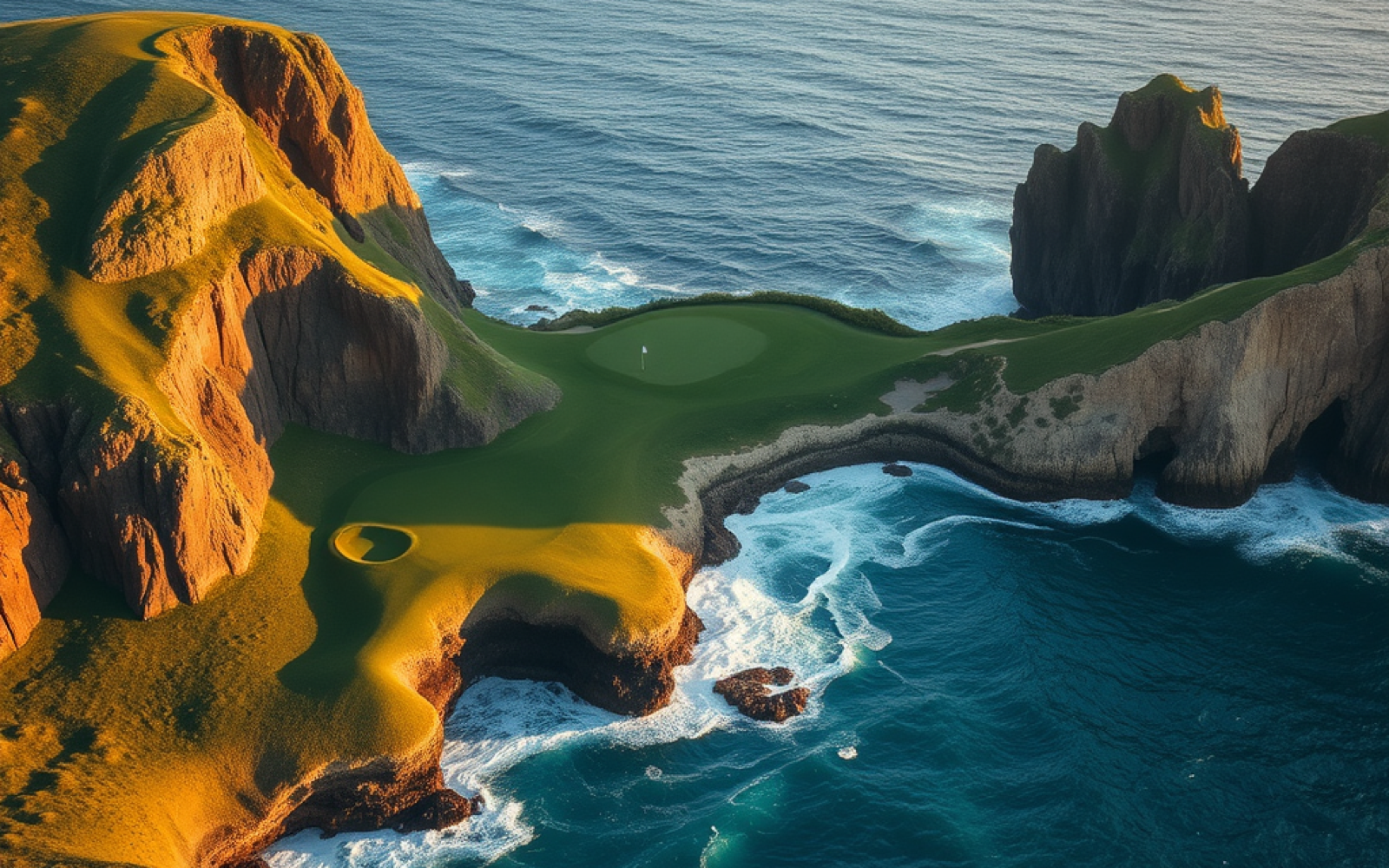
Hidden in the pine barrens of southern New Jersey, forty minutes east of Philadelphia, lies a golf course that exists almost entirely in mythology for most golfers. Pine Valley Golf Club doesn’t advertise, doesn’t seek publicity, and doesn’t need to justify its reputation. Since its opening in 1918, it has been universally regarded as the most intimidating, most perfectly crafted, and most revered inland golf course in the world.
The course occupies 184 acres of sandy wasteland transformed into a penal paradise where perfection is rewarded and mediocrity is brutally punished. There are no average shots at Pine Valley, only great ones and disasters. The fairways are islands of green manicured turf surrounded by natural sandy waste areas, scrub, and forest that will swallow golf balls and egos with equal indifference.
History and Design
Pine Valley was born from the obsession of George Arthur Crump, a wealthy Philadelphia hotelier who discovered the property in 1912 while searching for land to build the ultimate golf course. Crump purchased 184 acres of scrubby pine barrens for $9,500 and spent the next six years living on site in a bungalow, personally supervising every detail of construction. He moved 22,000 truckloads of earth and cleared 7,000 stumps to carve golf holes from the sandy wilderness.
Crump consulted with the era’s greatest golf minds, including Harry Colt, who visited in 1913 and suggested the routing. Other advisors included H.S. Colt’s associate Charles Alison, A.W. Tillinghast, Walter Travis, and amateur champion Jerome Travers. The course opened for play in early 1918, but tragedy struck when Crump died suddenly in January 1918 at age 46, with holes 12 through 15 still unfinished.
Hugh Wilson and his brother Alan completed the final four holes according to Crump’s detailed plans and notes. The course officially opened in October 1918 and was immediately recognized as an architectural masterpiece. Subsequent refinements by George Fazio and Tom Fazio in the 1980s enhanced Crump’s vision without altering his fundamental design philosophy of heroic carries and penal consequences.
Course Layout and Signature Holes
Pine Valley plays to a par of 70, measuring 6,765 yards from the championship tees, though distance is almost irrelevant here. The scorecard is deceptively modest, but the psychological warfare begins on the first tee. The opening hole is a 427-yard par 4 requiring a carry of 160 yards over pure wilderness to reach the fairway, immediately establishing the course’s uncompromising character.
The 5th hole, a 226-yard par 3, is perhaps the most photographed and feared hole in golf. The tee shot must carry entirely over sandy waste to a massive green protected by bunkers on all sides. There is no bail-out, no safe play, only commitment and execution.
This flyover tour from Golf Digest showcases every hole at Pine Valley, giving viewers a rare aerial perspective of Crump’s masterpiece.
The 7th, a 585-yard par 5 called “Hell’s Half Acre,” features the most famous bunker complex in golf, a vast sandy wasteland that must be carried twice to reach the green in regulation. The 10th hole, a 145-yard par 3, plays downhill to an infinity-edge green that appears to float on the horizon with only sky beyond. The 13th, a 446-yard par 4, demands a heroic second shot over the infamous “Devil’s Asshole” bunker to reach the green.
Every hole is an island of perfection surrounded by perdition. The fairways are generous by modern standards, but anything offline finds sandy scrub that can add three or four strokes in an instant. The greens are large, subtly contoured, and beautifully conditioned, rewarding accurate approach shots with reasonable birdie chances.
What Makes It World-Class
Pine Valley earns its perennial ranking as the world’s second-best course through its uncompromising purity of design. There are no gimmicks, no tricks, no unfair penalties. Every hazard is visible, every challenge is clear, yet the course still extracts its toll from even the world’s best players. The architecture is penal in the classic sense, meaning errors are severely punished, but it never feels arbitrary or unjust.
The course’s scale and boldness separate it from lesser designs. Crump had unlimited creative freedom and used it to build holes that modern architects would be told are too severe, too intimidating, too difficult. The carries are longer, the bunkers deeper, the consequences more dire than nearly any championship course in the world.
This Golf Digest feature explains the diabolical nature of Hell’s Half Acre on the 7th hole, demonstrating why Pine Valley’s hazards are so psychologically imposing.
The course demonstrates how strategic variety can coexist with penal architecture. The routing flows naturally through the property’s elevation changes and natural features. Several holes reward aggressive play with genuine birdie opportunities, while others demand conservative strategy to avoid disaster. The par 3s range from 145 to 226 yards and each presents entirely different challenges.
What truly elevates Pine Valley is the perfection of its maintenance and presentation. The contrast between immaculate fairways and wild natural areas is stark and beautiful. The conditioning is flawless every single day, creating the ideal test of shotmaking and nerve.
Playing Experience
Walking onto Pine Valley’s first tee is one of golf’s most intimidating experiences. The wilderness looms beyond the fairway, establishing immediate consequences for failure. First-time players routinely hit provisional balls on the opening tee shot, knowing the carry is achievable but still mentally overwhelming.
The round progresses as a test of composure as much as skill. Good shots are rewarded with relatively straightforward approaches, but any miss finds trouble that can derail a scorecard instantly. The course demands aggressive, confident swings and increased golf swing speed, punishing tentative players who try to steer shots to safety. Standing over approach shots with deep bunkers fronting greens requires total commitment to the swing.
Between the intensity of each shot comes remarkable beauty. The property feels isolated from civilization despite its proximity to Philadelphia. Tall pines frame holes, creating cathedral-like corridors of light and shadow. The sand flashes brilliant white against emerald fairways and jade-green forests.
Pine Valley is an intensely private club with membership by invitation only. Access for outside golfers requires a member host and occurs primarily on weekday mornings. The clubhouse atmosphere is understated and traditional, with no pretense beyond the golf itself. Walking the course feels like traveling back to golf’s golden age when architecture was bolder and consequences were real.

Get the Edge on Every Tournament
AI-powered predictions, data-driven analysis, and expert picks delivered before every PGA Tour event.
Try Golf Agent ProNotable Tournaments and Moments
Pine Valley has never hosted a major professional championship, reflecting the club’s deliberate choice to remain insulated from the tournament world. The course did host the Walker Cup in 1936 and 1985, both resulting in American victories. The 1985 Walker Cup saw the United States defeat Great Britain and Ireland 13-11 in one of the matches’ most competitive editions.
The course’s tournament history is primarily defined by club events and member competitions. Pine Valley established the Crump Cup in 1922, one of American golf’s most prestigious amateur invitational tournaments. Winners of the Crump Cup join an elite fraternity including Dick Chapman, Billy Joe Patton, Jay Sigel, and numerous other amateur champions.
Professional golfers who have played Pine Valley speak of it with reverence bordering on fear. Arnold Palmer once called it “the toughest golf course in the world without a doubt.” Jack Nicklaus has repeatedly stated it remains his favorite course to play. Tom Doak, the celebrated modern architect, has said Pine Valley is the one course he studies most carefully when evaluating design principles.
The most remarkable scoring feat occurred in 1989 when club member Woody Austin, later a PGA Tour winner, shot a course record 63. The achievement required not just excellent golf but nearly perfect golf, as the margin for error on any hole is razor-thin.
Visitor Information
Pine Valley Golf Club is strictly private with no public access or resort affiliation. Playing the course requires an invitation from a member, and even then, tee times are primarily available on weekday mornings when member play is lighter. The club maintains this exclusivity deliberately to preserve the experience for members and their guests.
For golfers seeking a Pine Valley experience without the membership requirement, several nearby courses offer excellent alternatives. Atlantic City Country Club, designed by William Flynn in 1925, features similar sandy terrain and penal design philosophy. Philadelphia Cricket Club’s Wissahickon Course, also by Flynn, shares architectural DNA with Pine Valley’s golden age roots. Aronimink Golf Club in Newtown Square showcases Donald Ross’s strategic brilliance in a similarly exclusive setting.
The best time to experience Pine Valley is autumn, when cool temperatures and fall colors create magical conditions. Spring also offers excellent weather, though the course plays slightly longer when the turf is softer. Summer can be humid, and Pine Valley’s walking-only policy makes selecting the best golf stand bags for walking 18 holes essential for afternoon rounds that can be physically demanding.
For serious golfers committed to playing the world’s best courses, cultivating relationships within golf’s network of prestigious clubs is essential. Regional invitational tournaments, amateur competitions, and golf association memberships can occasionally lead to Pine Valley invitations. The experience is worth the effort required to gain access.
The Verdict
Pine Valley Golf Club represents the pinnacle of penal golf architecture and remains the standard against which all other inland courses are measured. George Crump’s obsessive vision created something that has never been replicated or surpassed in over a century. For serious golfers who appreciate architectural purity and understand that the greatest courses should test both skill and courage, Pine Valley is the ultimate bucket list destination alongside iconic venues like Cypress Point Club.
Looking for an edge on the PGA Tour? Golf Agent Pro delivers AI-powered insights for every tournament.
Frequently Asked Questions
- Can the public play Pine Valley Golf Club?
- No, Pine Valley is a private members-only club with no public access. You must be invited by a member to play, and tee times are extremely limited even for guests.
- What makes Pine Valley Golf Club so difficult?
- Pine Valley features island fairways surrounded by sandy waste areas and natural scrub, with no bailout areas for missed shots. Every shot must be precise, as there are no average results - only perfect execution or severe penalties.
- Who designed Pine Valley Golf Club?
- George Crump, a Philadelphia hotelier, designed and built Pine Valley starting in 1912, consulting with architect Harry Colt on the routing. Crump lived on site for six years supervising every construction detail until his death in 1918.
- Where is Pine Valley Golf Club located?
- Pine Valley is located in the pine barrens of southern New Jersey, approximately 40 minutes east of Philadelphia. The course sits on 184 acres of former sandy wasteland transformed into championship golf terrain.