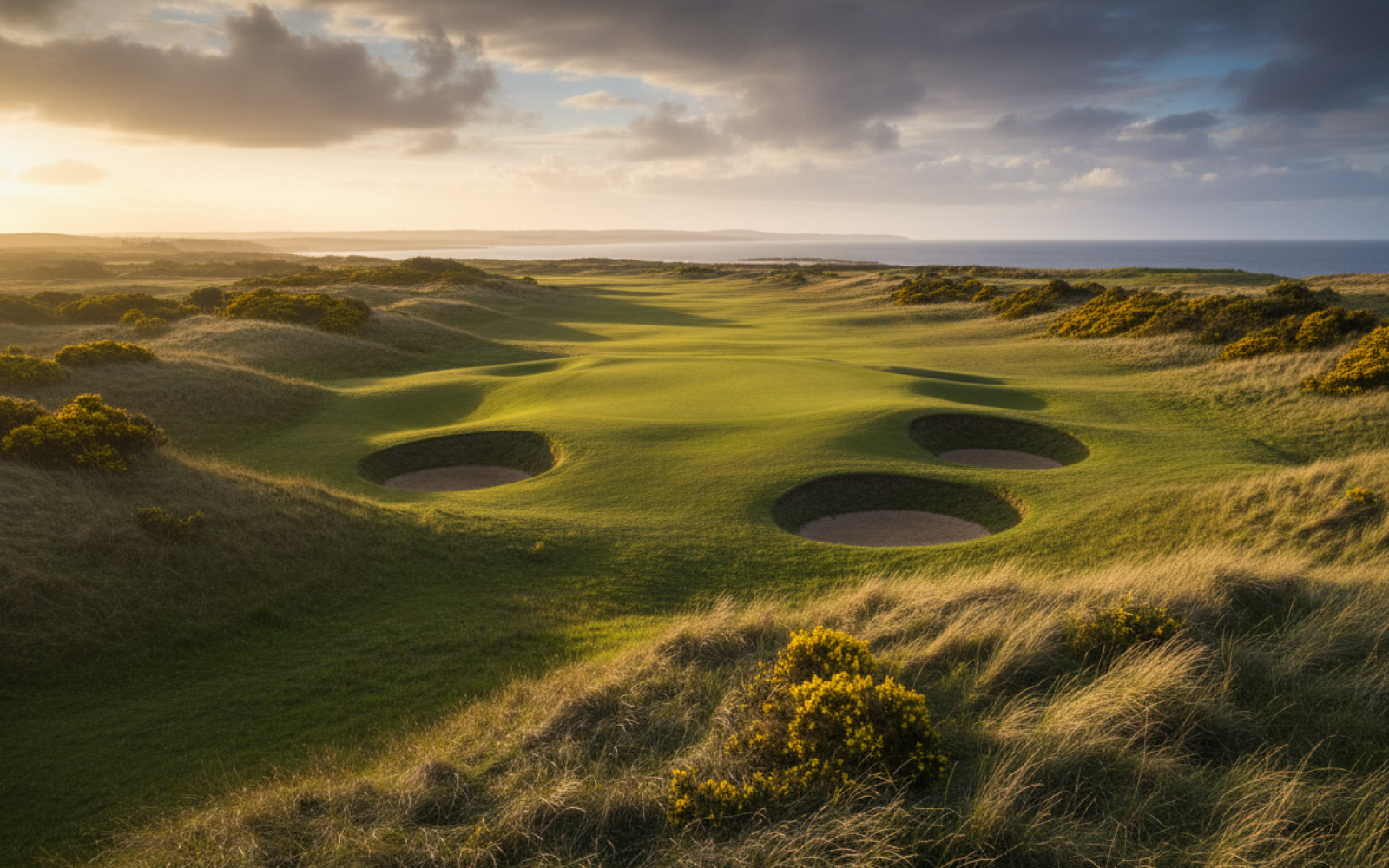


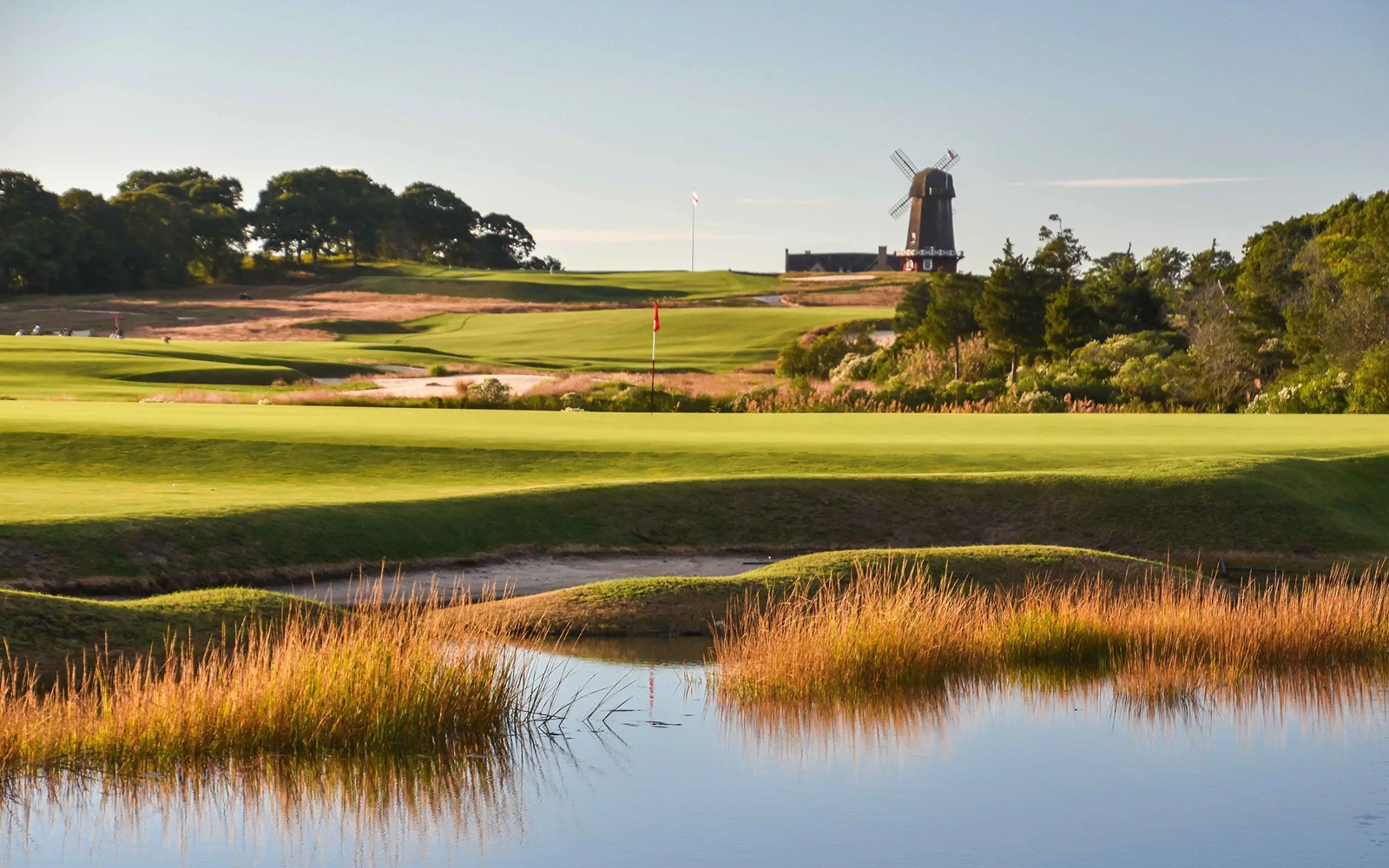
Across Peconic Bay from Southampton, where windswept dunes meet the Atlantic’s influence, stands the course that changed American golf forever. National Golf Links of America occupies a singular place in the pantheon of world golf, not merely for its current brilliance but for what it represented when it opened in 1911. This is where strategic golf architecture was born in the United States, where Charles Blair Macdonald proved that American soil could support links golf every bit as compelling as Scotland’s finest.
The sandy, undulating property overlooking Shinnecock Hills and Sebonack feels transported from the Old Course’s hometown, right down to the fescue-covered dunes and the salt air that sweeps inland from the water. Standing on the first tee, you sense immediately that you’re about to experience something profoundly different from typical American parkland golf.
History and Design
Charles Blair Macdonald spent two years studying the great courses of Britain before designing National Golf Links. He measured holes, sketched bunkers, and analyzed strategic principles with an obsessive attention to detail that bordered on fanaticism. When he returned to America, he didn’t simply copy what he’d seen but reimagined those classic holes for American golf, creating what he called “template holes” based on the world’s best.
The course opened in 1911 and immediately established itself as America’s premier golf destination. Macdonald’s vision was revolutionary: strategic options off the tee, dramatic bunkering that rewarded precision over power, and green complexes that demanded creativity around the putting surfaces. He personally supervised every aspect of construction, moving earth and shaping features until they matched his exacting standards.
Over the decades, National has been refined rather than radically altered. Seth Raynor, Macdonald’s protégé, made subtle modifications in the 1920s. More recently, Gil Hanse has overseen restoration work that has peeled back later changes to reveal Macdonald’s original intent, particularly around green complexes and bunker edges.
Course Layout and Signature Holes
National Golf Links plays to a par 73 measuring approximately 6,800 yards, though yardage is almost irrelevant here given the strategic complexity. The routing makes brilliant use of the property’s natural undulation, with holes that climb into the dunes, sweep along ridgelines, and drop toward the bay.
The 2nd hole, the famous “Sahara,” requires a 220-yard carry over a vast sandy waste that looks imported from North Africa. Miss short and you’re dead, miss right and you might be chipping from ankle-deep sand. The 3rd, “Alps,” is a blind par-4 where you hit over a massive dune to a green you can’t see from the fairway, pure faith golf that tests nerve as much as skill.
The par-3 4th, “Redan,” is perhaps the most famous template hole in golf, a 190-yard one-shotter played across a diagonal green that slopes hard from right to left. The correct play is often to aim 30 yards right of the flag and let the contours bring the ball down toward the hole. The 7th, “Bottle,” features a narrow, angled green protected by deep bunkers that punish anything less than precision.
The closing stretch from 15 through 18 provides a stunning finish along the bay. The par-5 15th demands perfect positioning to have any chance at reaching the green in two. The short par-4 16th tempts longer hitters to drive the green, but the narrow target and severe bunkering make prudence the better play for most.
What Makes It World-Class
National Golf Links earns its Top 5 world ranking through sheer architectural brilliance and historical significance. This is the Rosetta Stone of American golf design, the course that introduced strategic principles now considered fundamental. Every forced carry, every angled green, every risk-reward decision on American courses traces its lineage back to what Macdonald created here.
The bunkering alone deserves study. These aren’t decorative sand traps but strategic hazards positioned to punish poor execution and reward precise play. The bunkers have character: deep, craggy faces that look sculpted by wind rather than machinery, edges that blur into surrounding terrain.
The green complexes showcase genius-level understanding of angles and slopes. Macdonald built greens that accept running shots from specific angles while rejecting aerials from others. You can play the same hole ten times and discover new lines, new options, new ways the architecture rewards creative thinking.

Get the Edge on Every Tournament
AI-powered predictions, data-driven analysis, and expert picks delivered before every PGA Tour event.
Try Golf Agent ProWhat separates National from merely excellent courses is how every element works in concert. The routing flows naturally through dramatic terrain. The strategic options multiply on each hole rather than dictating a single correct play. The course tests every club in the bag and every dimension of golf skill, yet never feels contrived or artificial.
Playing Experience
Access to National Golf Links is extraordinarily limited, as this remains one of America’s most exclusive private clubs. Members and their guests comprise virtually the entire guest list, with the occasional architectural pilgrimage granted to serious students of design. Those fortunate enough to play here describe it as a religious experience, particularly when conditions firm up and the course plays fast and bouncy like true links golf.
The conditioning reflects a links philosophy: firm, fast fairways that encourage ground game, greens that run 11-12 on the stimpmeter without losing receptiveness, and rough that’s punishing but not penal. The course can be set up to play anywhere from challenging to borderingly unplayable depending on tee positions and hole locations.
Walking National with one of the club’s veteran caddies is essential to understanding the architecture. They’ll show you sight lines Macdonald intended, explain historical changes to holes, and help you navigate the subtle breaks in greens that look flat but contain world-class contour. The clubhouse itself, a rambling shingle-style structure, houses one of golf’s finest collections of art and memorabilia.
The atmosphere is reverent without being stuffy, befitting a place where golf architecture is taken seriously but golf itself remains fun. Foursomes move at a civilized pace, pausing to study shots and appreciate the artistry in the design.
Notable Tournaments and Moments
National Golf Links has deliberately avoided hosting professional championships, maintaining its status as a private sanctuary for match play and member competitions. The Walker Cup was contested here in 1922, one of the few major amateur events the club has hosted. That tournament showcased the course’s ability to challenge the world’s best amateurs while remaining playable for higher handicappers.
The club’s real legacy lives in the countless architects who have made pilgrimages here to study Macdonald’s work. Pete Dye, Tom Doak, Gil Hanse, Bill Coore, and virtually every significant modern designer has spent hours walking these fairways, measuring green angles, and photographing bunker details. National is the course that launched a thousand designs.
Bobby Jones played here frequently and credited National with teaching him strategic golf. Ben Crenshaw has called it the most influential course in American golf architecture. These aren’t tournament victories but something more lasting: the course’s impact on how golf is designed and played.
Visitor Information
National Golf Links of America remains strictly private with no public access or guest play outside member invitations. The club does not accept outside requests for rounds and maintains one of golf’s most selective membership processes. For those seeking to experience Macdonald’s architectural genius, the best alternative is studying his other work at courses like Yale Golf Course or Piping Rock Club.
Full details about the club’s history and architectural significance are available on the official website, though playing opportunities are not advertised there. The club sits just outside Southampton on Long Island’s eastern end, accessible via Route 27.
Golfers making the pilgrimage to Long Island’s golf corridor have exceptional options nearby, including several courses that rival the world’s finest layouts featured in reviews like Pine Valley and Royal County Down. Sebonack Golf Club, a modern Nicklaus-Doak design directly adjacent to National, offers one of America’s finest contemporary links experiences.
The ideal time to visit Long Island’s golf scene runs from May through October, with September offering the best combination of firm conditions and comfortable temperatures. Southampton offers luxury accommodations at properties like The American Hotel or Topping Rose House, both within 10 minutes of the course.
The Verdict
National Golf Links of America represents the foundation of American strategic golf architecture, a course so influential that its fingerprints appear on thousands of layouts across the country. This is essential viewing for anyone serious about understanding golf design, a masterclass in how terrain, strategy, and artistry combine to create timeless golf. While access remains the province of a fortunate few, the course’s influence touches every golfer who plays a template hole or navigates strategic bunkering anywhere in America.
Frequently Asked Questions
- Can the public play National Golf Links of America?
- No, National Golf Links is a strictly private club with no public access. Play is limited to members and their invited guests, with no outside tee time bookings accepted.
- What are the famous template holes at National Golf Links?
- The course features several legendary template holes including the Sahara (2nd), Alps (3rd), Redan (4th), and Bottle (7th), each based on classic holes from British courses that Macdonald studied.
- Why is National Golf Links considered so influential?
- Charles Blair Macdonald's 1911 design introduced strategic architecture principles to America, creating template holes that influenced thousands of subsequent courses and establishing design concepts still used today.
- What other courses near National Golf Links are worth playing?
- Shinnecock Hills and Sebonack Golf Club sit directly adjacent to National, while Friar's Head, Maidstone Club, and The Bridge are all within 30 minutes and offer exceptional links-style golf.
- Who designed National Golf Links of America?
- Charles Blair Macdonald designed National Golf Links, which opened in 1911 after he spent two years studying the great courses of Scotland and England to create America's first strategic golf course.
Looking for an edge on the PGA Tour? Golf Agent Pro delivers AI-powered insights for every tournament.