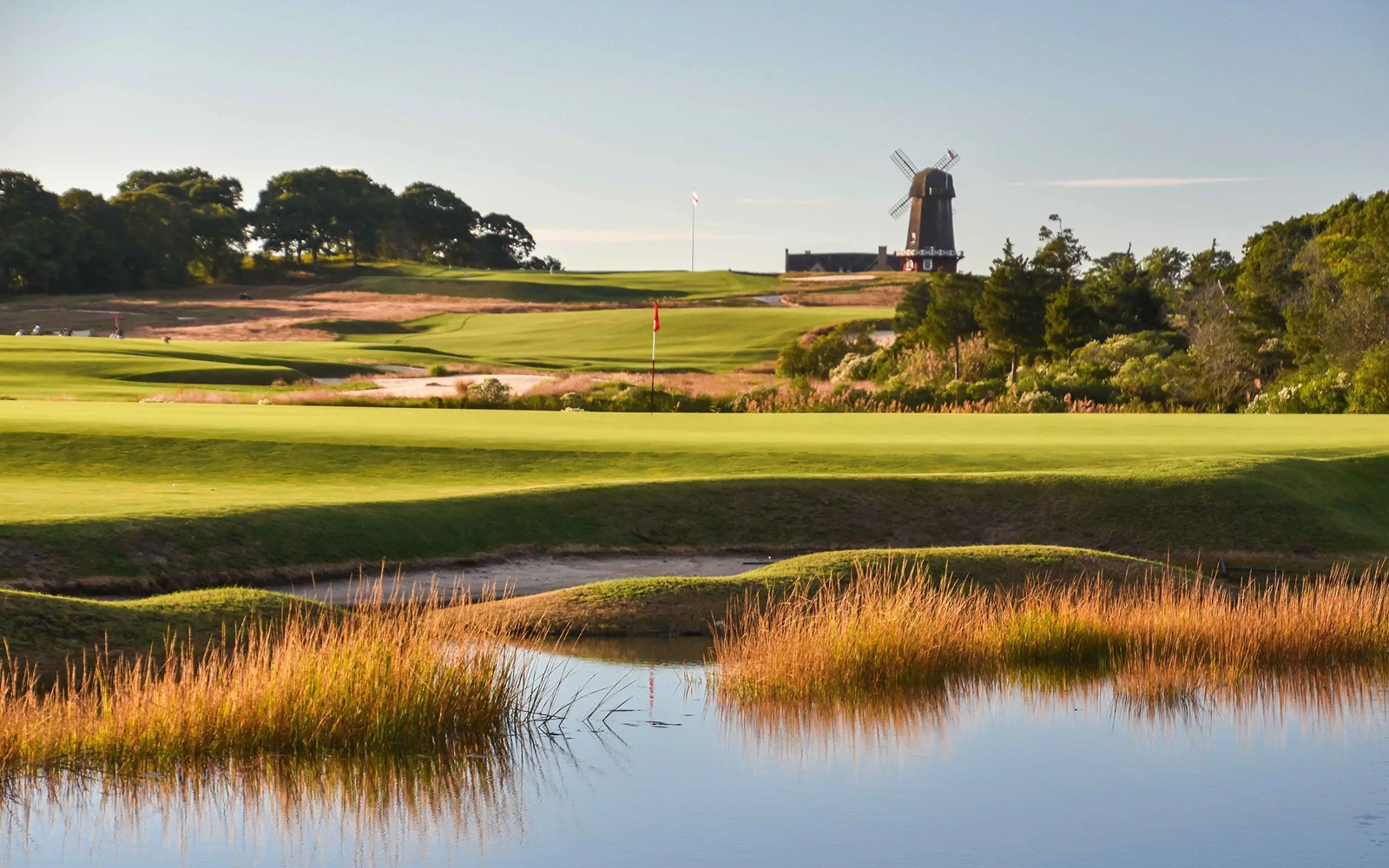



The six-hour drive from Omaha to Mullen, Nebraska tells you everything you need to know about Sand Hills Golf Club. The last hour winds through 19,000 square miles of untouched native grassland, rolling terrain that stretches to the horizon in every direction. There are no billboards, no strip malls, no signs of civilization beyond the occasional ranch gate. This isolation isn’t an inconvenience - it’s the whole point. What Bill Coore and Ben Crenshaw discovered here in the mid-1990s was something golf hadn’t seen in decades: genuine links terrain in the middle of America, waiting to be sculpted into something extraordinary.
I’d argue that Sand Hills represents the single most important American course built in the last 30 years. Not because it hosts major championships or appears on television, but because it proved a radical idea: that the best golf courses emerge from the land itself, not from massive earthmoving budgets and manufactured drama.
History and Design
Sand Hills opened in 1995, the product of a friendship between developer Dick Youngscap and architect Bill Coore. Youngscap, a Nebraska native, had purchased the property for cattle ranching when Coore mentioned that the rolling dunes might be ideal for golf. What they found exceeded expectations - natural sand formations resembling Scotland’s finest links, shaped by wind over thousands of years.
Coore and Crenshaw walked the property for months, identifying 137 potential hole locations. The final routing used only 18 of those options, connecting them across existing contours with minimal earth movement. They didn’t create the drama - they discovered it already sculpted by nature. The course opened with almost no fanfare, no professional tournament, no marketing campaign. Word spread organically among serious golfers who made the pilgrimage and returned home evangelizing.
The design philosophy was revolutionary for its time: wide fairways, massive greens, native blowouts serving as bunkers, firm-and-fast conditions. This wasn’t target golf - it was strategic golf that rewarded creativity and ground game. Within five years, Sand Hills had climbed into Golf Digest’s top ten courses in America.
Course Layout and Signature Holes
Sand Hills plays 7,089 yards from the tips to a par of 71, though those numbers barely capture what makes the course special. The routing flows naturally through the dunes, rarely requiring artificial transitions. Every hole feels inevitable, as if it’s been there forever.
The front nine eases you into the experience. The par-4 3rd hole runs 433 yards along a ridge line, with fairway bunkers carved from natural blowouts guarding the left side. What struck me about this hole is how the green sits on a natural shelf, visible from the tee but deceptive in its angles. Miss the fairway and you’re playing from sand or native grass, neither particularly friendly.
The par-5 7th stretches 609 yards and plays downwind on most days, making the green reachable in two for long hitters willing to challenge a massive blowout bunker protecting the right side. The green complex here showcases Coore and Crenshaw’s genius - it appears simple from distance but reveals multiple tiers and subtle breaks once you’re standing over a putt.
The inward nine includes several of the course’s most memorable holes. The par-3 17th plays from an elevated tee to a green nestled between towering dunes, the wind swirling unpredictably. Club selection here is pure guesswork, and I’ve seen it play anywhere from a 6-iron to a 3-wood on different days. The finishing hole, a 390-yard par 4, runs uphill to a green protected by deep bunkers - not the most dramatic closer in golf, but perfectly honest in its challenge.
What Makes It World-Class
Sand Hills earns its ranking as the 11th best course in the world (and 6th in the United States) through something rarer than architectural flourish: authenticity. This is what links golf looks like when it emerges organically from the landscape rather than being imposed upon it, much like how St Andrews Links (Old) evolved naturally over centuries on Scotland’s coast. The course plays firm and fast year-round, bouncing and rolling like Scottish seaside tracks rather than the soft, receptive conditions most American golfers expect.
The scale here separates it from pretenders. These aren’t manufactured mounds - they’re genuine sand dunes reaching 100 feet high in places. The fairways run 50 to 70 yards wide in many spots, giving players options and requiring decisions rather than simply executing the same stock shot on every hole. The greens average over 7,000 square feet, with gentle internal contours that penalize poor approach angles.
What I love about Sand Hills is its refusal to pander. There are no cart paths, no intermediate tees, no yardage stakes in the fairway. The course presents itself honestly and expects you to figure it out. Wind is the primary defense - conditions can shift dramatically mid-round, turning a comfortable 7-iron into a hard 5-iron in minutes.
This video tour showcases every hole at Sand Hills, giving you a sense of the dramatic terrain and minimalist bunker style that defines the course. Notice how the fairways blend seamlessly into the native grasses and how the greens sit naturally within the landscape rather than being artificially perched.

Get the Edge on Every Tournament
AI-powered predictions, data-driven analysis, and expert picks delivered before every PGA Tour event.
Try Golf Agent ProPlaying Experience
Sand Hills is strictly private, with membership by invitation only. The club maintains approximately 100 members and hosts a limited number of guests each year, keeping play to one round per day per tee time. This deliberate pace ensures pristine conditions and an unhurried experience that feels more like 1920s Scotland than modern America.
The atmosphere here is refreshingly unpretentious, similar to the understated elegance found at Pine Valley Golf Club. The modest clubhouse sits a mile from the first tee, overlooking the Dismal River. There’s no grand entrance, no imposing pro shop, no attempt at luxury resort trappings. Accommodations consist of simple cabins, meals are served family-style, and the focus remains entirely on the golf.
Playing here requires walking - caddies are available and recommended, though many serious golfers prefer to carry their own bags to fully absorb the terrain. The course plays different every time based on wind direction and pin positions. I’ve played Sand Hills on calm mornings where it felt almost easy and on windy afternoons where breaking 80 seemed like a victory.
The conditioning is immaculate but presented in a way that enhances rather than softens the challenge. Fairways run tight and fast, the ball bouncing and rolling 30 or 40 yards after landing. Greens putt true but quick, often reaching 12 or 13 on the Stimpmeter. The native grasses surrounding fairways are maintained just long enough to penalize wayward shots without becoming unplayable.
Notable Tournaments and Moments
Sand Hills deliberately avoids tournament golf. The club has never hosted a professional event, a decision that reflects its philosophy of preserving the pure golfing experience over commercial exposure. This sets it apart from nearly every other course in the world’s top 20, most of which have built their reputations through televised championships.
The course did host the 2014 U.S. Senior Amateur Championship, won by William Williford. Even this limited exposure was controversial among members who worried that publicity might compromise the club’s privacy. That tournament remains the only significant amateur competition held there.
What Sand Hills lacks in competitive history, it makes up for in influence. The course’s success inspired an entire generation of minimalist designs in remote locations - courses like Bandon Dunes, Streamsong, and Sand Valley that prioritize architecture and experience over convenience and amenities. Coore and Crenshaw’s work here proved that golfers would travel anywhere for exceptional design, fundamentally changing how developers approached new projects.
The course appears regularly in architecture discussions and best-of lists, with Golf Digest ranking it among America’s top ten courses every year since 2000. More importantly, it’s revered among serious golfers as a pilgrimage site, the place where American minimalism was reborn.
Visitor Information
Access to Sand Hills requires either membership or an invitation from a member. The club does not accept public play or outside booking requests. There are no green fees in the traditional sense - golf here operates on a membership model, with dues covering unlimited play for members and their guests.
For golfers without connections to a member, nearby alternatives offer a taste of Sandhills golf without the exclusivity. The Dismal River Golf Club, located about 40 miles away, features two courses designed by Tom Doak (Red) and Nicklaus Design (White) on similar terrain. Ballyneal Golf Club in Colorado, about three hours south, offers another Coore-Crenshaw design in comparable sand dune landscape. Both accept public play with advance reservations and provide the walking-only, links-style experience that Sand Hills pioneered.
The best time to visit this region is May through October, when weather conditions are most favorable. Summer afternoons can see temperatures reaching 90 degrees, but the dry climate and constant breeze make it manageable. Fall brings spectacular golden grasses and cooler temperatures, though wind tends to pick up significantly.
Full details about the region’s golf offerings are available through local tourism resources, though Sand Hills itself maintains minimal online presence by design. The club values privacy and operates largely by word-of-mouth among the golf community.
The Verdict
Sand Hills belongs on every serious golfer’s bucket list, even knowing that access remains challenging. This is golf in its purest form - strategic, walking-only, firm-and-fast, carved from terrain that was destined to become a golf course. It’s the standard against which modern minimalism should be measured, the proof that great architecture emerges from restraint and respect for the land. If you somehow secure an invitation, clear your schedule and make the drive. It’s worth every mile.
Frequently Asked Questions
- Can the public play Sand Hills Golf Club?
- No. Sand Hills is strictly private with membership by invitation only. Public play is not permitted, and the club does not accept outside booking requests or offer guest rates without member sponsorship.
- What makes Sand Hills Golf Club so highly ranked?
- Sand Hills ranks 11th in the world due to its authentic links-style terrain found naturally in Nebraska's Sand Hills region, minimalist design philosophy that lets the land dictate the routing, and firm-fast playing conditions that reward strategic thinking over power.
- Are there similar courses to Sand Hills that accept public play?
- Yes. Dismal River Golf Club (40 miles away) offers two courses on similar terrain and accepts public play. Ballyneal in Colorado and Sand Valley in Wisconsin provide comparable sand-based, minimalist designs that welcome visiting golfers.
- Who designed Sand Hills Golf Club?
- Bill Coore and Ben Crenshaw designed Sand Hills, which opened in 1995. They identified 137 potential holes on the property and selected 18 that required minimal earth movement to create the final routing.
- What is the best time of year to golf in Nebraska's Sand Hills region?
- May through October offers the most favorable conditions. Fall (September-October) is particularly beautiful with golden native grasses and cooler temperatures, though wind picks up considerably during this period.
Looking for an edge on the PGA Tour? Golf Agent Pro delivers AI-powered insights for every tournament.