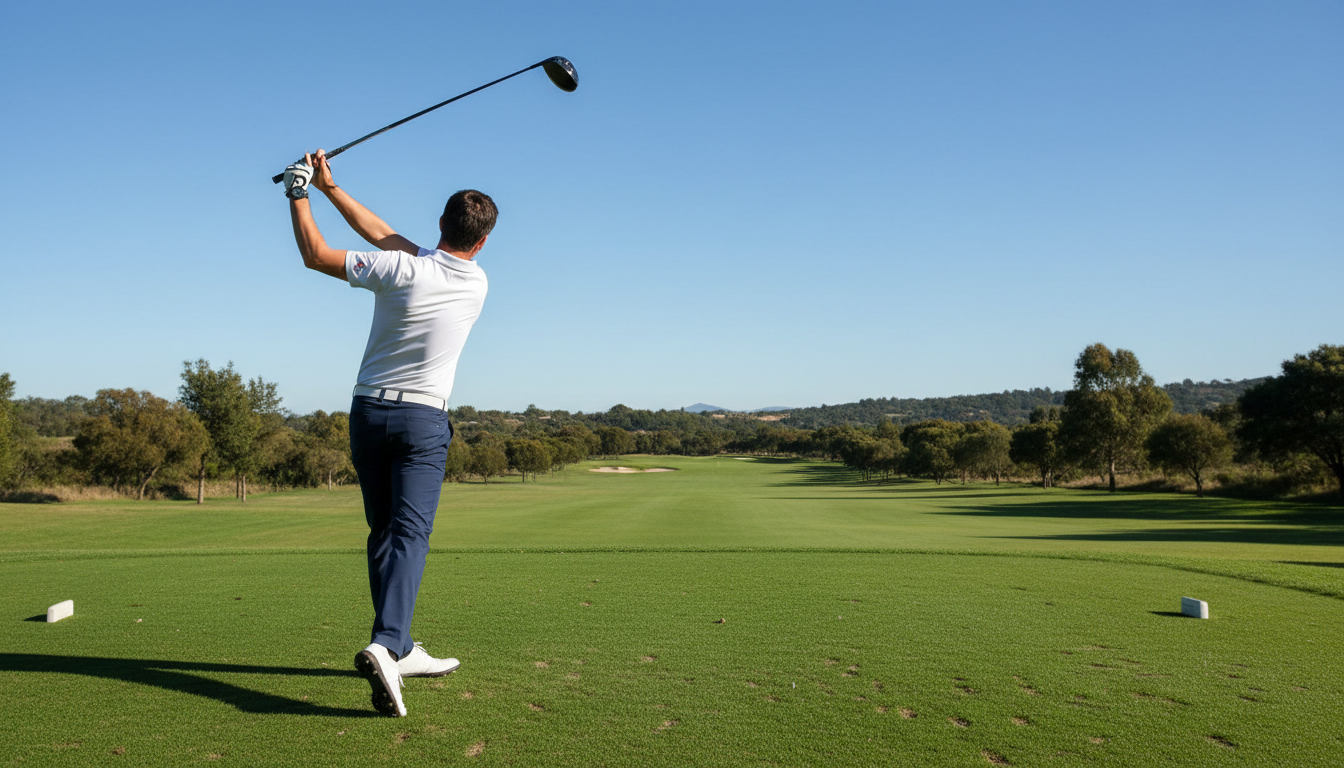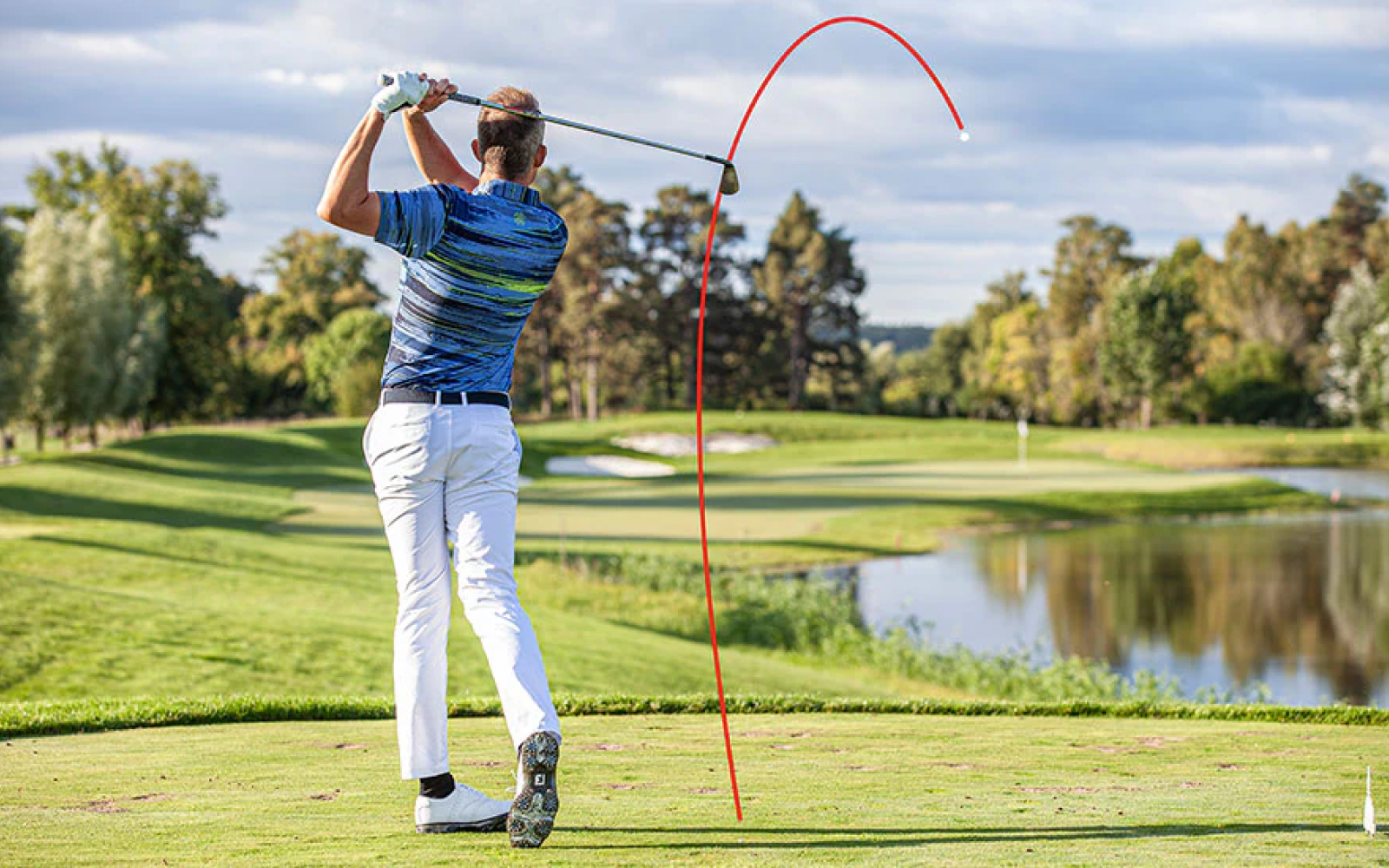


I’ve watched countless golfers hit beautiful practice swings, only to top their next shot. It’s one of the most frustrating misses in golf because a topped shot barely advances the ball, feels terrible, and can completely derail your confidence. The good news? Topping the ball is rarely a major swing flaw. It’s almost always a fixable issue related to where your club reaches its lowest point.
After years of working through this problem myself and helping others fix it, I’ve found that understanding the real causes makes the solution much clearer. Let me walk you through what’s actually happening when you top the ball and give you some drills that work fast.
What Actually Happens When You Top the Ball
When you top a golf shot, the leading edge of your club strikes the upper half of the ball instead of the center or lower portion. The result is a low, weak shot that skims across the ground or barely gets airborne.
Every golf swing moves in an arc, and that arc has a lowest point. With irons, your club should reach its lowest point just after the ball, allowing you to strike the ball first and then brush the turf. When you top it, the bottom of your swing arc happens too early. By the time the club reaches the ball, it’s already moving upward, catching only the top half.
Think of it this way: your swing’s low point is in the wrong place. Either it’s happening behind the ball, or your body position is changing so much during the swing that the club can’t reach down to the ball properly.
The Real Culprits Behind Topped Shots
I’ve found the most common cause of topping is improper weight transfer. When your weight hangs back on your trail foot through impact, your swing’s low point stays behind the ball. The club is ascending by the time it reaches the ball, and you catch it on the upswing.
Another major factor is early extension. This is when your hips move toward the ball during the downswing, which forces your body to stand up to make room for your arms. When you stand up, you move farther from the ball, and the club can’t reach down to it.
Here’s what I recommend watching to see this concept in action:
This video breaks down exactly how weight shift and body movement affect your contact. The key takeaway is that small changes in your posture through impact create massive differences in where the club bottoms out.
Fix Your Setup First
Before you worry about your swing, check your address position. I think the best option is to ensure your ball position isn’t too far forward in your stance. When the ball is too far forward, you’re more likely to catch it on the upswing.
For middle irons, I position the ball just forward of center in my stance. For shorter irons, it moves slightly back. This gives me the best chance to strike the ball before the ground.
Your posture matters too. I’ve seen golfers stand too upright at address, which makes it harder to maintain your spine angle through impact. Set up with a slight bend from your hips, keeping your back relatively straight. Your arms should hang naturally from your shoulders.
One setup check I use constantly: make sure your hands are slightly ahead of the ball at address with irons. This promotes a descending strike and helps ensure solid contact.
The Pivot-Divot Drill That Changed Everything
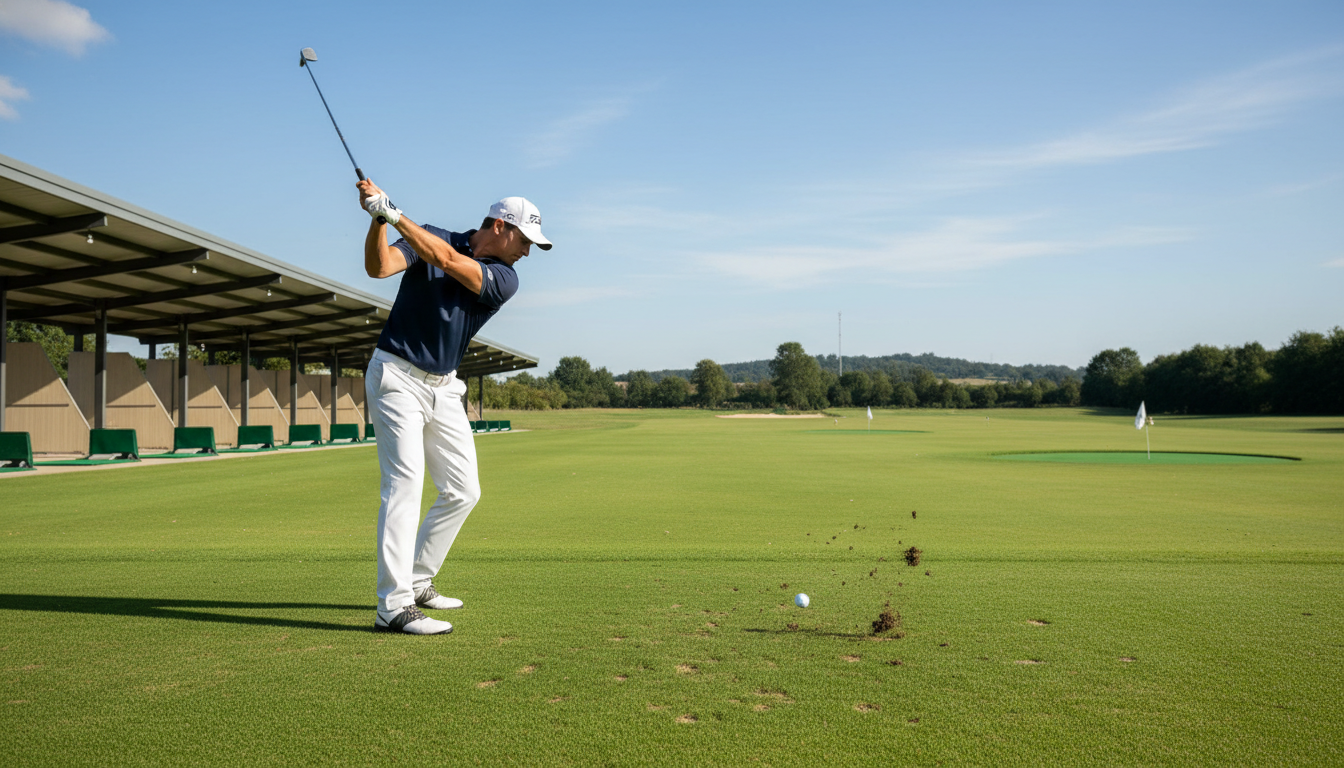
In my experience, the single best drill for stopping topped shots is what I call the pivot-divot drill. Take your setup without a ball and make a practice swing, focusing on two things: proper weight transfer to your lead side and taking a divot after where the ball would be.
Do this five times in a row, checking that each divot starts at or just ahead of where you’d place the ball. You’re training your body to shift forward and bottom out in the correct spot.
Once you’re consistently taking divots in the right place, add a ball. I recommend starting with half swings, gradually building up to full speed as your contact improves.
Here’s a video showing this drill in action:
The beauty of this drill is that it forces you to get your weight moving forward. You can’t take a divot in the right spot if your weight is hanging back. This one-minute drill genuinely works if you commit to doing it regularly.
Address the Weight Shift Problem
The weight transfer issue is so common that I want to give you a specific fix. Try the step drill: set up to the ball with your feet together, then as you swing back, step with your lead foot into your normal stance width. This exaggerated movement trains the feeling of weight moving forward.
I’ve found this drill helps golfers who tend to fall back onto their trail foot through impact. The stepping motion makes it nearly impossible to hang back, and after 10-15 reps, the correct weight transfer starts to feel natural.

Get the Edge on Every Tournament
AI-powered predictions, data-driven analysis, and expert picks delivered before every PGA Tour event.
Try Golf Agent ProAnother checkpoint I use: at the finish of your swing, you should be able to hold your balance with 90% of your weight on your lead foot. If you’re falling backward or struggling to balance, your weight never transferred properly.
Stop Early Extension With This Simple Feel
Early extension is trickier to fix because it often happens unconsciously. The feeling you want is maintaining the bend in your hips through impact. Think about your belt buckle: it should stay back and rotate, not thrust toward the ball.
A drill that works for me is practicing with a wall or alignment stick behind my hips at address. As I swing through, I try to keep my hips from pushing back into the stick. This gives immediate feedback when I’m standing up too early.
I also think about keeping my head steady during the swing. I’m not saying you can’t move your head at all, but excessive up-and-down movement usually indicates you’re losing your posture. Pick a spot on the back of the ball and maintain that eye level through impact.
The Fairway Wood Problem
Topping fairway woods frustrates golfers more than anything else I see on the course. The ball sits lower to the ground, and there’s less margin for error. The same principles apply, but I’ve learned you need to trust the club’s design.
With fairway woods, I recommend a slightly wider stance for better stability and a smoother tempo. The temptation is to help the ball into the air by scooping at it, which guarantees a topped shot. Instead, focus on sweeping the ball off the turf with a shallow angle of attack.
Here’s a great video specifically about fairway woods:
The biggest mistake I see is golfers trying to lift the ball with their bodies instead of letting the club do the work. The loft on your fairway wood is designed to get the ball airborne. Your job is simply to deliver the club to the ball with a level or slightly descending blow.
Practice Drills You Can Do Anywhere
I think the best option for ingraining better contact is the tee drill. Stick a tee in the ground so just the top is visible, then practice hitting it without a ball. This trains you to hit a specific spot and transfer your weight properly.
Another drill I use is placing a second ball or alignment stick 6-8 inches behind your actual ball. This creates a visual reminder not to let your swing bottom out too early. You’ll know immediately if you’re hanging back because you’ll hit the back object first.
For issues related to golf swing tempo, I count “one-two” during my swing, with “one” at the top of the backswing and “two” at impact. This simple rhythm helps prevent rushing the downswing, which often leads to topped shots.
Common Mistakes That Make Topping Worse
One thing I’ve learned through trial and error: don’t try to fix everything at once. I’ve seen golfers get so focused on their weight shift that they forget about maintaining posture, then they overcorrect and create new problems.
Another mistake is practicing with full swings when you’re struggling with contact. I recommend starting with half or three-quarter swings, focusing purely on solid contact. Speed comes after you’ve grooved the correct movement pattern, similar to how you’d build a pre-shot routine that lowers your scores.
I also think golfers underestimate how much tension affects their swing. When you’re anxious about topping another shot, you grip the club tighter and swing faster, which makes the problem worse. Take a breath, make a smooth practice swing, and trust the adjustments you’re working on.
Frequently Asked Questions
- Why do I only top the ball with my driver?
- Driver topped shots usually happen because the ball is teed too low or positioned too far back in your stance. With the driver, you want to hit slightly up on the ball, so position it forward in your stance and ensure the tee height allows you to sweep through impact.
- Can topping the ball cause injury?
- While topping itself rarely causes injury, the compensation movements you make trying to avoid topped shots can strain your back and shoulders. Focus on fixing the root cause rather than adding tension to your swing.
- How long does it take to stop topping the ball?
- With focused practice on the pivot-divot drill and proper weight transfer, most golfers see improvement within 2-3 practice sessions. Consistent solid contact typically takes 2-3 weeks of regular practice to become automatic.
- Should I use different clubs if I keep topping?
- Equipment changes won't fix a topped shot caused by swing mechanics. However, if you're struggling specifically with long irons, hybrids can be more forgiving and easier to hit cleanly due to their lower center of gravity.
- Is topping worse than hitting it fat?
- Both are poor strikes, but topped shots generally travel less distance and offer less control. Fat shots at least compress the ball somewhat and can advance it a reasonable distance, while topped shots barely get airborne.
Looking for an edge on the PGA Tour? Golf Agent Pro delivers AI-powered insights for every tournament.