


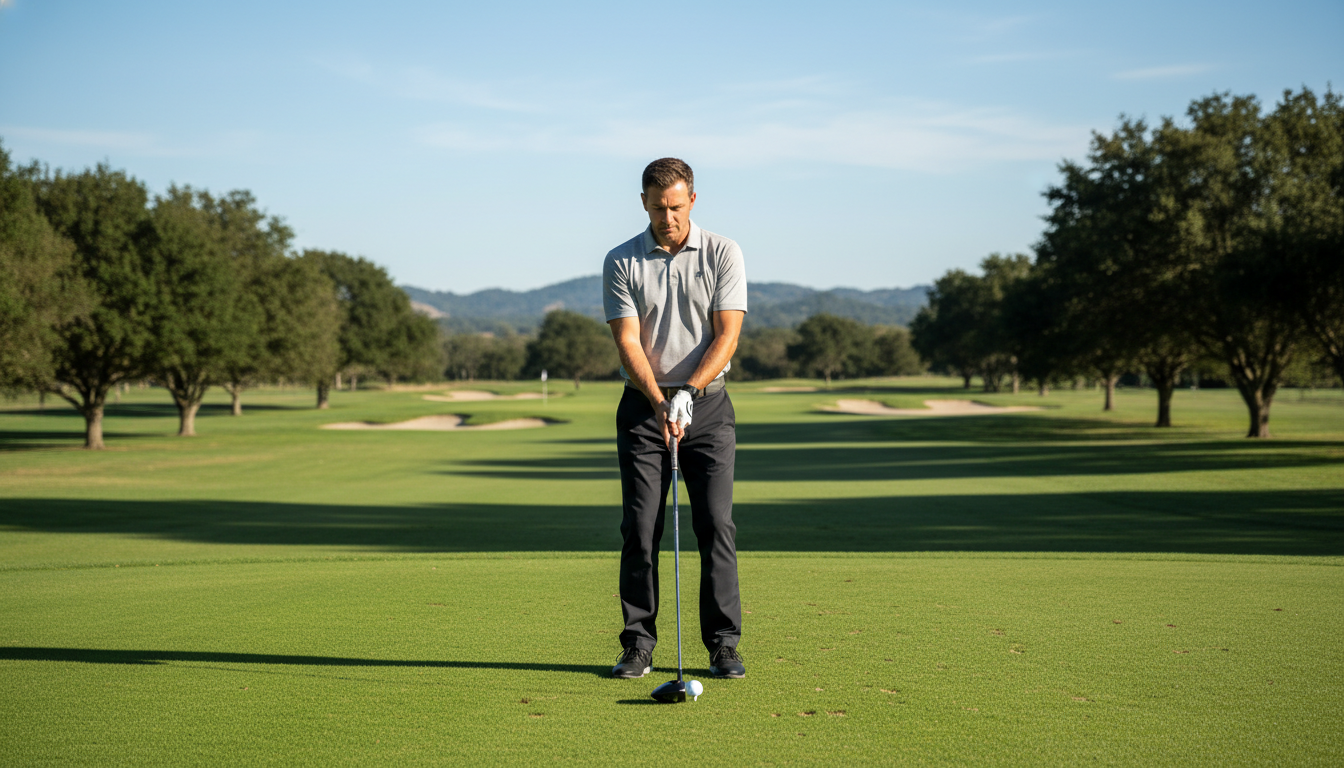
I’ve watched countless golfers stand over the ball with no clear plan, second-guessing their club choice, or dwelling on the water hazard they’re trying to avoid. The result? Tension, doubt, and erratic shots that pile up strokes faster than you’d think.
What separates consistent ball-strikers from weekend warriors isn’t always swing mechanics. It’s the mental framework they follow before every shot. A pre-shot routine is your best defense against overthinking and the fastest path to repeatable performance under pressure.
Why Your Pre-Shot Routine Matters More Than You Think
Here’s something that should get your attention: a European Tour study analyzing 22,579 shots across five tournaments found that players who spent less time over the ball and maintained consistent timing were 50 percent more likely to make the cut. The data showed that quicker, more consistent routines led to a 90 percent increase in strokes gained on putts.
I’m not suggesting you rush your shots. What I am saying is that an efficient, repeatable routine keeps your conscious mind from interfering with your athletic instincts. Every Tour player you watch on Sunday has one. From Tiger Woods’ precise waggle sequence to Jack Nicklaus’ visualization routine, these patterns aren’t superstition, they’re performance psychology in action.
The beauty of a solid routine is that it works regardless of your skill level. Whether you’re following data-driven strategies to break 90 or shooting in the 70s, the mental benefits remain the same. You’ll manage nerves better, eliminate indecision, and create a familiar anchor point when pressure mounts.
The Four Essential Components of Every Great Routine
I’ve broken down the most effective pre-shot routines into four distinct phases. Think of this as your G.A.M.E. plan, each letter representing a critical step that builds confidence and clarity.
First comes your assessment phase. This is where you gather information from behind the ball. Check the wind, evaluate the lie, note any hazards or trouble spots. I recommend spending 15-20 seconds here getting crystal clear on the shot you need to hit. Pick a specific target, not just “the fairway” or “the green,” but an exact spot like a tree branch or a discolored patch of grass.
Next is alignment and setup. Step into your stance with purpose and verify your body is aimed correctly. This is where most amateurs rush or get sloppy. I’ve found that using an intermediate target about three feet in front of your ball makes alignment far more reliable. Take one or two practice swings if that’s part of your rhythm, but keep them purposeful, not mindless.
Here’s a quick look at how one of golf’s most respected instructors approaches the pre-shot routine fundamentals:
That Titleist instruction demonstrates the core principles of target selection and commitment. Notice how clean and decisive the process stays from start to finish.
Building Commitment Into Your Routine
The third phase is where golfers either win or lose the mental battle: commitment. Once you’re over the ball, your decision-making window has closed. No more club debates, no swing thoughts beyond a simple feel or tempo cue. I tell my students to use a single swing trigger, something like “smooth tempo” or “trust it” that signals your body to execute.
Research shows that players who second-guess themselves over the ball lose significant strokes compared to those who commit fully to their plan. If doubt creeps in, step away and restart your routine from behind the ball. Never hit a shot you’re not committed to.
The final component is execution and acceptance. Swing with freedom and accept the outcome without immediate judgment. This mental reset between shots prevents one bad result from contaminating the next three holes. I’ve seen too many solid rounds implode because a player couldn’t let go of a chunked wedge or missed three-footer.
Common Pre-Shot Routine Mistakes That Cost You Strokes
Even golfers who think they have a routine often sabotage themselves with these five mistakes. The first is inconsistent timing. If your routine takes 45 seconds on one shot and 15 on the next, you’re not giving your brain the familiar pattern it needs to perform under stress.
Taking too long over the ball is another stroke killer. That European Tour data I mentioned earlier proves that excessive time breeds doubt and tension. Aim for 8-12 seconds from your final look at the target to trigger your swing. Any longer and you’re overthinking.
The third mistake is having no routine for different shot types. Your driver routine might need slight adjustments for a delicate pitch shot or a breaking putt. I recommend developing variations that maintain the same basic structure but account for the specific demands of each situation, much like the differences between chipping and pitching techniques around the green.
Want to see the complete breakdown of routine mistakes and how to fix them? This video covers the traps that trip up even experienced players:
Those five hacks address alignment errors, mental distractions, and timing issues that most golfers never recognize in their own games.

Get the Edge on Every Tournament
AI-powered predictions, data-driven analysis, and expert picks delivered before every PGA Tour event.
Try Golf Agent ProStep-by-Step: Your Personalized Routine Blueprint
Let me walk you through building your own routine from scratch. Start by watching your next practice session and timing yourself naturally. Are you taking 20 seconds over putts? 30 seconds on full swings? Establish your baseline first.
Next, design a simple three-part framework: behind the ball (assessment), beside the ball (setup), over the ball (execution). Write down exactly what you’ll do in each phase. For example, behind the ball might include picking your target, visualizing ball flight, and selecting your intermediate aim point.
Practice this routine on the range until it feels automatic. I’m talking about hundreds of repetitions where you go through every step on every shot, not just when you remember. This is where amateur golfers fail, they design a routine but never practice it enough to make it instinctive.
Test your routine under pressure. Play money games, compete in club tournaments, or even just keep a scorecard during practice rounds. A routine that crumbles when it matters isn’t a routine at all. Adjust based on what works and what feels forced or unnatural.
How to Make Your Routine Work on the Course
The practice range is where you build the routine, but the course is where it proves its worth. I’ve found that the best routines remain flexible enough to handle pace-of-play demands without sacrificing effectiveness. If your group is playing quickly, you can abbreviate your routine slightly without abandoning its core elements.
One practical tip: use physical triggers to signal each phase. Maybe you pull the glove tight when you commit to a club selection, or you take a deep breath before your final look at the target. These anchors help your brain recognize where you are in the process.
Another course-management strategy is to maintain your routine regardless of score. It’s easy to stay disciplined when you’re one-under through six holes. The real test comes after a double bogey or when you’re grinding to break 80 for the first time. That’s when your routine becomes a lifeline, not just a habit.
Your routine should also adapt to weather and environmental factors. Playing in wind? Add a moment to reassess club selection mid-routine if gusts change. Fast greens? Build in an extra practice stroke on putts to dial in speed. The framework stays consistent, but smart course management means making micro-adjustments based on conditions.
The Science Behind Routine and Performance
Sports psychology research has proven that consistent pre-performance routines reduce anxiety and improve focus. When you follow the same pattern before every shot, you’re essentially telling your nervous system, “This is familiar, we’ve done this before, we can handle it.”
Dr. Bob Rotella, one of golf’s most respected mental game coaches, has said that routines create “a sense of control in an uncontrollable game.” I couldn’t agree more. You can’t control where your ball lands, but you can control your preparation process.
Neuroscience also shows that routines help bypass the prefrontal cortex, the part of your brain responsible for overthinking and analysis. By making your routine automatic, you free up mental bandwidth to simply react and perform. That’s why Tour players look so calm under pressure, their routines have created a mental autopilot that works regardless of the situation.
Putting It All Together for Lower Scores
Building a pre-shot routine that actually lowers your scores requires commitment to the process. I’m not promising instant results, but I am guaranteeing that if you develop and practice a solid routine, you’ll see improvement in consistency, confidence, and your ability to handle pressure situations.
Start simple and refine as you go. Your first routine doesn’t need to be perfect. What matters is that you have one and that you stick to it shot after shot, round after round. Track your scores over ten rounds before and after implementing your routine. I think you’ll be surprised by the measurable difference.
The golfers who shoot their best scores aren’t always the most talented ball-strikers. Often, they’re the ones who’ve mastered the mental side of the game through disciplined routines that eliminate doubt and maximize focus. That edge is available to you right now if you’re willing to put in the work.
Frequently Asked Questions
- How long should a golf pre-shot routine take?
- Your entire routine should take 25-35 seconds total, with 8-12 seconds spent over the ball before you trigger your swing. Longer routines increase doubt and tension, which hurts performance.
- Should my pre-shot routine be the same for every club?
- The basic structure should remain consistent, but small adjustments are fine. Your driver routine might include an extra practice swing, while your putting routine may emphasize reading the green more carefully.
- What's the most important part of a pre-shot routine?
- Commitment is the most critical element. Once you're over the ball, all decision-making must be finished. Execute your shot with full trust in your plan and accept the result without judgment.
- Can a pre-shot routine really lower my golf scores?
- Yes. European Tour data shows that consistent routines improve performance by up to 90 percent on putts and make players 50 percent more likely to make cuts. The mental benefits translate directly to lower scores.
- How do I practice my pre-shot routine effectively?
- Use your routine on every single shot during practice sessions, not just when you remember. Time yourself to ensure consistency, and test it under pressure during competitive rounds or money games.
Looking for an edge on the PGA Tour? Golf Agent Pro delivers AI-powered insights for every tournament.