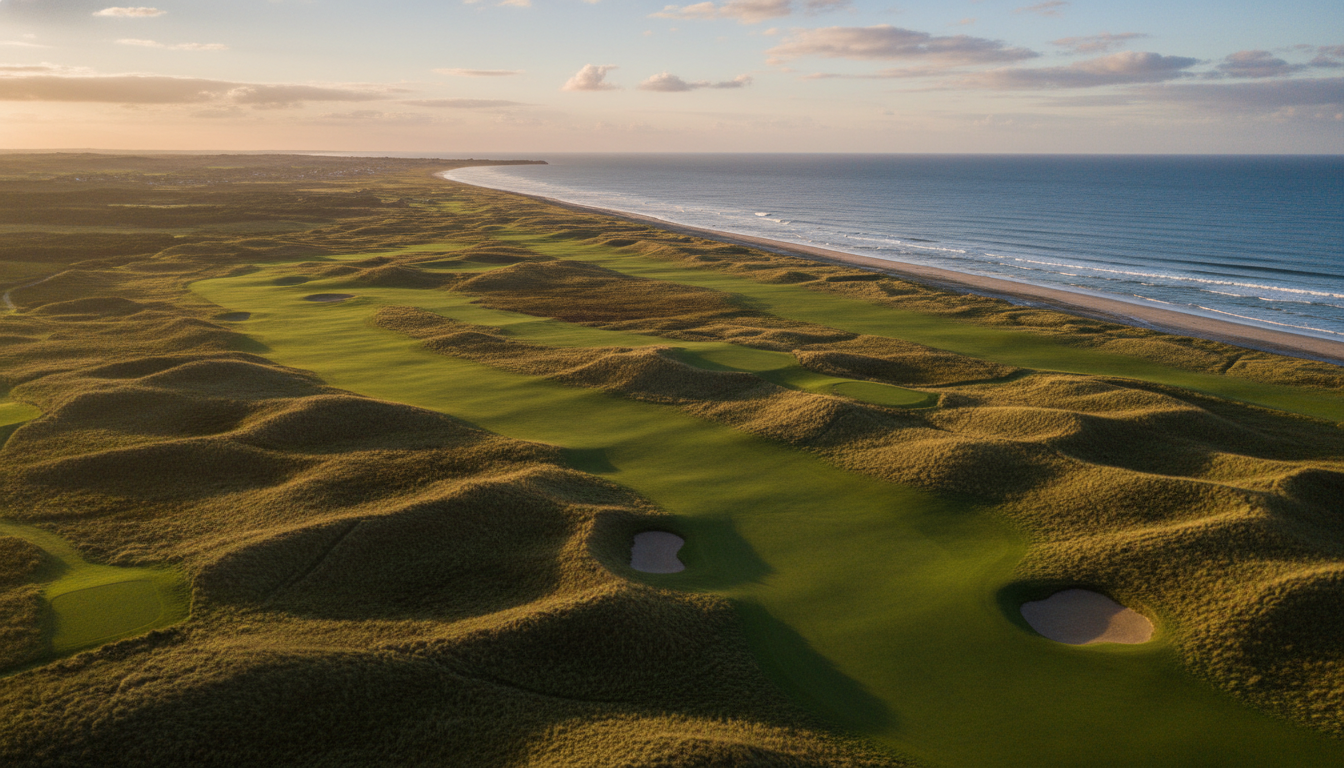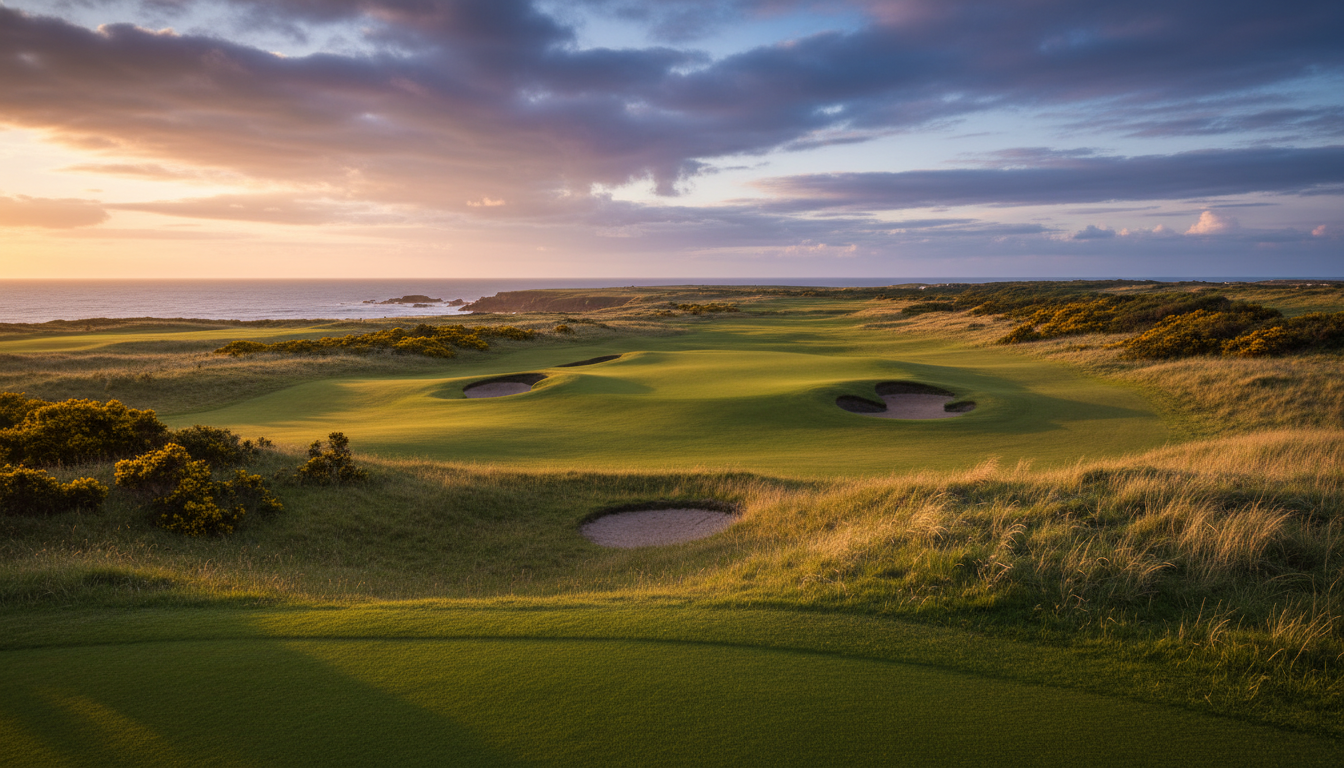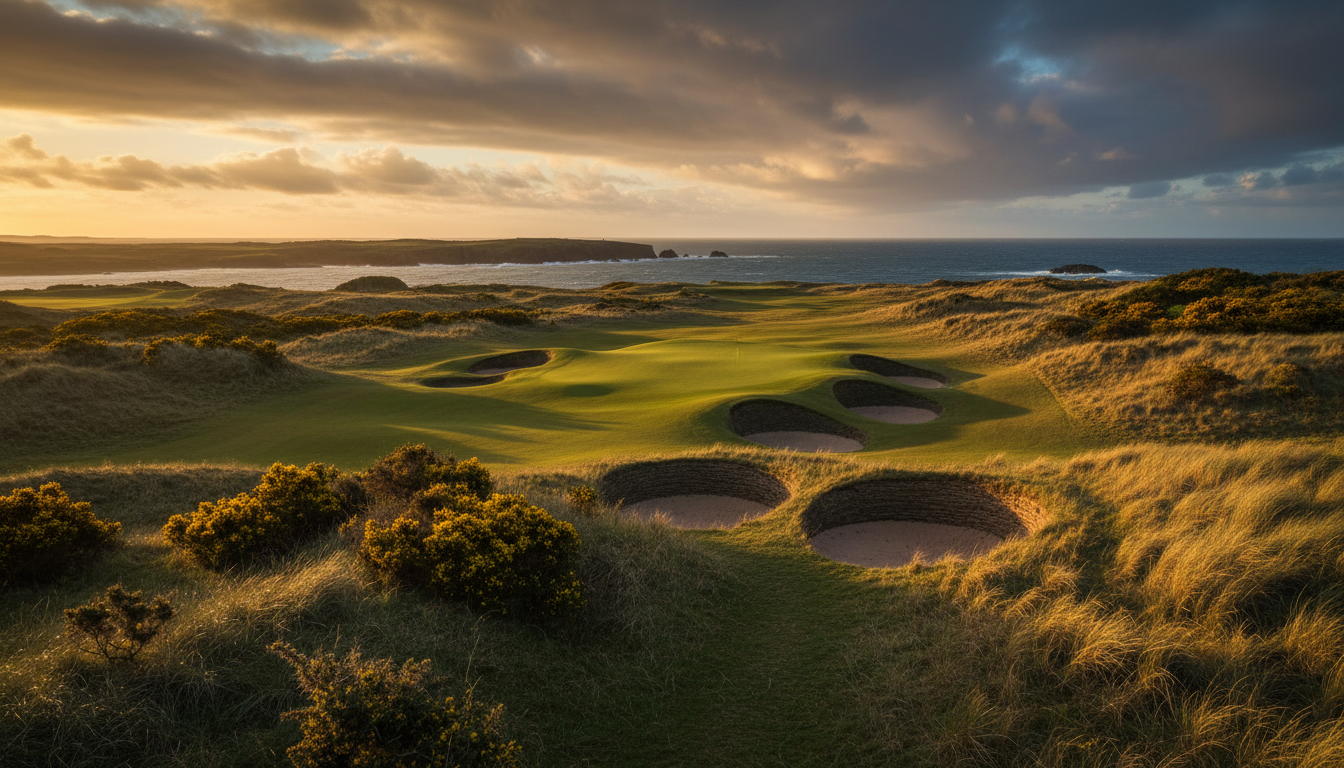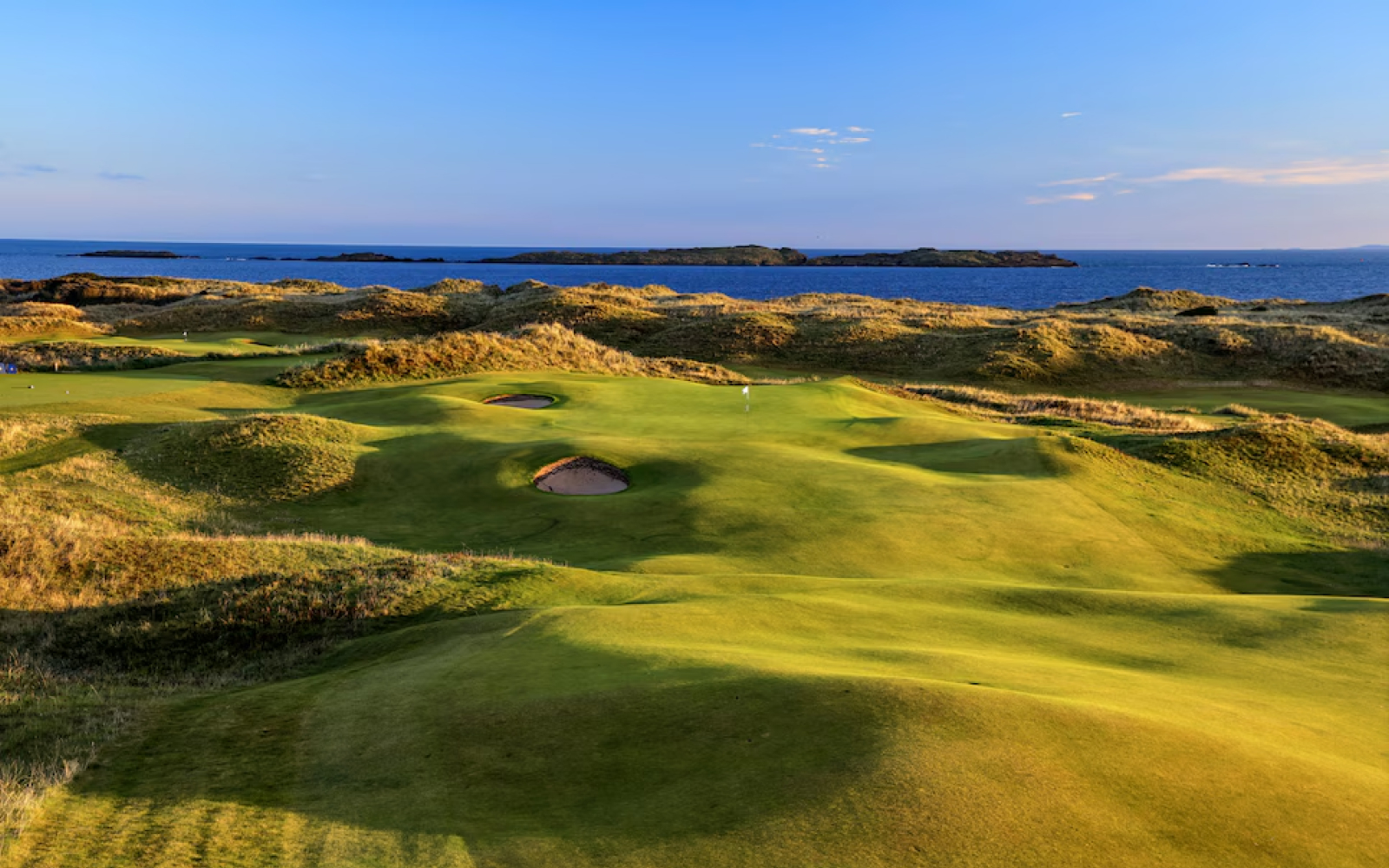



Standing on the first tee at Royal St George’s Golf Club, you’re looking at the same rolling sandhills and wild fescue that greeted Dr. Laidlaw Purves in 1887 when he discovered this stretch of Kent coastline. What struck me immediately was how untamed the landscape feels despite hosting 15 Open Championships. The dunes rise and fall with natural drama, the fairways twist through valleys, and you can taste salt air drifting inland from the English Channel two miles away.
This is links golf in its purest form, the kind that rewards creativity and punishes stubbornness. Royal St George’s isn’t trying to be pretty or accommodating. It’s trying to test you.
History and Design
Dr. Laidlaw Purves was on a mission when he found Sandwich. Fed up with the chaotic dual-direction layout at Wimbledon Common, where two clubs shared the same course playing in opposite directions, he vowed to walk the entire English Channel coast until he found proper linksland. A local tip saved him the trek and led him to the medieval seaport of Sandwich, where centuries of coastal silting had created hundreds of acres of sandhills perfect for golf.
Within months in 1887, Purves, along with Henry Lamb and Scottish greenkeeper Ramsay Hunter, laid out what they called St. George’s Golf Club, named for England’s patron saint. The course earned its Royal prefix in 1902, a testament to its rapid rise in prestige. Just seven years after opening, it became the first course outside Scotland to host The Open Championship in 1894, breaking St. Andrews’ stranglehold on the Claret Jug.
The routing has remained largely faithful to Purves’ original design, though architect Frank Pennink made significant refinements in 1975 and again before the 1981 Open. Pennink removed many of the blind tee shots and cross-bunkers that Victorian golfers accepted but modern championship play couldn’t tolerate. What remains is a course that feels utterly natural while playing fair at the highest level.
Course Layout and Signature Holes
Royal St George’s plays to a par 70 stretching 7,204 yards from the championship tees, though yardage tells you almost nothing about the challenge here. The routing moves through towering dunes with dramatic elevation changes that constantly test your ability to judge distances and control trajectory in coastal winds.
The opening hole, a 442-yard par 4, introduces you to the property with a blind tee shot over a ridge. It’s an old-fashioned links opener that demands trust in your line. The second hole curves left around deep bunkers, asking for a controlled fade off the tee.
The par-3 3rd hole stretches to 239 yards and plays to a plateau green guarded by the infamous Sahara bunker, a vast sandy wasteland that has swallowed countless approach shots. This hole alone demonstrates why St. George’s earned its fearsome reputation.
What I love about the 4th is how it epitomizes classic links golf strategy. At 496 yards, it’s listed as a par 4, which tells you everything about the course’s severity. The fairway pitches dramatically, and the approach plays to a green nestled in a natural amphitheater of dunes.
The par-3 6th, called Maiden, stretches 176 yards to a green protected by deep pot bunkers. The putting surface is enormous and wildly contoured, meaning distance control matters less than reading the proper quadrant to attack.
The 7th hole is a reachable par 5 at 573 yards, but the fairway narrows significantly in the landing zone for longer hitters. The green sits in a hollow, and anything missed left tumbles down a steep slope into deep rough.
I’d argue the back nine is where St. George’s truly bares its teeth. The 11th hole plays 242 yards uphill into prevailing winds, often requiring a driver or fairway wood just to reach the putting surface. The 13th, at 457 yards, doglegs right with bunkers pinching the landing area and a green that slopes away from the ideal approach angle.
The 14th and 15th holes form a brutal closing stretch. The 14th, Suez, runs 545 yards with a narrow fairway bordered by gorse and deep bunkers. The 15th stretches to 493 yards as a par 4, making it one of the longest and most demanding driving holes in championship golf.
What Makes It World-Class
Royal St George’s sits at #19 in the world and #7 in Britain and Ireland because it delivers everything you want from a championship links without compromise. The land itself is spectacular, featuring more dramatic elevation changes than any other Open venue. While most links courses play relatively flat, St. George’s routes through genuine dunes that create blind shots, downhill approaches, and plateau greens that test every aspect of shot-making.
What separates this course from other elite venues is its refusal to coddle players. There are five par 4s measuring over 450 yards, and the par is 70 rather than the standard 72, reflecting two brutally long par 4s where par feels like birdie. The greens are massive and wildly contoured, meaning even perfect approaches leave 40-foot putts with multiple breaks.
The bunkering strategy here is brilliant. Rather than penal hazards placed for visual intimidation, most bunkers at Royal St George’s sit exactly where your miss is likely to land. The fairway bunkers pinch landing zones at driver distance, forcing decisions about whether to lay back or challenge them. Greenside bunkers are deep and often feature vertical faces that require genuine recovery skills.
I believe what truly makes this course world-class is how completely different it plays in various wind conditions. In calm weather, low scores are possible, as Darren Clarke’s 66 in the final round of the 2011 Open proved. But when the wind blows, Royal St George’s becomes one of the most demanding tests in golf. The routing runs in all directions, so you never settle into a comfortable pattern of downwind and into-wind holes.

Get the Edge on Every Tournament
AI-powered predictions, data-driven analysis, and expert picks delivered before every PGA Tour event.
Try Golf Agent ProPlaying Experience
Walking off the 18th green at Royal St George’s feels like completing a pilgrimage rather than just finishing a round of golf. The course has an authentic weight to it, a sense that you’ve tested yourself on the same ground where Open champions have triumphed and contenders have collapsed.
The conditioning is immaculate without feeling artificial. The fairways are firm and fast, exactly what links golf should be, allowing the ball to bounce and run. The rough is genuinely punishing, featuring thick fescue that can swallow a ball completely. The greens run true at championship speed, and their internal contours create constant doubt on approach shots.
What struck me most was the variety of shots required. You’ll hit drivers, long irons off tees, bump-and-run approaches, high spinners, punch shots under the wind, and everything in between. Modern equipment has made some classic courses obsolete, but Royal St George’s demands the full repertoire.
The atmosphere here is proper old-world golf club. The clubhouse dates to 1887 and maintains period details throughout. The members are welcoming to visitors but expect you to understand links etiquette and pace of play. This isn’t a resort course where rangers shuttle you along. You’re expected to manage yourself.
Royal St George’s operates as a private club, though visitor access is available on select days. The experience is exclusive without being stuffy. You’re playing one of the world’s great courses, and everyone there understands that privilege.
Notable Tournaments and Moments
Royal St George’s has hosted The Open Championship 15 times, more than any course in England. That 1894 championship, won by amateur J.H. Taylor, marked a watershed moment as the first Open held outside Scotland. It signaled that championship golf belonged to Britain, not just Scotland.
The 1934 Open saw Henry Cotton shoot a record-tying 65 in the second round, a performance so dominant that a Dunlop 65 golf ball was later named in its honor. Cotton’s victory broke a decade-long American dominance of The Open and restored British pride in the championship.
Bobby Locke won here in 1949 with steady, strategic golf that showcased how to play Royal St George’s properly. Rather than overpower the course, Locke positioned his tee shots carefully and relied on his brilliant short game around the massive greens.
Greg Norman’s wire-to-wire victory in 1993 was one of the most dominant Open performances ever recorded. Norman led by four shots after every round and never looked remotely challenged. His final-round 64 on Sunday was a masterclass in links golf execution.
But it’s Darren Clarke’s 2011 triumph that I find most memorable. At 42 years old and ranked 111th in the world, Clarke weathered brutal conditions throughout the week while dealing with personal tragedy, having lost his wife to cancer three years earlier. His final-round 70 under intense pressure showcased the mental fortitude required to win on this course, similar to how course management and smart strategy can overcome technical limitations.
The most famous individual shot at Royal St George’s remains the buried bunker escape by Seve Ballesteros on the 16th hole in 1985. Trailing by one shot with three to play, Ballesteros couldn’t find his ball in the deep face of a fairway bunker. When it was located, nearly plugged, he somehow extracted it, hit the green in three, and made the putt to stay in contention.
Visitor Information
As a private members’ club, Royal St George’s carefully manages visitor access while maintaining its championship standards. The club accepts visitors on Tuesdays, Thursdays, and Fridays, subject to availability and handicap requirements. Full details and booking information are available on the official website.
Green fees reflect the course’s world-class status and exclusivity, typically running around £295-£350 depending on the season. You’ll need a current handicap certificate, and the club maintains traditional dress standards in the clubhouse and on the course.
The best time to visit is between April and October when the course is in peak condition and weather is most reliable. That said, autumn rounds can be spectacular, with fewer visitors and dramatic coastal light. Winter golf is possible but challenging, as the course remains open year-round.
Getting to Sandwich is straightforward. The course sits roughly 90 minutes southeast of London by car, near the historic town of Sandwich in Kent. The nearest train station is in Sandwich itself, about two miles from the club. Many visitors combine a round at Royal St George’s with nearby championship courses like Prince’s Golf Club and Royal Cinque Ports, both within a few miles.
If you’re planning a links pilgrimage to the area, I’d recommend booking accommodation in Sandwich or the nearby coastal town of Deal. Both offer charm and convenience, with multiple golf courses accessible within a short drive. The Sandwich area is home to three Open Championship venues within five miles, making it one of the most concentrated areas of championship golf in the world.
For those who can’t access Royal St George’s directly, Prince’s Golf Club and Royal Cinque Ports offer similarly challenging links experiences with slightly easier visitor access. Both are legitimate championship courses in their own right.
The Verdict
Royal St George’s deserves its place among the world’s greatest courses because it delivers authentic, uncompromising links golf on a dramatic natural landscape. Understanding how to navigate these demanding conditions - from playing golf in the wind to executing proper recovery shots - separates casual visitors from those who truly appreciate championship golf. If you’re serious about testing yourself on the same ground as Open champions from five different centuries, Sandwich belongs on your bucket list. Just be prepared to have your assumptions about golf challenged and your patience tested by one of the game’s most demanding and rewarding experiences.
Frequently Asked Questions
- Can the public play Royal St George's Golf Club?
- Royal St George's is a private members' club but accepts visitors on Tuesdays, Thursdays, and Fridays subject to availability. You'll need a current handicap certificate and must book in advance through the club.
- What is the best hole at Royal St George's?
- The par-3 3rd hole is the course's signature, playing 239 yards over the infamous Sahara bunker to a plateau green. The brutal 15th, a 493-yard par 4, is also legendary among championship golf fans.
- How much does it cost to play Royal St George's?
- Green fees typically range from £295-£350 depending on the season and day of play. The price reflects the course's status as one of England's most prestigious championship venues.
- When does Royal St George's host The Open Championship?
- The Open returns to Royal St George's on a roughly 10-year rotation. It has hosted 15 Open Championships since 1894, most recently in 2021 when Collin Morikawa won.
- What makes Royal St George's different from other Open venues?
- Royal St George's features more dramatic elevation changes than any other Open venue, with towering dunes creating blind shots and severe slopes. The par of 70, rather than 72, reflects its severity.
Looking for an edge on the PGA Tour? Golf Agent Pro delivers AI-powered insights for every tournament.