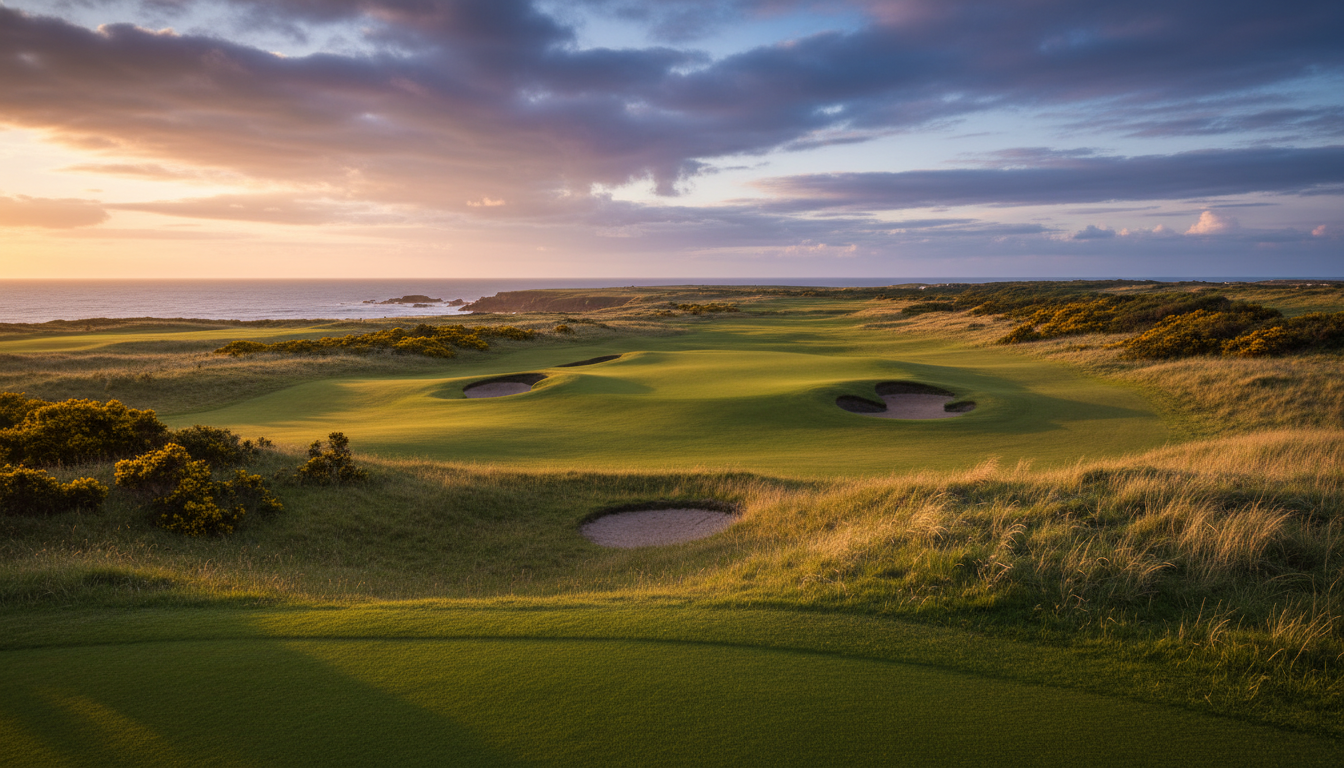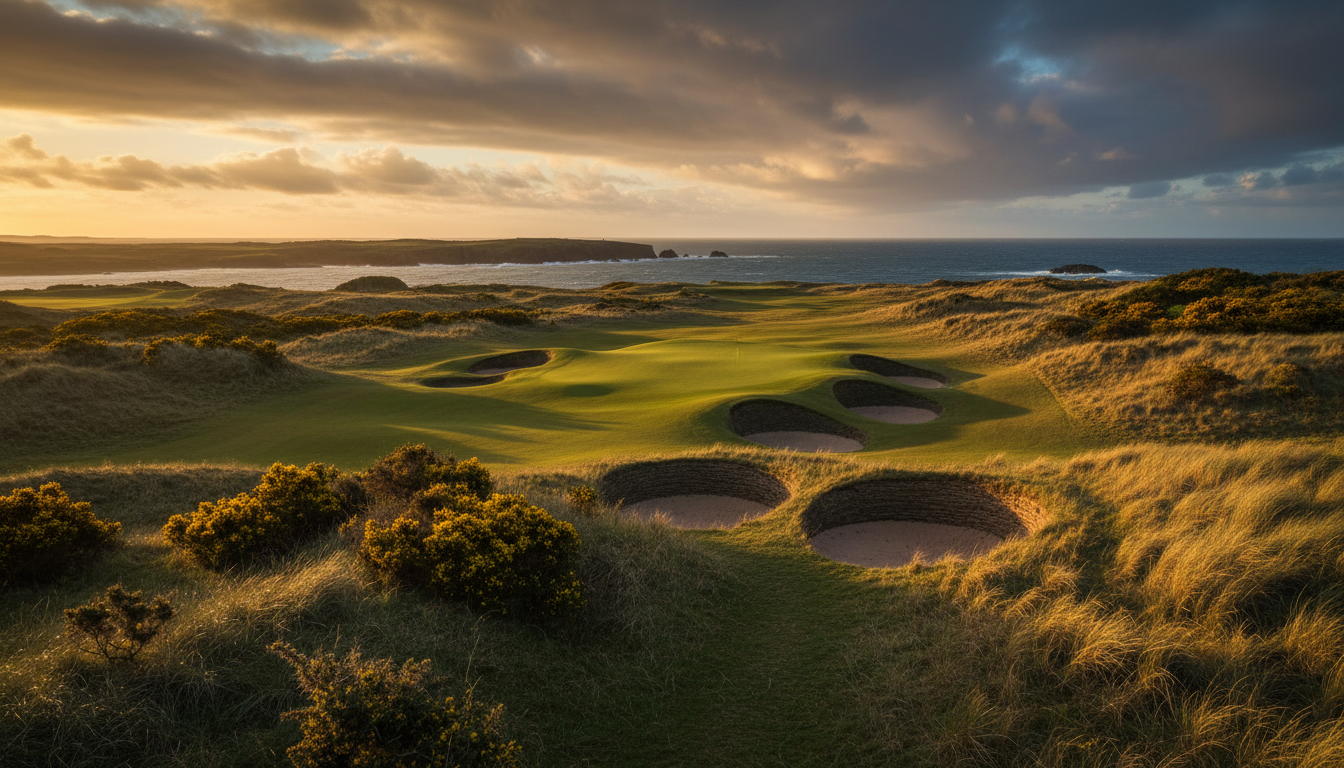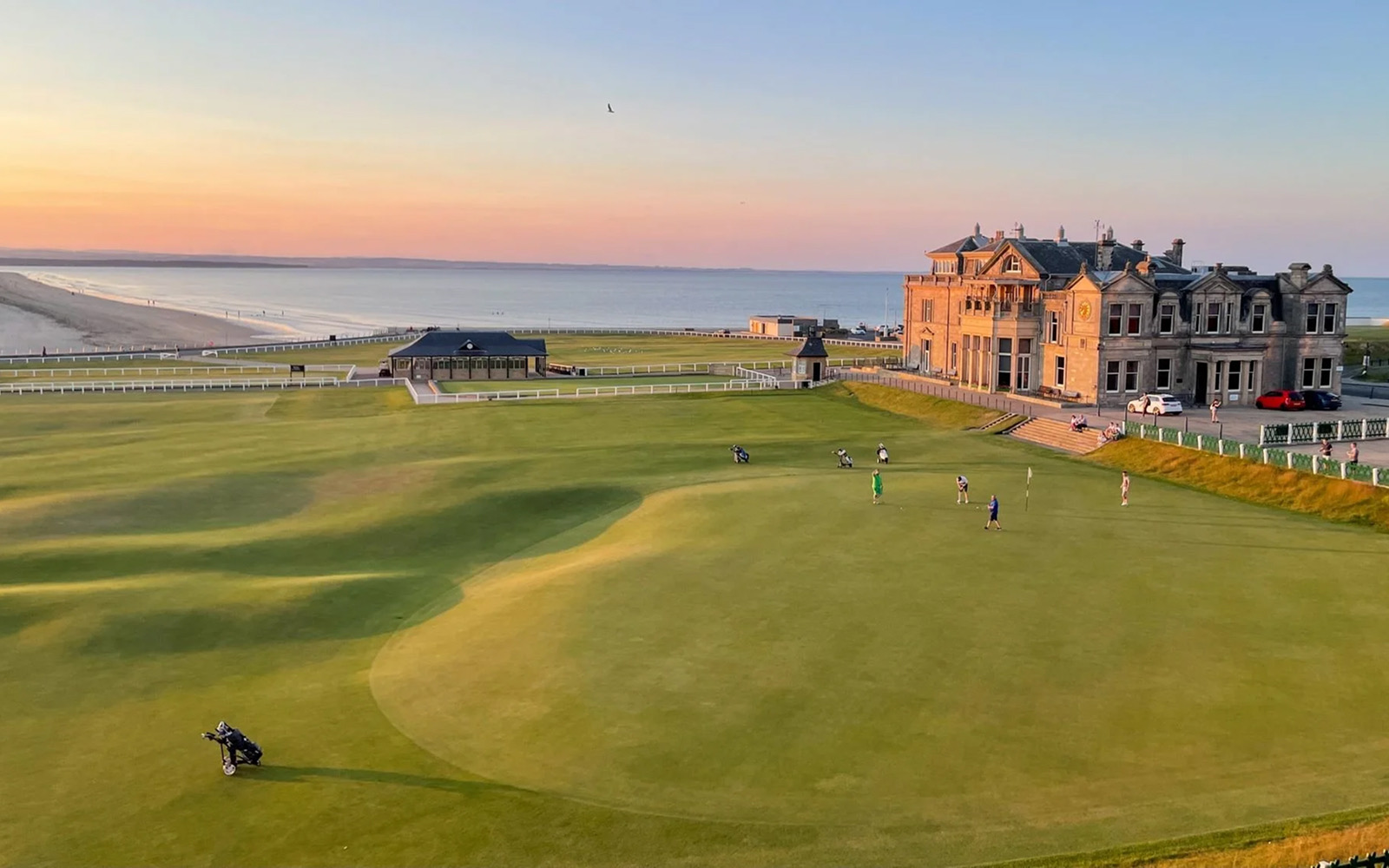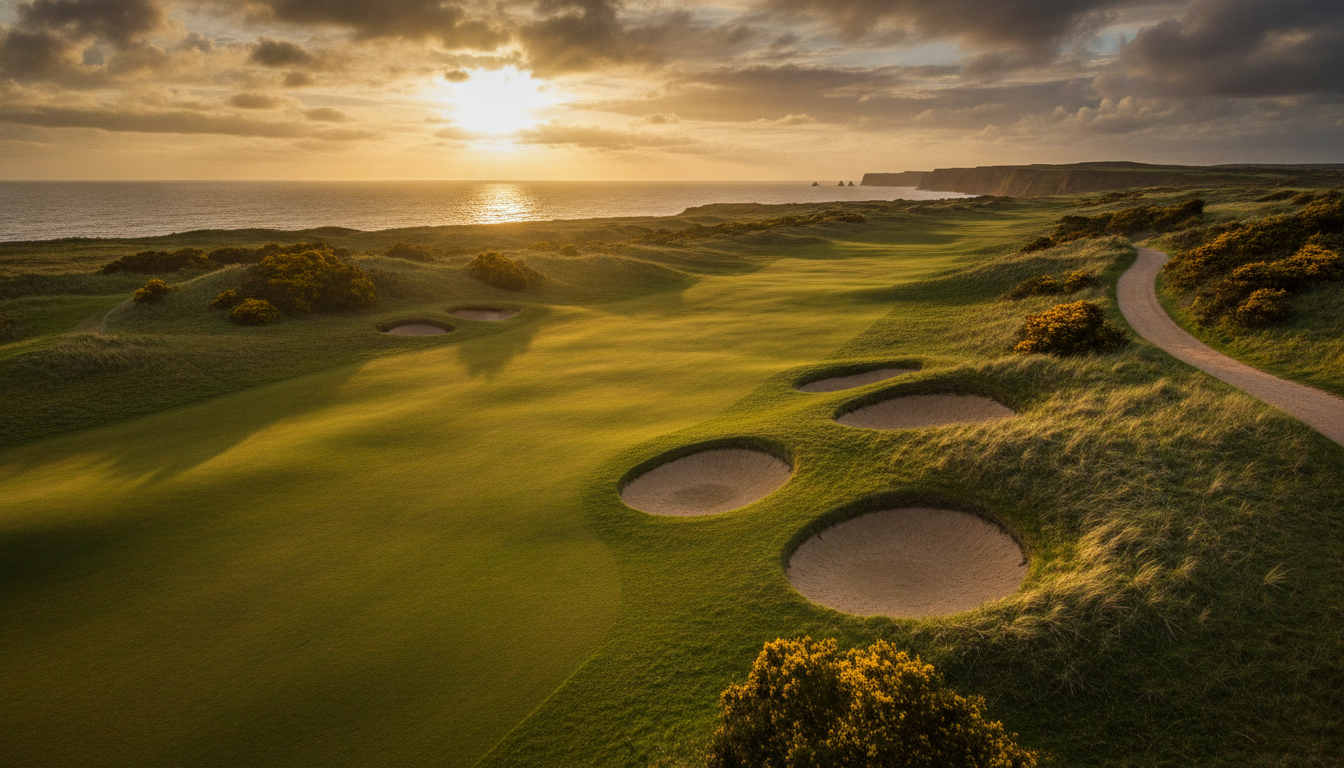


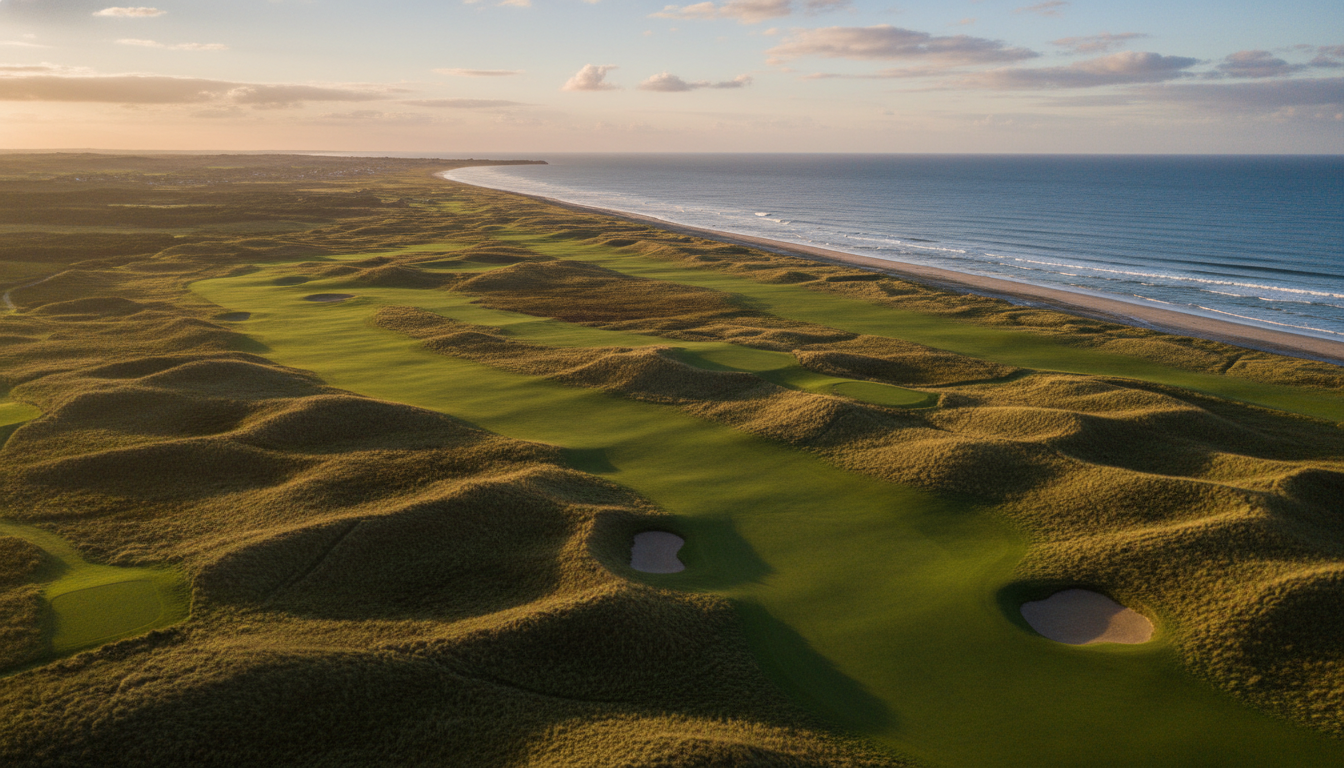
There’s something almost spiritual about standing on the first tee at Royal Dornoch. The vast expanse of linksland rolls out before you along the Dornoch Firth, framed by shimmering waters and gorse-covered hillsides that turn golden each spring. This is Scotland’s northernmost championship links, and what struck me immediately was how remote it feels, how pure the golf experience becomes when you’re this far from the well-trodden paths of St Andrews and other legendary Scottish venues.
I’d argue that Royal Dornoch’s position as the world’s 15th-ranked golf course actually undersells its architectural brilliance. The routing is simply masterful, and the elevated, plateau greens that define the course create shot values that feel both timeless and utterly unique.
History and Design
Golf at Dornoch traces back to 1616, making it the third-oldest recorded golf venue in the world. The club itself was formally established in 1877, when the town’s burghers decided to organize what had been casual play into something more permanent. What I love about Dornoch’s story is the Old Tom Morris connection. In 1886, Morris made the journey north from St. Andrews to extend the links from nine to 18 holes, famously declaring, “there canna be better for gowf.”
Perhaps even more significant is the Donald Ross connection. Ross, born in Dornoch in 1872, served as the club’s greenkeeper and professional before emigrating to America, where he would design over 400 courses including Pinehurst No. 2. The elevated, crowned greens that became Ross’s trademark? He learned that craft right here on his home links.
The course has been refined continuously over the decades, most recently with thoughtful changes to the 7th and 8th holes to future-proof the routing while maintaining the integrity of Morris and Ross’s vision.
Course Layout and Signature Holes
Royal Dornoch plays to 6,799 yards from the tips with a par of 70, which immediately tells you this isn’t about overpowering the golf course. It’s about precision, strategy, and dealing with the ever-present coastal wind that swirls off the Dornoch Firth. The routing begins gently with a 333-yard par-4 opener, but don’t let that lull you into complacency.
The 2nd hole, called “Ord,” is a 184-yard par-3 that introduces you to Dornoch’s defining characteristic: the plateau green. Two deep bunkers guard the front, with a grassy mound between them that funnels mishit shots into either hazard. The green itself sits above the surrounding terrain and slopes back to front, making club selection absolutely critical.
What struck me most about the routing is how it uses the natural elevation changes. The outward nine climbs gradually through the property, while the back nine makes a dramatic turn at the far end. The 14th, “Foxy,” is the signature hole, a 445-yard par-4 that plays along a ridge with bunkers perfectly positioned to catch anything offline. The green complex here is severe, with steep falloffs on all sides, a true test of approach play.
The finishing stretch from 16 through 18 brings you back along the beach, with the cathedral spire of Dornoch visible in the distance. The 17th is a magnificent par-5 where positioning off the tee determines everything about your second shot, and the 18th demands a precise drive between fairway bunkers before a nerve-testing approach to an elevated green.
This documentary explores the rich history and enduring appeal of Royal Dornoch, capturing what makes this remote links such a pilgrimage site for golfers worldwide. The aerial footage beautifully showcases the dramatic coastal setting that defines the entire experience.
What Makes It World-Class
I believe what separates Royal Dornoch from other elite links courses is the sophistication of its green complexes. These aren’t subtle, ground-level targets where the ball can bounce and roll its way on. These are elevated stages that demand aerial precision, yet they’re integrated so naturally into the landscape that they feel inevitable rather than manufactured.
The strategic demands are relentless but fair. Every hole presents clear options: play safe to the fat part of the fairway and leave a longer approach, or challenge the bunkers for a better angle into the green. The greens themselves reward proper angles, penalizing approaches from the wrong side with nearly impossible recovery shots.
What also makes Dornoch world-class is its conditioning. The turf is firm and fast, allowing the ground game to flourish when conditions permit, yet the greens remain receptive enough to hold well-struck irons. The bunkering feels ancient and organic, with steep faces and firm sand that demands precise technique to escape.

Get the Edge on Every Tournament
AI-powered predictions, data-driven analysis, and expert picks delivered before every PGA Tour event.
Try Golf Agent ProPlaying Experience
Playing Royal Dornoch feels like stepping back in time to when golf was simpler, purer, more connected to the land. As a public course, it’s remarkably accessible, though advance booking is essential during peak season. The clubhouse is welcoming without being ostentatious, the kind of place where you can enjoy a post-round whisky while overlooking the 18th green and the firth beyond.
The course’s remoteness is part of its charm. Getting to Dornoch requires commitment, whether you’re driving up from Inverness or flying into the tiny local airport. But that journey feels appropriate for a course of this caliber. You’re not just playing another round of golf; you’re making a pilgrimage.
The challenges are both physical and mental. The wind can make club selection a guessing game, turning a comfortable 7-iron into a hard 5-iron on the same hole from one day to the next. The elevated greens mean that anything slightly mishit will roll back down the slopes, sometimes 20 or 30 yards from the flag. What I loved most was how the course forces you to think strategically, understanding when to play smart percentages versus aggressive angles with every shot.
Notable Tournaments and Moments
Unlike many courses of its stature, Royal Dornoch has never hosted a major championship. Its remote location in the Scottish Highlands makes staging a modern professional event logistically challenging. However, this hasn’t diminished its reputation among the game’s greatest players.
Tom Watson has called it “a natural masterpiece” and ranks it among the finest courses he’s ever played. Ben Crenshaw, another Dornoch devotee, has made multiple pilgrimages and speaks reverently about the course’s strategic brilliance. In the 1960s, American writer Herbert Warren Wind famously wrote, “No golfer has completed his education until he has played and studied Royal Dornoch,” a sentiment that helped put the course on the international map.
The club has hosted several Scottish Amateur Championships and remains a regular stop for serious students of golf architecture. Donald Ross himself returned to Dornoch throughout his life, using his home course as inspiration for his American designs that would define American golf course architecture in the early 20th century.
Visitor Information
Royal Dornoch is a public course, which means any golfer can book a tee time, though advance planning is crucial. Green fees for the Championship Course range from approximately £145 to £200 depending on the season, with twilight rates offering better value for those willing to play later in the day. Full details and booking are available on the official website.
The best time to visit is May through September when daylight extends well into the evening and the weather is most stable. That said, I’d argue that Dornoch in spring or autumn can be magical, with fewer crowds and that golden Highland light that photographers dream about. The club also offers a second course, the Struie, which provides excellent value and serves as either a warm-up or a worthy challenge in its own right.
For accommodation, the town of Dornoch offers several quality options within walking distance of the course. The Dornoch Castle Hotel and Royal Golf Hotel are both convenient, though booking ahead is essential during peak season. If you’re making the journey to the Highlands, consider pairing Dornoch with nearby Brora, another outstanding links just 15 minutes north, or Castle Stuart and Nairn to the south.
The drive from Inverness takes about an hour along scenic Highland roads. Many golfers fly into Inverness and rent a car for maximum flexibility in exploring the region. The journey itself becomes part of the experience, winding through landscapes that feel unchanged for centuries.
Frequently Asked Questions
- Can the public play Royal Dornoch Championship Course?
- Yes, Royal Dornoch is a public course open to all golfers. Green fees range from £145-£200 depending on season, and advance booking is strongly recommended, especially during peak summer months.
- What is the best hole at Royal Dornoch?
- The 14th hole, called Foxy, is widely considered the signature hole. This 445-yard par-4 plays along a ridge with strategic bunkering and an elevated green that demands precision approach play from the proper angle.
- Why is Royal Dornoch ranked so highly?
- Royal Dornoch's world ranking stems from its elevated plateau greens, strategic routing by Old Tom Morris, natural beauty along the Dornoch Firth, and its influence on Donald Ross, who learned greenkeeping here before designing over 400 American courses including Pinehurst No. 2.
- How difficult is Royal Dornoch Golf Club?
- Royal Dornoch is challenging but fair, playing 6,799 yards at par 70. The elevated greens penalize imprecise approach shots, and coastal winds constantly change club selection. Strategic thinking matters more than raw distance.
- What other courses should I play near Royal Dornoch?
- Brora Golf Club is 15 minutes north and offers excellent links golf. Castle Stuart and Nairn are about an hour south near Inverness. Many visitors combine these courses into a Highland golf itinerary over several days.
The Verdict
Royal Dornoch deserves its place among the world’s elite golf courses. Anyone serious about understanding links golf, course architecture, or simply experiencing golf in its purest form should have this course on their bucket list. The journey is worth every mile.
Looking for an edge on the PGA Tour? Golf Agent Pro delivers AI-powered insights for every tournament.