


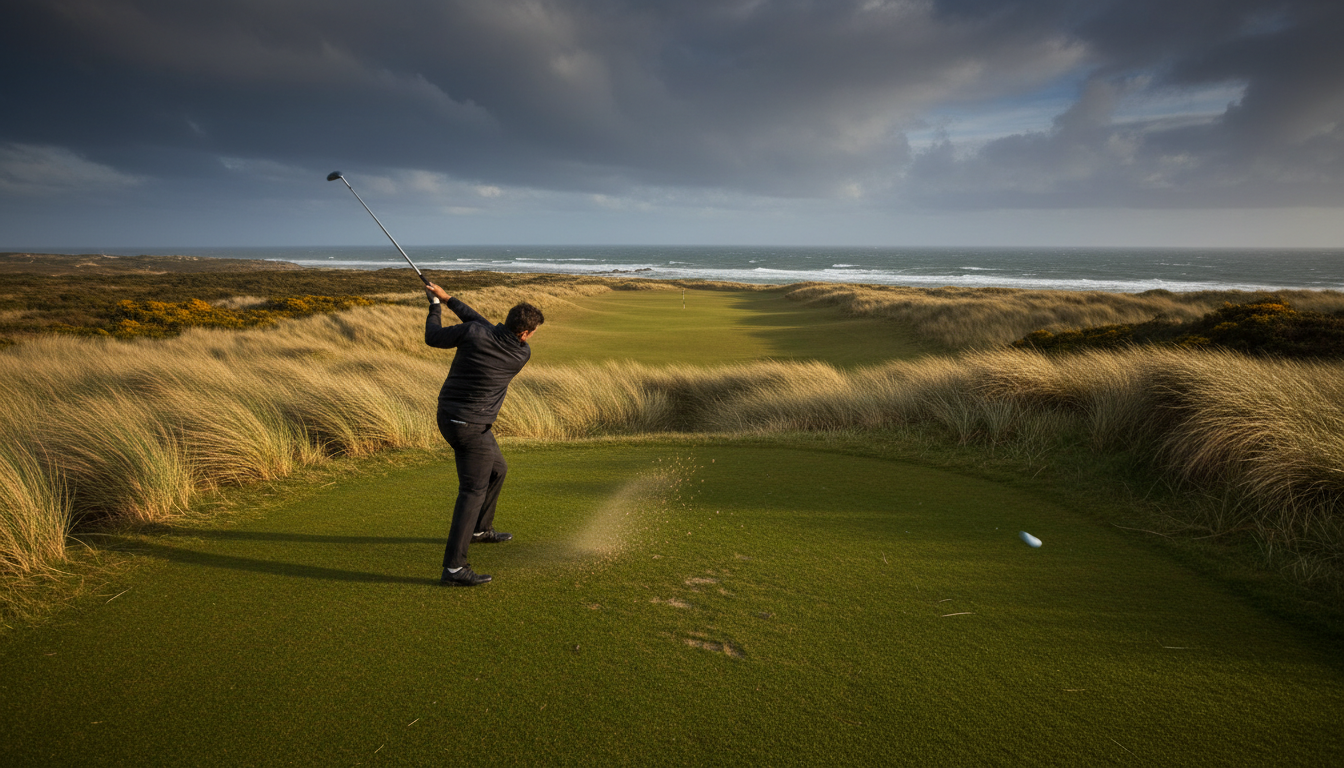
I used to absolutely dread windy days on the golf course. My natural high ball flight would get eaten alive by even a modest breeze, and I’d find myself fighting mother nature on every single shot. The harder I swung, the worse things got.
Here’s what changed everything for me: I stopped trying to overpower the wind and started working with it instead. Once I understood how wind actually affects ball flight and adjusted my strategy accordingly, windy rounds became opportunities rather than disasters.
Why Most Golfers Struggle in the Wind
The biggest mistake I see golfers make in windy conditions is swinging harder. When you grip it and rip it, you’re adding spin to the golf ball, and spin is your absolute worst enemy when it’s gusty out there.
Think about it this way: a ball with 3,000 RPM of backspin will balloon into a headwind, while that same shot with 2,000 RPM will penetrate much better. The wind magnifies every mistake, turning a slight fade into a 30-yard slice or a high draw into a duck hook.
I’ve learned that solid contact matters more in the wind than anywhere else. A well-struck 7-iron will hold its line far better than a poorly struck 6-iron, even though the 6-iron theoretically gives you more distance.
Understanding Wind Direction and Ball Flight
Wind direction completely changes how you should approach each shot. When playing into a headwind, your ball will curve more dramatically. If you normally hit a 10-yard draw, expect it to draw 15-20 yards into a stiff breeze.
Crosswinds are trickier than most golfers realize. A 20-mph wind from the left can push your tee shot 30-35 yards offline, even with a premium golf ball. I’ve found that aiming into the wind and letting it drift the ball back works far better than trying to hold a straight line.
This Titleist instruction video breaks down the key differences between using the wind versus fighting it, which completely changed how I think about crosswind strategy.
Downwind shots are often the most deceptive. The wind will flatten your ball flight and reduce spin, which means less control when the ball lands. I typically take less club and focus on a controlled trajectory rather than trying to maximize distance.
Smart Club Selection for Windy Conditions
My club selection strategy in the wind is simple: take more club and swing easier. If I’m facing a 150-yard shot into a 15-mph headwind, I’m not reaching for my stock 8-iron and swinging hard. Instead, I’ll grab a 6-iron and make a smooth 80% swing.
This approach accomplishes two critical things. First, it reduces spin dramatically, which helps the ball penetrate the wind better. Second, it keeps my tempo smooth and my contact solid, which matters more than pure distance when conditions get tough.
For approach shots into the wind, I’ll often club up two or even three clubs depending on wind speed. A 20-mph headwind can cost you 30-40 yards of carry, and I’d rather hit a smooth 5-iron that finds the green than a forced 7-iron that comes up short.
The Punch Shot: Your Secret Weapon
Learning to hit a proper punch shot transformed my wind game completely. This low, penetrating trajectory cuts through the wind like nothing else, and it’s become my go-to shot in tough conditions.
This video nails the technique for hitting low punch shots, and contrary to popular belief, ball position isn’t the only factor that matters.
Here’s how I set up for a punch shot: I take one extra club, grip down an inch, and position the ball slightly back in my stance. The key is maintaining a smooth tempo and finishing with a lower, abbreviated follow-through. I’m not trying to hood the club dramatically or make some weird manipulation; it’s all about swing path and controlling the finish.
The punch shot isn’t just for iron play either. I’ll use it off the tee with a 3-wood or hybrid when accuracy matters more than distance, especially on tight holes where the wind is howling.

Get the Edge on Every Tournament
AI-powered predictions, data-driven analysis, and expert picks delivered before every PGA Tour event.
Try Golf Agent ProStrategic Course Management in Wind
Course management becomes absolutely critical when the wind picks up. I’ve learned to be much more conservative with my targets, aiming for the fat part of greens rather than tucked pins, especially when the wind is swirling.
One strategy that’s saved me countless strokes: laying back on par 5s when facing a strong headwind. Instead of trying to force a 3-wood into a 25-mph gust, I’ll hit a comfortable iron and leave myself a full wedge into the green. Three smooth shots beat two forced shots and a recovery every single time.
Pay attention to elevation changes too. A shot from an elevated tee will catch more wind than you think, while shots from low areas might be more protected. I always look at trees and flags around the green to gauge wind speed and direction before committing to a club.
Adjusting Your Swing for Windy Conditions
The technical adjustments I make for wind play are subtle but important. I widen my stance slightly for better stability and grip down on the club for more control. My backswing becomes a bit shorter, and I focus on maintaining my balance through impact.
These five tips from Sky Sports Golf cover the essential swing adjustments and mental approach needed for windy conditions.
Tempo is everything. I repeat this to myself constantly on windy days: smooth and controlled beats hard and fast. A 70% swing with solid contact will outperform a 100% swing with poor contact every single time in the wind.
One drill that’s helped me tremendously is practicing with a shorter follow-through. This naturally reduces spin and helps me hit more penetrating shots without having to think about complex swing mechanics during the round.
Ball Position and Stance Width
I make subtle adjustments to my setup based on wind conditions. In strong headwinds, I’ll move the ball back about an inch in my stance, which naturally de-lofts the club and produces a lower launch. The key is not overdoing it; you still want to make solid contact first.
Stance width matters more than most golfers realize in windy conditions. I’ll widen my stance by 2-3 inches to create a more stable base, especially on full swings with the driver. This extra stability helps me maintain my balance when gusts hit during the swing.
Mental Approach and Scoring Strategy
Playing in the wind requires a different mental approach. I’ve learned to accept that bogeys happen more frequently when it’s windy, and that’s okay. The goal isn’t to shoot your best score; it’s to minimize damage and capitalize when conditions favor you.
I think of windy rounds as survival mode. Pars are victories, bogeys are acceptable, and doubles need to be avoided at all costs. This mindset shift keeps me from pressing and making the big mistakes that ruin scores, similar to the disciplined approach required when learning how to break 90 in golf consistently.
Target adjustment is huge mentally. Instead of aiming at the flag, I pick a spot 20 feet right or left that gives me margin for error. Even if the wind pushes my ball around, I’m still on the green with a reasonable putt.
Putting and Short Game Adjustments
Wind affects the short game more than you might think. I’ve learned to keep my chipping and pitching trajectories lower in windy conditions, even if it means running the ball further. A bump-and-run with a 7-iron is often safer than a flop shot with a 60-degree wedge when it’s gusty, which ties into understanding when to use chipping versus pitching shots around the green.
For putting, I focus on firmer strikes that keep the ball on line. Wind can actually move putts, especially longer ones, so I’m not afraid to be aggressive with my speed. A putt that dies at the hole is much more susceptible to wind than one that reaches the back of the cup.
Green reading changes in the wind too. If you’re putting directly into or downwind, expect less break than normal. The ball’s forward momentum fights against gravity’s pull on breaking putts, making proper putting speed control even more critical in these conditions.
Frequently Asked Questions
- How many clubs should I add when hitting into a headwind?
- For every 10 mph of headwind, add roughly one club. A 20 mph headwind might require 2-3 extra clubs depending on shot height. I always err on the side of taking more club and swinging smooth.
- Should I aim into the wind or try to hold it straight in crosswinds?
- I recommend starting the ball into the wind and letting it drift back, similar to playing a breaking putt. Trying to hold a straight ball into a crosswind requires perfect contact and often leads to bigger misses.
- What's the best way to keep the ball low in windy conditions?
- Take more club, grip down slightly, and make a controlled 75-80% swing with a shorter follow-through. Ball position slightly back helps too, but solid contact is more important than extreme adjustments.
- Does wind affect driver distance more than iron shots?
- Yes, because drivers produce higher launch and more spin. A 20 mph headwind can cost 40-50 yards off the tee but only 20-30 yards on a 7-iron. This is why course management becomes so critical in wind.
- How do I adjust my putting stroke in windy conditions?
- Use a firmer stroke to keep the ball on line, especially on longer putts. Wind can move golf balls on the green, so don't be afraid to hit putts with conviction rather than dying them at the hole.
Looking for an edge on the PGA Tour? Golf Agent Pro delivers AI-powered insights for every tournament.