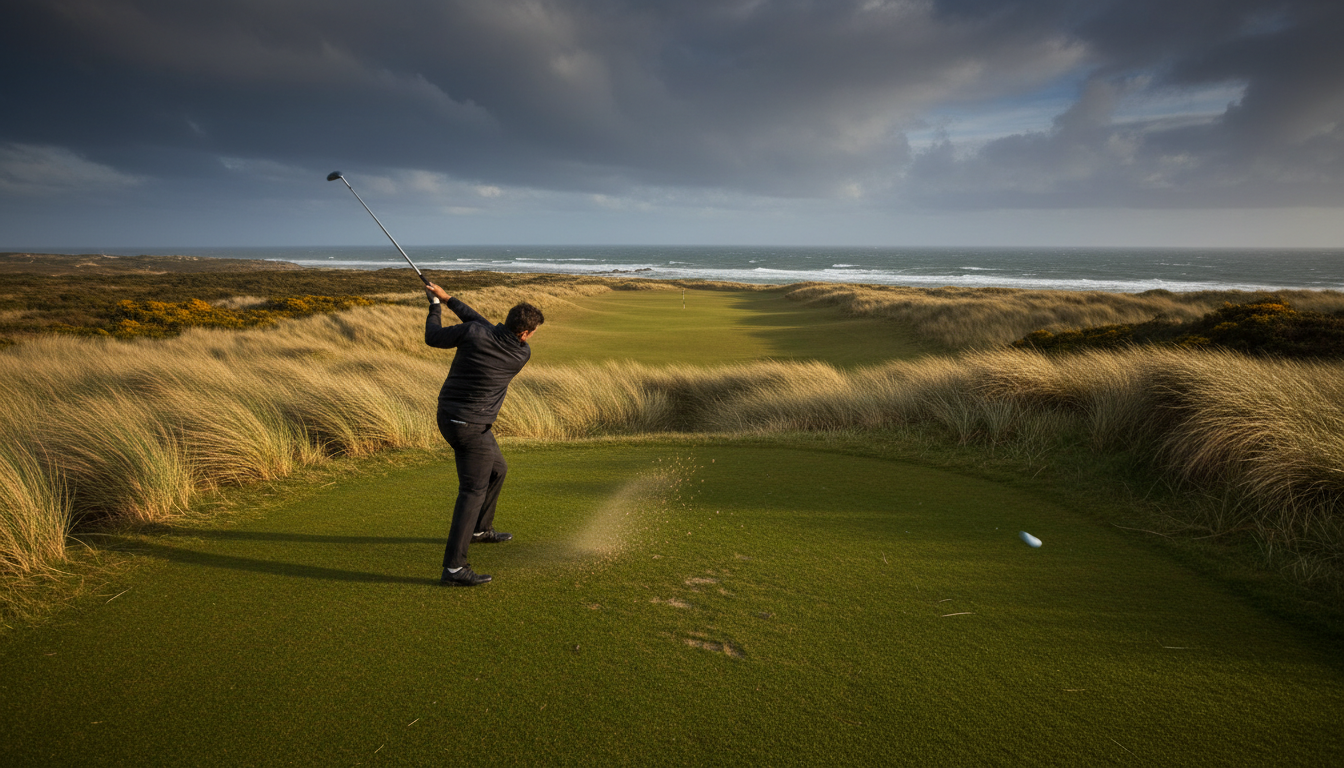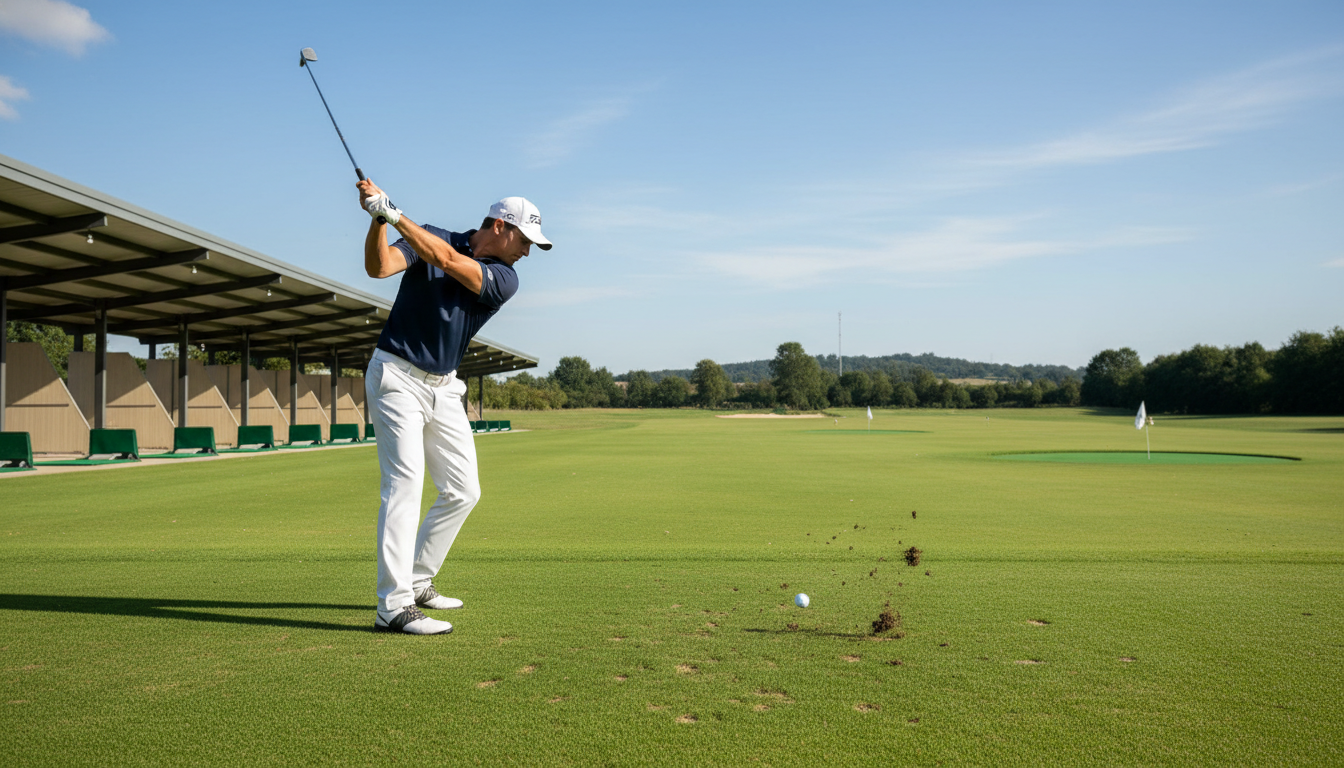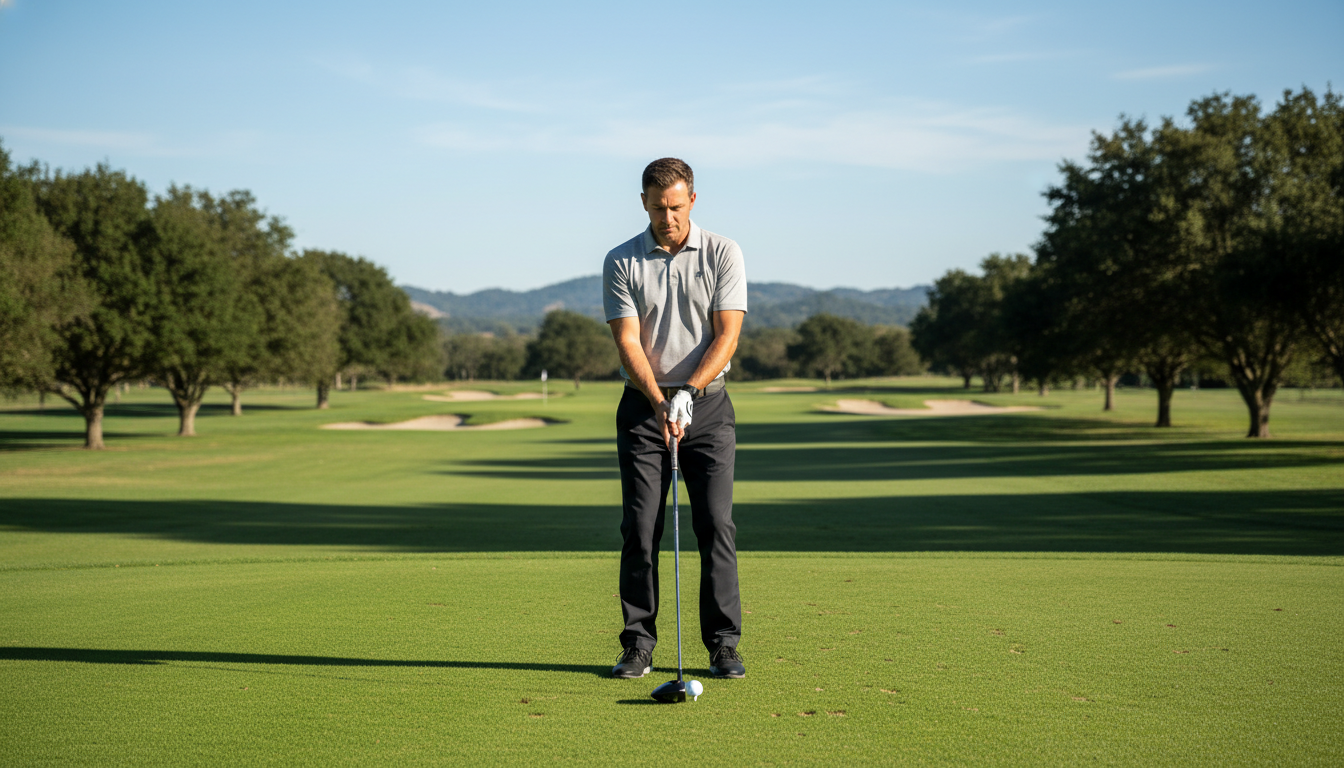



I remember the first time I intentionally shaped a shot around a tree. It felt like I’d unlocked a secret level in golf. For mid handicappers, learning to hit draws and fades on command isn’t just about showing off - it’s about having options when the course demands them.
The truth is, shot shaping becomes much more accessible once you understand the fundamental ball flight laws. I’m going to show you the exact setup and swing changes I use to curve the ball predictably, without the mystery or confusion that typically surrounds this skill.
Understanding the Ball Flight Laws
Every shot shape comes down to two factors: clubface angle at impact and swing path. The ball starts roughly where your clubface points, then curves based on the relationship between face and path. For a draw, you need the face slightly closed relative to your path. For a fade, you need it slightly open.
I’ve found that mid handicappers often overcomplicate this. They try to manipulate their hands or make wild swing changes when really, it’s about making small, deliberate adjustments to setup and feel. The goal is control, not massive curves that look impressive but land in trouble.
Here’s what really matters: consistency. Tour pros like Scottie Scheffler hit gentle fades because they’re predictable. The same principle applies to your game - a reliable 10-yard curve beats an unpredictable 25-yard hook every time.
How to Hit a Reliable Draw
To hit a draw, I start by closing my stance slightly. For right-handers, this means aiming your feet, hips, and shoulders about 10-15 yards right of your target. Keep your clubface aimed at the target itself. This creates the inside-to-out path you need.
Ball position is crucial here. I place it slightly back in my stance compared to my normal position, maybe an inch or so toward my trail foot. This helps me catch the ball with that in-to-out path before the club swings too far left.
Rick Shiels breaks down the setup fundamentals perfectly in this video. The key takeaway is that your body alignment creates the path naturally - you don’t need to consciously swing differently.
During the swing, I focus on feeling like I’m swinging out toward right field (for right-handers). My hands should release naturally through impact, with the toe of the club rotating over the heel. This isn’t forced - it’s what happens when your body is aligned correctly and you make a normal swing.
The Fade Setup and Swing
For a fade, flip everything. I open my stance so my body aims about 10-15 yards left of target while keeping the clubface pointing at the target. This outside-to-in relationship is what produces the left-to-right spin.
I position the ball slightly forward in my stance, toward my lead foot. This catches the ball as the club is swinging more left, enhancing that fade spin. The swing thought I use is to feel like I’m pulling the handle across my body through impact.
The mistake I see most often with fades is golfers opening the clubface too much at address. You want the face open relative to your path, not open to your target line. A slightly open face aimed at your target, combined with an out-to-in path, creates the perfect fade.
One drill I recommend: place an alignment stick or club on the ground pointing at your body line, not your target line. This visual reminds you that your swing follows your body, creating the path difference you need.
Practical Drills for Both Shots
The best drill I’ve found for learning both shots is the “gate drill.” Set up two alignment sticks or clubs creating a gate about three feet in front of your ball. For draws, angle the gate to the right of your target. For fades, angle it left. This forces you to swing through the correct path.
Start with half swings using a 7-iron or 8-iron. I can’t stress this enough - don’t grab driver first. Mid-irons give you immediate feedback without the distance variation that makes it hard to judge your curve. Once you’re consistently curving 5-10 yards, gradually work up to longer clubs.
This video shows you the simplest method I’ve seen for practicing both shots. The key insight is using grip pressure and wrist angles to subtly influence face angle without major swing changes.
Another effective practice method: hit 10 balls alternating between draws and fades. This trains your brain to make the adjustments quickly and builds confidence that you can shape shots on demand, not just when conditions are perfect.

Get the Edge on Every Tournament
AI-powered predictions, data-driven analysis, and expert picks delivered before every PGA Tour event.
Try Golf Agent ProWhen to Use Each Shot Shape
I choose a draw when I need extra distance or I’m facing a dogleg left. The draw’s lower trajectory and extra roll make it perfect for long par 4s or par 5s where you need to maximize distance. It’s also more effective in headwinds because the lower flight penetrates better.
Fades are my choice for tight approach shots or when there’s trouble on the left. The higher trajectory and softer landing make fades ideal for holding greens. On dogleg rights or when the pin is tucked right behind a bunker, a fade is the percentage play.
Wind changes everything, much like playing golf in the wind requires strategic adjustments. In a left-to-right wind, I actually hit a draw to hold it straighter - the wind counters my curve. Same logic with a fade into a right-to-left wind. This is where shot shaping becomes a scoring weapon rather than just a trick.
Common Mistakes to Avoid
The biggest error I see is making the adjustments too extreme. You don’t need to aim 30 yards away from your target or make massive swing changes. Subtle adjustments produce more reliable results. Think 10-15 yards of body aim difference, not extreme angles.
Another mistake: trying to steer or guide the ball. I’ve learned that you still need to commit to the swing. Your setup does most of the work - trust it. Make an athletic, aggressive swing along your body line rather than trying to manipulate the club through impact.
Don’t practice only one shot shape. I alternate between draws and fades in every practice session because being one-dimensional limits your options on the course. Even if you prefer one shot, having both in your arsenal makes you more versatile when the course demands it, particularly when course management strategy becomes critical for scoring.
Finally, expect some misses. Even tour pros don’t shape every shot perfectly. The goal is to have a reliable pattern, not perfection. If your draw occasionally turns into a straight shot, that’s fine - it’s the big misses (hooks and slices) you want to eliminate.
Taking It to the Course
Start incorporating shot shaping on holes where the risk is low. On wide-open par 5s or generous fairways, try shaping your tee shot. This builds confidence without the pressure of needing perfection. I recommend having a “default” shape for trouble situations and only trying the opposite when the reward justifies the risk.
Commit fully to your shot shape before you swing. I pick my shape based on the hole, visualize the flight, make my setup adjustments, and then swing without second-guessing. Indecision kills shot shaping more than poor technique.
Track your results honestly. After a few rounds of deliberately shaping shots, you’ll know which curve is more reliable for you. For most mid handicappers, one shape feels more natural. That’s your go-to shot under pressure - save the other for practice and low-stress situations, especially when working toward goals like breaking 90 in golf.
Frequently Asked Questions
- What's easier to learn first, a draw or a fade?
- Most golfers find fades easier because the open-stance setup feels more natural and the cut spin is similar to the slice pattern many already fight. I recommend starting with a fade, then progressing to draws once you understand the ball flight principles.
- How much should I aim away from my target when shaping shots?
- For mid handicappers, aim your body 10-15 yards away from your target while keeping the clubface pointed at the target. More extreme angles often lead to over-curving and inconsistency. Start conservative and increase as your control improves.
- Can I shape shots with every club in my bag?
- Yes, but it's easier with mid and long irons. Wedges have so much spin that shaping becomes less predictable. Driver and fairway woods shape well once you have the fundamentals down. I suggest mastering 6-iron through 4-iron first.
- Why do my practice range draws not work on the course?
- Range balls often have different spin characteristics than premium balls, and nerves change your swing tempo on the course. Practice with the same balls you play, and start with conservative shapes in low-pressure situations to build real course confidence.
- Should I change my grip to hit draws and fades?
- No, keep your normal grip for consistency. The stance and path changes are enough to shape shots reliably. Changing your grip adds another variable that makes it harder to repeat under pressure. Setup adjustments alone will produce the curves you need.
Looking for an edge on the PGA Tour? Golf Agent Pro delivers AI-powered insights for every tournament.