
Four players share the lead after a suspended first round at THE PLAYERS Championship 2026, with Maverick McNealy, Lee Hodges, Sepp Straka, and Sahith Theegala all posting 5-under 67s at TPC Sawgrass. Play was halted at 6:42 PM EDT with 59-degree temperatures and sustained 17 mph winds making the Stadium Course play firm and fast.
Our data-driven preview for THE PLAYERS Championship 2026 highlighted how extreme winds (17-37 mph forecasted) would turn this into survival golf. Round 1 delivered exactly that narrative, with only 20 players breaking par and the scoring average hovering around 73.
Round 1 Recap
McNealy’s round was powered by a scorching +2.00 strokes gained putting, the best mark among the leaders. He gained +1.17 off the tee and added +1.76 approaching the green, proving the DataGolf model’s course fit projection accurate. The model had him at +1.27 predicted strokes gained for the week, and he delivered that plus interest in one round.
Sahith Theegala produced the ball-striking clinic of the day, gaining +3.89 strokes approaching the green - the single best approach performance in Round 1. He hit 77.8% of greens in regulation and scrambled at 100% when he missed. That combination is deadly at Sawgrass, where premium approach play separates contenders from survivors.
The surprise of the leaderboard? Lee Hodges gaining +4.00 strokes putting, the highest putting mark of anyone under par. Hodges hit just 66.7% of greens but converted 85.7% of his scrambling opportunities. That’s the formula for surviving TPC Sawgrass in wind.
Justin Thomas sits one back at -4 after gaining +2.56 on the greens. Russell Henley joins him at -4, gaining +2.78 putting - the highest putting total among players inside the top 10. Cameron Young posted identical -4 scoring but did it differently, gaining +3.81 approaching the green while barely breaking even on the greens (+0.13).
The names at -3 tell the real story of this championship. Ludvig Åberg, Tommy Fleetwood, Viktor Hovland, and Xander Schauffele all sit at 69, exactly where you’d expect elite ball-strikers to settle on a firm, windy day at Sawgrass.
By the Numbers
The strokes gained data from Round 1 reveals who survived and who thrived. Austin Smotherman (T1, -5) led all players with +6.19 total strokes gained, powered by a +3.37 approach performance. That’s a top-5 skill on full display.
Xander Schauffele’s -3 (69) came with the day’s most volatile strokes gained profile: -1.42 off the tee but +5.12 approaching the green. He hit 77.8% of greens despite finding just 35.7% of fairways. That’s elite iron play compensating for wayward driving.
Corey Conners (+4.12 SG:Total) gained +3.05 approaching and +1.87 off the tee but lost -1.23 putting. He hit 77.8% of greens and 85.7% of fairways - the best ball-striking combination in the field - but three-putted his way to just -3.
Viktor Hovland’s -3 came with the strangest profile of the day: +3.57 strokes gained around the green despite hitting just 44.4% of greens. He scrambled at 90.9% and turned potential disaster rounds into a respectable opening score.
The putting surface showed its teeth. Russell Henley (+2.78 SG:Putting) and Lee Hodges (+4.00) feasted while elite putters struggled. The firm greens and 17 mph winds made speed control brutal.
Hole difficulty data confirms what Jamie Anderson predicted in our Wednesday preview - par 4s murdered the field. Hole 9 averaged 4.934 strokes (just 0 eagles, 30 birdies), and Hole 11 matched it at 4.934. Those two holes alone cost the field nearly two full strokes relative to par.
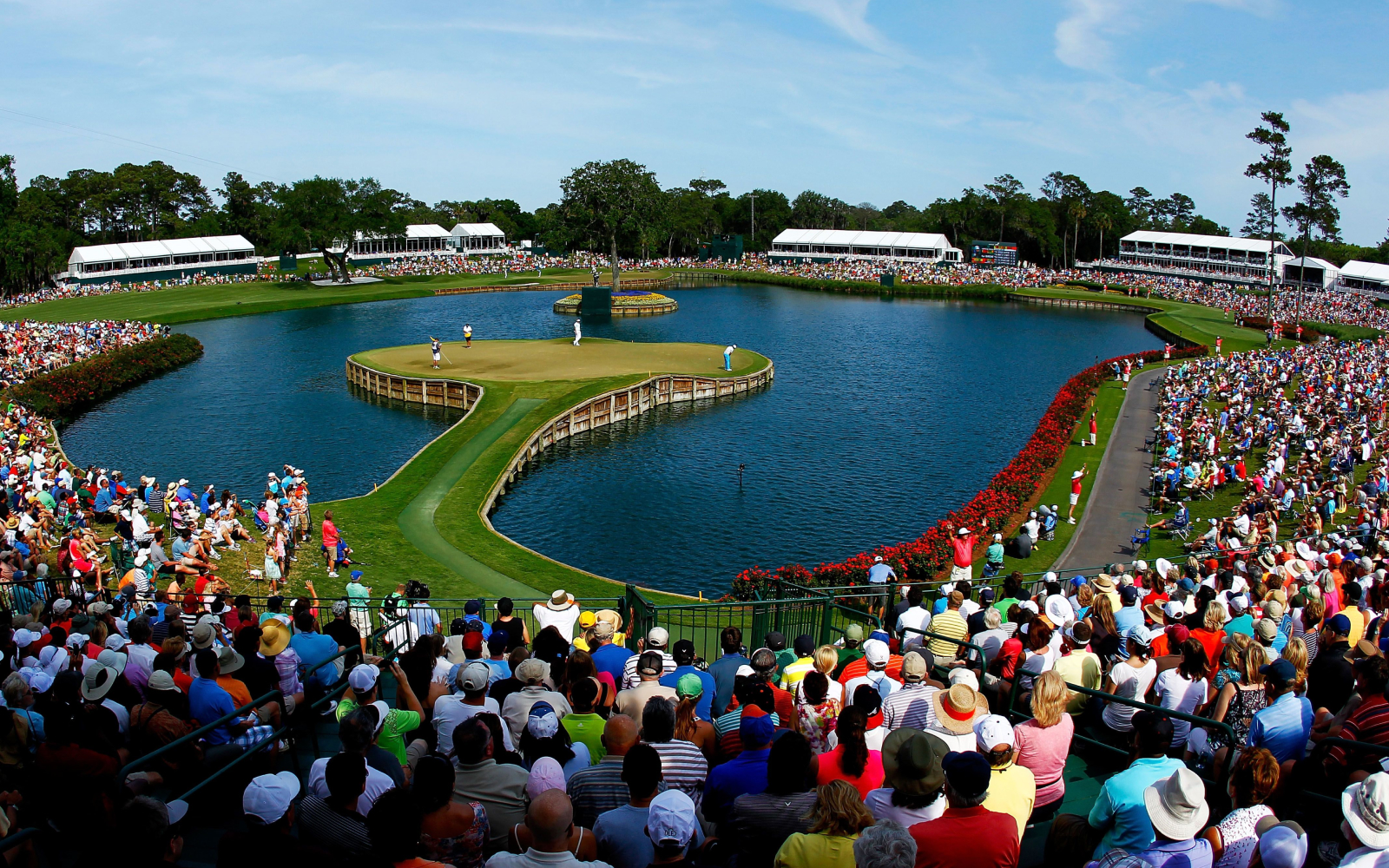
The famous island-green 17th hole? Played as the second-easiest hole at 3.328 average. Players took dead aim with the wind down, producing 11 birdies and 13 double-bogeys-or-worse. Classic risk-reward Sawgrass chaos.
Model vs. Reality
The DataGolf pre-tournament model had Scottie Scheffler at 12.0% win probability, far ahead of Rory McIlroy at 6.1%. Scheffler posted even-par 72, gaining just +1.50 total strokes (career baseline: +2.85). His course fit was projected at -0.08, suggesting Sawgrass doesn’t perfectly suit his game. Round 1 confirmed it.
Collin Morikawa withdrew before the round with an injury, removing a key win probability from the field. That opened the door for players the model liked but didn’t love.
Maverick McNealy entered with 2.0% win probability (11th in the field). After posting 67 and gaining +6.12 strokes, the live model now gives him 9.1% to win - a massive jump to second-favorite behind Russell Henley (9.3%). That’s a 4.5x increase in win probability after one round.
Cameron Young pre-tournament: 3.0% win probability (6th). After R1 at -4: 6.9% to win (3rd). His +3.81 approach performance validated the model’s course fit projection of +1.52 predicted strokes gained.
Tommy Fleetwood pre-tournament: 2.4% to win (9th). After R1 at -3: 6.5% to win (4th). His +1.43 off the tee and +1.75 approach numbers align with his +1.74 predicted course performance.
The biggest surprise? Sahith Theegala moved from 1.6% pre-tournament win probability to 4.8% post-R1 despite being tied for the lead. The model still doesn’t fully buy his profile at Sawgrass, even after gaining +6.12 strokes. His DraftKings odds moved from +3500 to +1850, but the DataGolf algorithm suggests he’s still overpriced.
Sepp Straka entered at 1.5% win probability and sits at 5.5% after R1. His +2.27 around the green and +2.06 approach performance were elite, but the model projects regression. His FanDuel odds (currently +1400) suggest the market believes more than the algorithm does.

Get the Edge on Every Tournament
AI-powered predictions, data-driven analysis, and expert picks delivered before every PGA Tour event.
Try Golf Agent ProWeekend Outlook
The projected cut line sits around +1 or +2, which is standard for THE PLAYERS but represents survival golf in these conditions. Only 20 players broke par in Round 1, and I expect similar scoring Friday if the wind sustains.
The DataGolf course fit model emphasized approach play and scrambling as the two skills that matter most at Sawgrass. Round 1 confirmed it. Sahith Theegala (+3.89 APP), Cameron Young (+3.81 APP), and Xander Schauffele (+5.12 APP) led all players under par in approach play. That’s not coincidence.
What I found interesting: the best drivers gained the most strokes off the tee, but accuracy didn’t correlate with scoring. Ludvig Åberg hit 78.6% of fairways and gained +2.50 off the tee. Maverick McNealy hit just 35.7% of fairways but still gained +1.17 off the tee. At Sawgrass, distance and scrambling ability matter more than fairway percentage.
The putting surfaces will firm up even more over the weekend if weather holds. Friday’s forecast shows similar 17 mph winds and temperatures in the low 60s. That means players who can control trajectory and spin will continue to separate.
I think this matters because the par 4s are playing nearly half a shot over par. Holes 2, 9, and 11 averaged between 4.86 and 4.93 strokes in Round 1. Players who can attack par 5s (12, 16) and par 3s (13, 17) will build separation while others bleed strokes on par 4s.
The model identifies three statistical trends that matter for the weekend, much like the strokes gained metrics that consistently predict PGA Tour winners: elite approach players who can hold firm greens, scrambling specialists who can convert 70%+ around the greens, and players with positive course history at Sawgrass. Those three factors separated -5 from +5 in Round 1.
This PGA TOUR highlights package shows exactly what firm, fast conditions look like at tournament venues. The same trajectory control and distance management apply at TPC Sawgrass this week. Pay attention to how players who flight their irons lower and prioritize spin control score better in wind.
Players to Watch
Russell Henley’s statistical profile screams weekend contender. He gained +5.12 total strokes in R1 with elite putting (+2.78) and solid approach play (+1.25). His course fit projection (+1.81 predicted SG) ranked 5th in the field, and his course history (1 top-5 at Sawgrass) suggests comfort. The DataGolf model now gives him 9.3% win probability, the highest in the field. His bet365 odds sit at +830, which represents value if you believe the model.
Cameron Young fits every statistical trend the DataGolf algorithm values at Sawgrass. His +3.81 approach performance in R1 led all players at -4 or better. He hit 77.8% of greens despite finding just 50% of fairways, proving he can score from anywhere. His pre-tournament course fit (+1.52 predicted SG) ranked 9th in the field. The model gives him 6.9% to win (3rd), but his BetMGM odds (+1275) suggest the market hasn’t fully adjusted.
Tommy Fleetwood’s R1 performance (+4.12 SG:Total) came with elite ball-striking: +1.43 off the tee, +1.75 approach, +1.24 around the green. He’s lost just -0.29 putting, suggesting positive regression if he can even break even on the greens. His course fit projection (+1.74) ranked 6th in the field, and his Caesars odds (+1250) represent significant value at 6.5% DataGolf win probability.
Xander Schauffele’s +5.12 approach performance was the single best iron display among players inside the top 15. He hit 77.8% of greens despite missing 64.3% of fairways. That’s exactly the skill profile that wins at Sawgrass when greens firm up. The model gives him just 3.5% to win despite sitting at -3, suggesting his FanDuel odds (+1850) might be overvaluing his position.
The model flagged three players outperforming their pre-tournament projections with statistical profiles that historically correlate with strong weekend finishes. These are ball-strikers who scramble well and have shown positive course history trends.
Get the Full Analysis
Want to see which players the model identified as value plays before odds shifted? Golf Agent Pro provides model-driven projections, strokes gained breakdowns, and weekend outlooks for every PGA Tour event. The app updates live after each round with adjusted win probabilities and value angles the market hasn’t priced in yet.