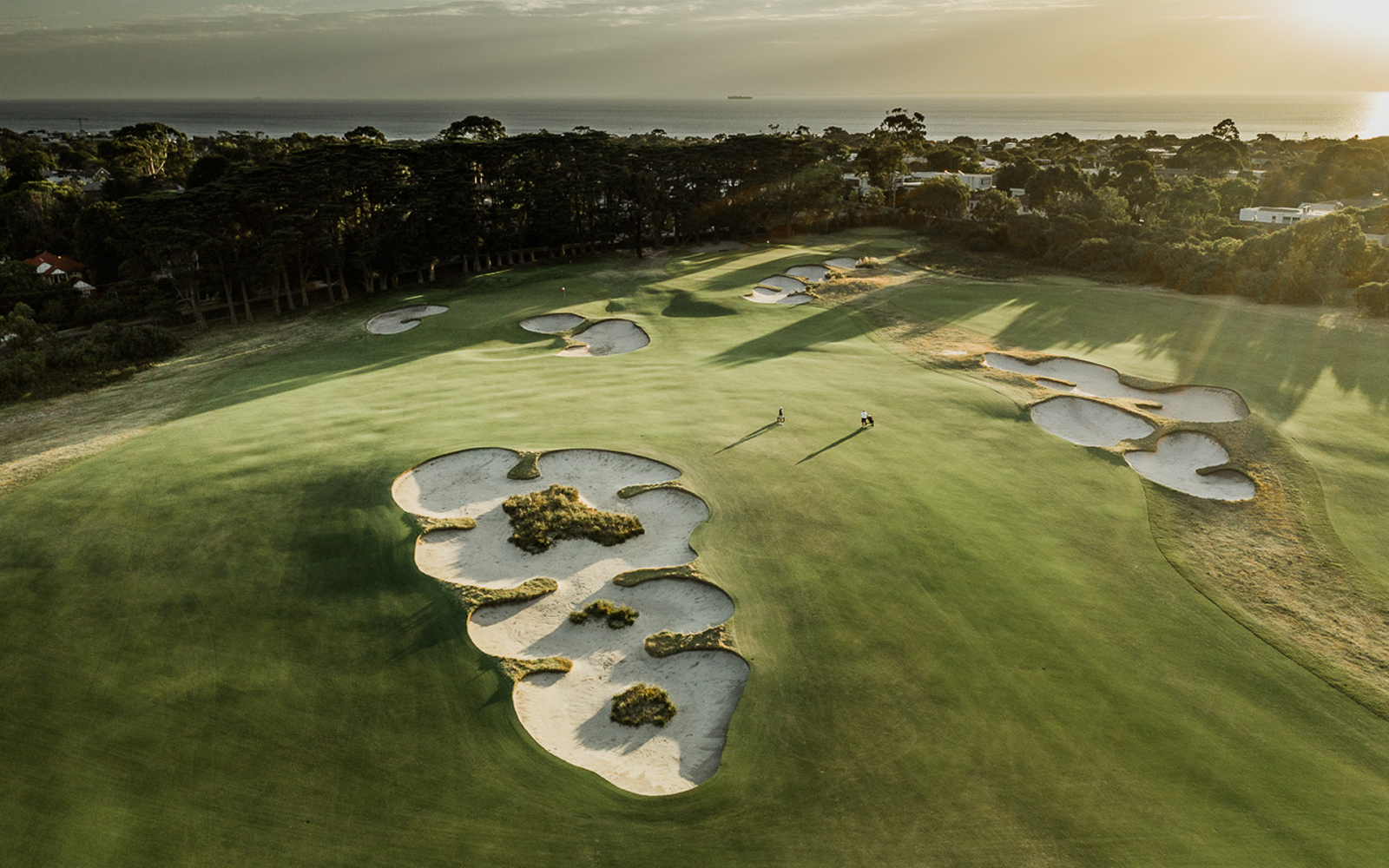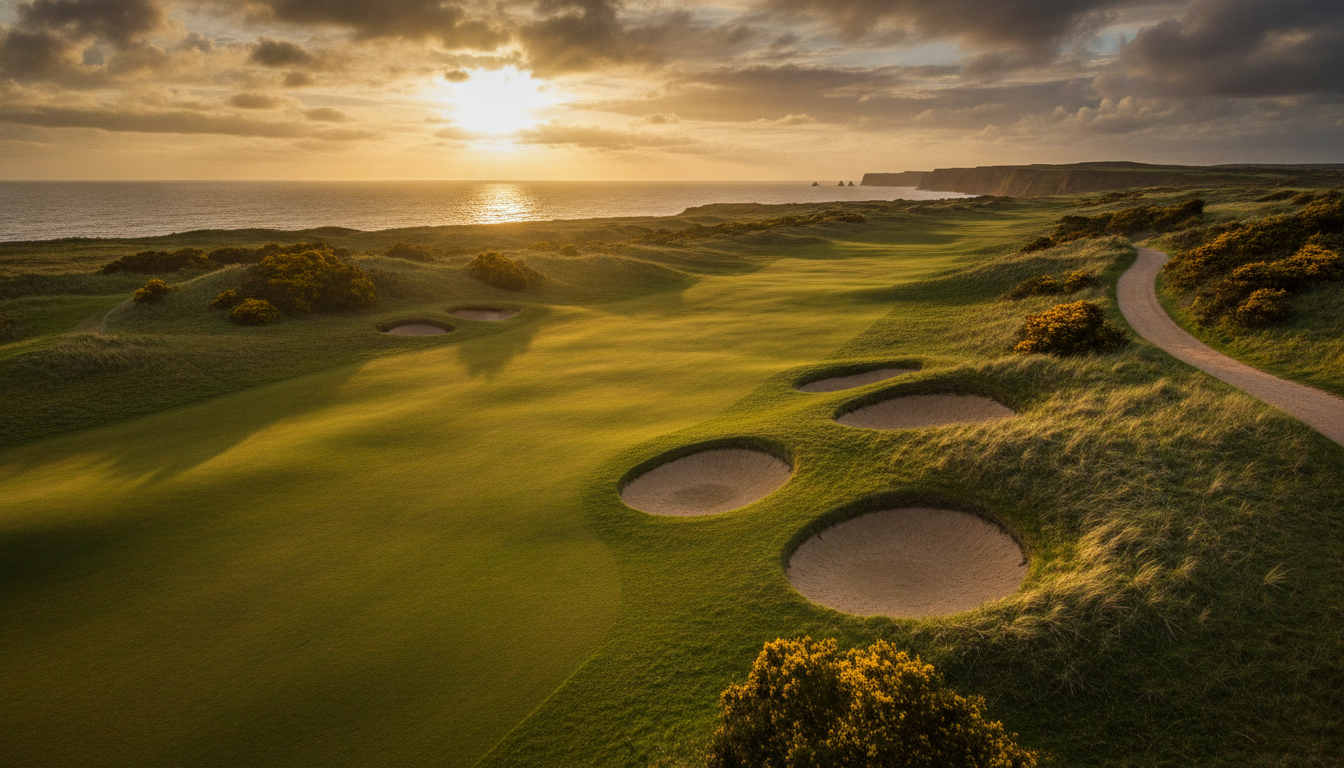

Standing on the first tee at Kingston Heath Golf Club, you immediately sense you’re somewhere special. The crisp morning air carries that distinct sandbelt feel, the turf beneath your feet firm and fast, the vista ahead revealing strategic bunkering so artfully placed it belongs in a museum. This is golf architecture at its absolute finest, a course that many Australians will quietly tell you surpasses even its celebrated neighbor, Royal Melbourne.
What struck me most about Kingston Heath is how it achieves greatness through subtlety rather than spectacle. There are no dramatic elevation changes, no ocean vistas, no stadium holes designed for television. Instead, you get 18 holes of pure strategic golf where every shot demands thought, where the ground game is not just an option but often the smartest play, and where the greens and bunkers work in perfect harmony to reward precision and punish the careless.
History and Design
Kingston Heath’s story begins in 1909, though not at its current home. The club originally formed as Elsternwick Golf Club on flat, swampy ground that quickly proved unsuitable for championship golf. In 1923, the membership made a bold decision, purchasing market garden land in Cheltenham in Melbourne’s emerging Sandbelt region. By 1925, play had commenced on the new property, and the club was rechristened Kingston Heath.
The original layout was designed by Des Soutar, but the course’s transformation into a masterpiece came in 1928 when Dr. Alister MacKenzie arrived in Australia. Fresh from his work on Royal Melbourne’s West Course, MacKenzie was paid 250 pounds to redesign Kingston Heath’s bunkering and convert the 15th hole into a par three. That investment proved to be one of the best bargains in golf history.
MacKenzie’s influence permeates every corner of the course, from the strategic placement of hazards to the subtle undulations in the greens. His philosophy of rewarding thoughtful play while penalizing the reckless found perfect expression on Kingston Heath’s sandy canvas. The course has undergone various refinements over the decades, but MacKenzie’s architectural DNA remains intact, a testament to the timelessness of great design.
Course Layout and Signature Holes
Kingston Heath measures 6,840 yards from the championship tees, playing to a par of 72. The yardage might seem modest by modern standards, but distance is largely irrelevant here. This is a course where strategy trumps strength, where angles matter more than power, and where the smartest players invariably post the best scores.
The opening hole, a 417-yard par four, sets the tone immediately. The fairway is generous, but MacKenzie’s bunkers create clearly defined lines off the tee. Play safely left and you face a longer approach over fronting bunkers; challenge the right side bunkers and you’re rewarded with a shorter, more favorable angle. It’s a brilliant introduction to the strategic choices that define every hole.
The par-three 15th hole, MacKenzie’s converted masterpiece, is simply one of Australia’s greatest par threes. At just 155 yards, it appears straightforward until you study the green complex. Sandy waste areas and cavernous bunkers surround a small, sloping putting surface that demands precision. The hole can play anything from a wedge to a long iron depending on wind and pin position, and even professionals treat it with profound respect.
I’d argue the stretch from the 12th through 16th represents one of the finest five-hole sequences in world golf. Each hole presents distinct challenges, the routing flows naturally across the property, and the strategic options multiply with every shot. The 14th, a drivable par four of just 303 yards, tempts the bold but severely punishes the wayward with deep bunkers and a wickedly contoured green.
What Makes It World-Class
Kingston Heath’s #17 world ranking reflects a rare combination of architectural brilliance and impeccable presentation. The course consistently ranks as one of the fastest and firmest in the world, conditions that allow MacKenzie’s strategic design to function exactly as intended. The greens run at championship speeds year-round, the fairways provide true bounce, and the bunkers remain deep and penal.
What separates Kingston Heath from other elite courses is the completeness of the design. There are no weak holes, no awkward transitions, no moments where the architecture feels forced. The bunkering alone deserves study, with each hazard placed not just aesthetically but to create specific strategic options and consequences. I’ve never seen such beautiful bunkering work in perfect harmony with natural landforms.
The course’s relatively small footprint, approximately 125 acres, forces the routing to maximize every available acre. Rather than feeling cramped, the layout feels intimate and focused, with holes playing in multiple directions to create variety in wind conditions. The sandy subsoil provides the perfect canvas for firm-and-fast conditions, allowing shots to release and roll in ways rarely experienced on most modern courses.

Get the Edge on Every Tournament
AI-powered predictions, data-driven analysis, and expert picks delivered before every PGA Tour event.
Try Golf Agent ProPlaying Experience
Playing Kingston Heath as a guest immediately makes you feel like an honorary member, not a visitor. The bag tags literally say “Honorary Member” rather than “Guest,” and that welcoming spirit extends through every interaction. The clubhouse radiates understated elegance without pretension, a gathering place for prominent business families and influential politicians who share a passion for great golf.
The course demands your full attention from the first tee to the final green. Strategic thinking is paramount; simply hitting driver everywhere won’t work here. I found myself constantly weighing risk versus reward, studying angles, considering where to miss, and appreciating how smart course management strategy opens up options unavailable through pure aerial assault.
Kingston Heath is a private members club with limited visitor access, typically arranged through member introduction. The exclusivity adds to the sense of occasion when you do play, making every round feel special. The conditioning is nothing short of spectacular, with turf quality that rivals any course in the world and attention to detail that extends to every corner of the property.
Walking these fairways in the footsteps of champions, you understand why Australian golfers hold this course in such reverence. The atmosphere encourages thoughtful golf, the pace of play flows naturally, and the entire experience feels timeless. You can still see the market garden furrows across the first and sixth fairways with clever lighting, a charming reminder of the land’s agricultural past.
Notable Tournaments and Moments
Kingston Heath has hosted the Australian Open seven times, including memorable editions that showcased the course’s ability to challenge the world’s best players. The 2009 Australian Open saw Stuart Appleby capture victory on a course he reveres, his local knowledge and strategic thinking overcoming a world-class field. The tournament returned in 2016, with Rodger Davis winning in dramatic fashion.
The course has also hosted multiple Australian Masters championships, Australian PGA Championships, and countless state and national amateur events. These tournaments consistently produce scoring averages that remind modern professionals that strategic design can defend par without resorting to extreme length. Even with today’s equipment and athletic players, Kingston Heath demands respect.
What makes Kingston Heath’s tournament history particularly notable is how the course plays differently under championship conditions. When the greens get extra firm and fast, when hole locations push into tight corners, the strategic options narrow and the penalties for poor execution multiply. The 15th hole, in particular, has produced countless dramatic moments when championships hang in the balance.
Australian golf legends including Norman Von Nida, Peter Thomson, and Greg Norman all have deep connections to Kingston Heath. Thomson, one of golf’s great strategic minds, frequently cited the course as the standard by which all others should be judged, particularly in terms of how architecture and conditioning combine to reward intelligent play.
Visitor Information
Access to Kingston Heath requires a member introduction, making advance planning essential for international visitors hoping to play. Some specialized golf tour operators maintain relationships that can facilitate rounds for traveling golfers, though availability is never guaranteed. Full details about the club and its facilities are available on the official website.
The best time to visit Melbourne’s Sandbelt is during the Australian spring and autumn (October-November or March-May), when temperatures are mild and conditions typically firm and fast. Summer rounds are possible but can be extremely hot, while winter brings cooler temperatures and occasionally softer conditions.
For golfers unable to secure access to Kingston Heath, the neighboring Sandbelt courses offer world-class alternatives. Royal Melbourne, Metropolitan, Victoria, and Commonwealth all provide spectacular golf in the same distinctive style. Several excellent public and resort options exist in the broader Melbourne area, including Thirteenth Beach, The Dunes, and The National Golf Club’s three championship courses.
In 2023, Kingston Heath added “The Furrows,” a superb 9-hole short course designed by Ogilvy Clayton Cocking Mead that provides members and guests an additional world-class experience on property. The short course pays homage to the land’s agricultural heritage while showcasing the same architectural excellence that defines the championship layout.
This video explores Melbourne’s incredible golf scene and why many consider it the world’s greatest golf destination. You’ll see what makes the Sandbelt courses so special and understand Kingston Heath’s place in this celebrated collection of championship layouts.
The Verdict
Kingston Heath Golf Club deserves its place among the world’s elite courses through the perfect marriage of strategic architecture and impeccable presentation. For serious students of golf course design, for players who value thinking over power, and for anyone who appreciates firm-and-fast conditions that make the ground game relevant, this is essential bucket-list golf that will change how you think about the game.
Frequently Asked Questions
- Can the public play Kingston Heath Golf Club?
- No, Kingston Heath is a private members club that requires a member introduction for access. Some specialized golf tour operators can occasionally arrange rounds, but availability is limited and advance planning is essential.
- What is the best hole at Kingston Heath?
- The 15th hole, a 155-yard par three designed by Alister MacKenzie, is widely considered one of Australia's greatest short holes. Its deceptive simplicity, dramatic bunkering, and severely contoured green make it both beautiful and demanding.
- How does Kingston Heath compare to Royal Melbourne?
- Both courses rank among the world's finest and share similar Sandbelt characteristics and MacKenzie influence. Many Australian golfers consider Kingston Heath equal or even superior to Royal Melbourne, though both provide world-class strategic golf on firm, fast conditions.
- When was Kingston Heath designed?
- The course opened in 1925 on its current site, designed by Des Soutar. Dr. Alister MacKenzie redesigned the bunkering and converted the 15th hole to a par three in 1928, creating the masterpiece that exists today.
- What makes Kingston Heath's conditioning so special?
- The sandy subsoil of the Melbourne Sandbelt provides perfect drainage and allows the course to maintain firm, fast conditions year-round. The club's commitment to championship presentation means the greens run at elite speeds and the fairways provide true bounce that rewards strategic play.
Looking for an edge on the PGA Tour? Golf Agent Pro delivers AI-powered insights for every tournament.