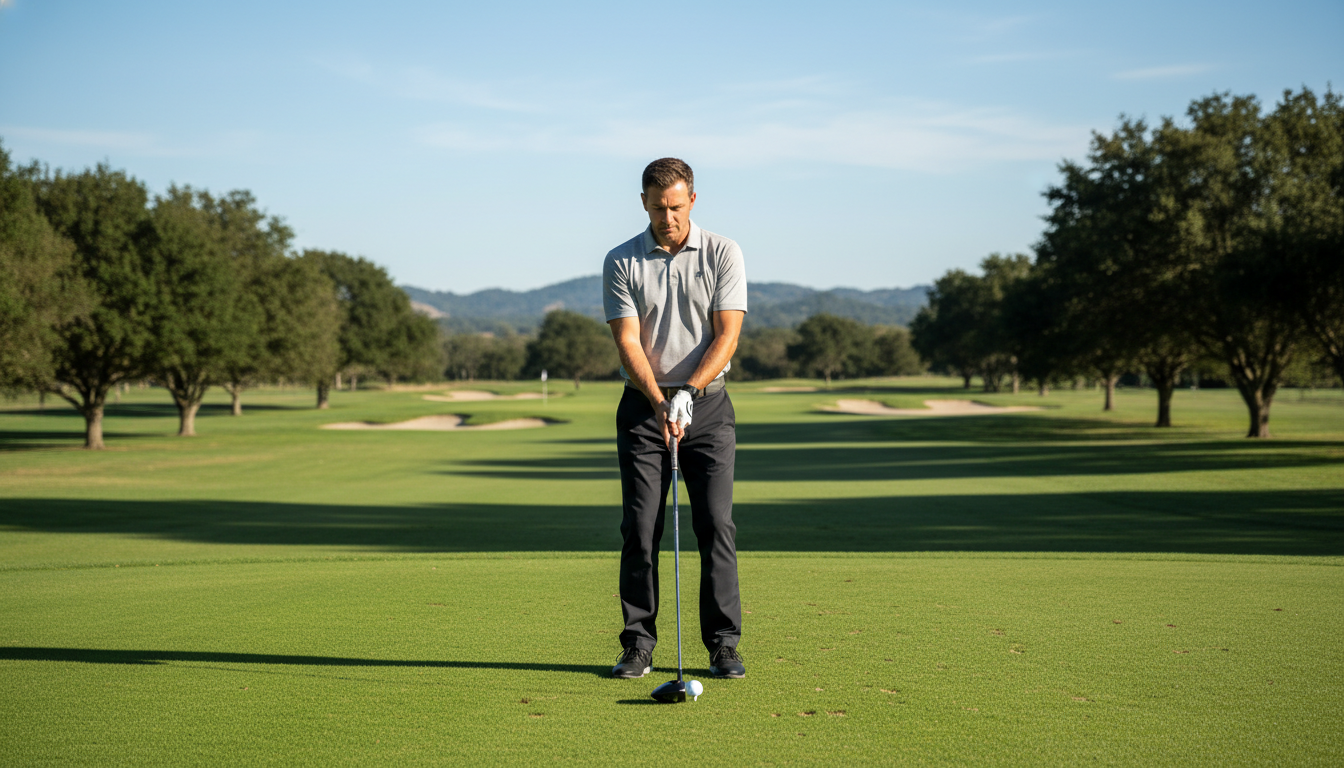



Walking onto a golf course for the first time can feel like entering a foreign country. Experienced golfers toss around terms like “approach shot,” “lie,” and “handicap” as if everyone speaks the language. Understanding golf terminology isn’t just about sounding knowledgeable - it’s essential for communicating with playing partners, following instruction, and enjoying the game.
This guide breaks down the most important golf terms every beginner should master before their first round in 2026.
Scoring Terms You’ll Hear Constantly
Golf scoring revolves around par, which represents the number of strokes an expert golfer should need to complete a hole. Par-3 holes typically measure 250 yards or less, par-4s range from 251-475 yards, and par-5s stretch beyond 475 yards. Most courses have a total par between 70 and 72.
A birdie means you completed a hole in one stroke under par, while an eagle represents two strokes under par. These are the good scores you’re chasing. On the flip side, a bogey is one stroke over par, and a double bogey is two over par.
The most celebrated score in golf is a hole-in-one, also called an ace. This occurs when you sink your tee shot directly into the cup. According to National Hole-in-One Registry data, the odds of an amateur making an ace are roughly 12,500 to 1, so don’t feel bad if you never achieve one.
Paige Spiranac walks through basic golf terminology in this helpful beginner video. The key takeaway is understanding how scoring terms relate to par, which forms the foundation of golf’s competitive structure.
The Parts of a Golf Course
The teeing ground or tee box is where every hole begins. Most courses offer multiple tee boxes at different distances - forward tees (often red or gold markers) for beginners, middle tees (white markers) for average players, and back tees (blue or black markers) for advanced golfers. Choosing the right tees dramatically affects your enjoyment and pace of play.
The fairway is the closely mowed grass between the tee and the green. Keeping your ball in the fairway gives you the best chance at a good score. The rough surrounds the fairway and features longer grass that makes shots more difficult.
Hazards are areas designed to penalize wayward shots. Water hazards include ponds, lakes, and streams marked by yellow or red stakes. Bunkers are sand-filled depressions that require special technique to escape. In 2019, the USGA renamed water hazards to “penalty areas” and simplified the rules, but most golfers still use the old terminology.
The green is the ultra-short grass surrounding the hole. Reading the green means analyzing the slope and grain to predict how your putt will roll. The fringe or apron is the slightly longer grass bordering the green.
Shot Types and Situations
A drive refers to your tee shot on par-4 and par-5 holes, typically using your driver (the longest club). Driving distance has increased dramatically in professional golf - PGA Tour players averaged 299.0 yards off the tee in 2024, up from 289.0 in 2010.
An approach shot is any shot aimed at landing on the green. These shots require accuracy over distance. For beginners looking to improve their short game technique with proper chipping and pitching, understanding that a chip is a short, low-flying shot played from just off the green while a pitch is a higher, softer shot that flies farther but rolls less is essential.
Your lie describes how the ball sits on the ground. A good lie means the ball sits cleanly on top of the grass. A bad lie occurs when the ball nestles down into the rough or sits on hardpan. The rules allow you to improve your lie only in certain designated areas.
A mulligan is a do-over shot, typically allowed only in casual rounds with friends. Don’t expect to take mulligans in competitive play or when posting official scores for your handicap.
Equipment and Club Terms
This video explains essential golf terminology with clear visual examples. The main insight is how equipment terms connect to specific shots and situations you’ll encounter on the course.
Golf clubs divide into woods (including the driver), irons (numbered 3 through 9), wedges, and a putter. The loft refers to the angle of the clubface - higher loft produces higher, shorter shots. Modern drivers typically feature 9-12 degrees of loft, while sand wedges range from 54-58 degrees.
The shaft is the long tube connecting the grip to the clubhead. When considering how shaft weight and flex affect your distance, it’s important to know that shaft flex (extra stiff, stiff, regular, senior, ladies) should match your swing speed, and studies show that 85% of amateur golfers use the wrong shaft flex, leading to inconsistent ball flight.
Clubs have a sweet spot - the ideal contact point on the clubface that maximizes distance and accuracy. Off-center hits are called toe shots (contact toward the club’s end) or heel shots (contact near the hosel).
Your stance refers to how you position your feet at address (the setup position before swinging). Ball position means where the ball sits relative to your feet - forward for longer clubs, centered for mid-irons, and slightly back for short irons and wedges.
Rules and Etiquette Terminology
The honor means the right to tee off first, typically awarded to whoever scored best on the previous hole. In casual play, many groups simply play “ready golf” where whoever’s prepared hits first to maintain pace.
A provisional ball is a second ball played when your first might be lost or out of bounds. This rule saves time by avoiding the walk back to re-hit. You must announce “I’m hitting a provisional” before playing the second ball.
Casual water is any temporary water accumulation on the course (not permanent water hazards). You get free relief from casual water without penalty. Ground under repair (GUR) is another condition allowing free relief, marked by white lines or signs.
The caddie is someone who carries your clubs and provides advice. While rare for beginners, understanding this role helps when watching professional golf. PGA Tour caddies typically earn 5-10% of their player’s winnings plus a weekly base salary.
Gimmes are short putts your playing partners concede without requiring you to putt out. Generally accepted within two feet in casual play, gimmes never apply in stroke play competitions. The tradition exists purely for pace of play in friendly rounds.
Understanding Handicaps and Course Ratings
Your handicap index represents your potential playing ability, calculated from your best scores. The USGA’s World Handicap System launched in 2020, creating unified global standards. A 15-handicap golfer should average about 15 strokes over par on a typical course.
Course rating indicates the difficulty for a scratch golfer (zero handicap). A course rating of 72.5 means a scratch golfer should average 72.5 strokes. Slope rating measures difficulty for bogey golfers, ranging from 55 (easiest) to 155 (hardest), with 113 as standard.
These numbers help calculate your course handicap, which adjusts based on which tees you play. A higher slope rating means you receive more strokes to level the playing field. This system allows golfers of different abilities to compete fairly.

Get the Edge on Every Tournament
AI-powered predictions, data-driven analysis, and expert picks delivered before every PGA Tour event.
Try Golf Agent ProPractice and Training Language
The driving range is where you hit practice balls, often called a range session. Working on your swing mechanics at the range proves more effective than trying to fix problems during rounds. PGA Tour players spend an average of 2-3 hours on the range before tournament rounds.
A teaching pro provides golf instruction, while a club pro manages the golf shop and member services. Golf academies offer intensive multi-day programs combining instruction, practice, and course play.
Swing thoughts are mental cues you use during your swing, like “smooth tempo” or “complete your turn.” Too many swing thoughts create paralysis by analysis, so instructors recommend focusing on just one key thought per swing, especially when learning proven tips and drills to increase your golf swing speed.
The short game encompasses shots within 100 yards of the green - chipping, pitching, and putting. Data from Decade Golf shows that a 10-handicap golfer who improves their short game to 5-handicap level would lower their overall handicap by 3-4 strokes without changing their long game at all.
Modern Technology Terms
Launch monitors measure ball flight data including launch angle, spin rate, and carry distance. TrackMan and GC Quad are the industry standards, now available at many teaching facilities and fitting centers. These devices have revolutionized instruction by replacing guesswork with precise measurements.
Strokes Gained is an advanced statistic that measures performance against the field in specific categories: off the tee, approach, around the green, and putting. This metric helps identify exactly where your game needs improvement rather than relying on outdated stats like fairways hit or greens in regulation.
GPS watches and rangefinders provide accurate yardages to hazards, greens, and pins. While once controversial, rangefinders became legal in casual play and most amateur competitions. They significantly speed up play by eliminating yardage debates.
Understanding golf rules provides crucial context for the terminology you’ll hear. This video covers essential rules that connect directly to the terms beginners need to know.
Putting It All Together
Learning golf terminology isn’t about memorization - it’s about understanding the game’s structure and communication style. Start by mastering scoring terms and basic shot types, then gradually add equipment, rules, and advanced concepts.
Don’t worry about knowing every term before your first round. Even experienced golfers occasionally encounter unfamiliar terminology. The key is asking questions and staying engaged with learning.
Practice using these terms when describing your round to friends or scheduling your next tee time. The language becomes natural through repetition and real-world application. Within a few months, you’ll find yourself speaking golf fluently.
Looking for an edge on the PGA Tour? Golf Agent Pro delivers AI-powered insights for every tournament.
Frequently Asked Questions
- What does par mean in golf?
- Par represents the number of strokes an expert golfer should need to complete a hole. Most golf courses have a total par between 70 and 72, with individual holes ranging from par-3 (250 yards or less) to par-5 (beyond 475 yards).
- What is the difference between a birdie and a bogey?
- A birdie is one stroke under par on a hole, while a bogey is one stroke over par. Birdies are good scores that golfers aim for, whereas bogeys represent missed opportunities to score at or below par.
- How rare is a hole in one in golf?
- According to National Hole-in-One Registry data, the odds of an amateur golfer making a hole-in-one are approximately 12,500 to 1. This makes an ace one of the rarest and most celebrated achievements in golf.
- What golf terms should beginners learn first?
- Beginners should start with scoring terms like par, birdie, bogey, and eagle, followed by course features like bunker, fairway, and green. Understanding these basic terms helps with communication, following instructions, and enjoying the game from your first round.