

I’ve tested dozens of launch monitors over the past few years, and 2026 has brought some serious competition to the market. The question I hear most often is simple: which launch monitor should I actually buy?
The answer depends entirely on how you plan to use it. I’ve spent countless hours hitting balls into nets, analyzing data at the range, and building home simulator setups. What I’ve learned is that the “best” launch monitor isn’t always the most expensive one.
Understanding Launch Monitor Technology in 2026
Launch monitors fall into two main categories: camera-based systems and radar-based systems. Camera systems like TrackMan and Garmin’s R50 track the ball through high-speed cameras and measure actual ball flight. Radar systems like SkyTrak use Doppler technology to calculate ball data.
In my experience, both technologies have reached impressive accuracy levels in 2026. The differences now come down to portability, ease of use, and software integration rather than pure data quality.
Here’s what matters most: camera systems generally excel outdoors and provide more comprehensive data, while radar units often perform better indoors with limited space. I’ve found that understanding this distinction will save you from buyer’s remorse down the line.
TrackMan: The Professional Standard
TrackMan remains the gold standard that tour pros and club fitters use worldwide. I’ve used TrackMan units at multiple fitting centers, and the data consistency is remarkable. The system captures 26 data points per shot, including face angle, club path, and dynamic loft.
The TrackMan 4 currently runs around $20,000, which puts it firmly in the professional category. For that price, you get dual-radar technology that works flawlessly both indoors and outdoors. The software integration with practice facilities and simulation platforms is also top-tier.
What I appreciate most about TrackMan is the confidence in the numbers. When I see a carry distance of 287 yards, I know that’s what actually happened. The spin rates, launch angles, and descent angles all align perfectly with real-world ball flight.
This video breaks down the best launch monitors at different price points, including where TrackMan fits in the professional tier. The host has extensive experience testing these systems, and I think his practical approach mirrors what most golfers need to consider.
Garmin Approach R50: The New Premium Contender
The Garmin R50 launched in 2026 at $5,000 and immediately caught my attention. I’ve tested it extensively against both SkyTrak and TrackMan, and the results impressed me. Garmin uses high-speed camera technology similar to TrackMan but packages it in a more affordable unit.
What sets the R50 apart is its dual-camera system that captures club and ball data simultaneously. I found the club data particularly useful for understanding my swing mechanics. The unit measures face angle, club path, angle of attack, and even impact location on the face.
The R50 works equally well indoors and outdoors, which solves a major limitation of earlier Garmin models. I’ve used it in my garage with 9-foot ceilings without issues. The software connects seamlessly to the Garmin Golf app, and you can play over 43,000 courses through their simulation platform.
Before watching this comparison, I was skeptical about whether the R50 justified its $2,500 premium over the SkyTrak Plus. The side-by-side testing reveals some interesting differences in how these systems measure certain metrics.
SkyTrak Plus: The Home Simulator Favorite
SkyTrak Plus sits at $2,500 and has become my recommendation for golfers building home simulators. I’ve had one in my garage for six months, and it’s transformed my practice routine. The photometric technology delivers accurate ball data for 99% of amateur golfers.
The SkyTrak ecosystem includes access to WGT, E6 Connect, and other popular simulation software. I particularly like the Game Improvement mode, which tracks your tendencies over time and highlights areas for improvement. The shot tracer feature also helps you visualize ball flight indoors.
Where SkyTrak Plus excels is ease of use. I can set it up in under two minutes, and it rarely requires recalibration. The iOS and Android apps work flawlessly, and I’ve never experienced the connectivity issues that plagued earlier SkyTrak models.
The main limitation is that SkyTrak Plus works best indoors with hitting into a net or screen. I’ve used it at the range a few times, but outdoor performance doesn’t match camera-based systems. For a dedicated home setup, though, I think it offers the best value in 2026.

Get the Edge on Every Tournament
AI-powered predictions, data-driven analysis, and expert picks delivered before every PGA Tour event.
Try Golf Agent ProBudget Options That Actually Deliver
Not everyone needs to spend $2,500 or more on a launch monitor. I’ve tested several budget options that provide genuine value for recreational golfers. The Voice Caddy SC4 Pro at $700 delivers surprisingly accurate carry distances and clubhead speed data.
The Garmin Approach R10 remains relevant in 2026 despite being a few years old. At $600, it’s an excellent option for range practice and basic swing analysis. I found the R10 perfect for tracking trends in your game rather than obsessing over individual shot data.
For absolute beginners, the Rapsodo MLM2 Pro at $700 offers a nice balance of features and affordability. The photometric system works well indoors, and the shot tracer helps you understand ball flight patterns. I recommend it for golfers who want to track progress without breaking the bank.
The R10 continues to sell well in 2026, and this recent review examines whether it still makes sense given newer competition. I think the answer depends largely on your specific needs and budget constraints.
What I Actually Recommend
If you’re a serious golfer who wants professional-level data and money isn’t the primary concern, TrackMan remains unmatched. I’ve never questioned a TrackMan number, and the system pays for itself if you’re a club fitter or teaching professional.
For most golfers building a home simulator, I recommend the SkyTrak Plus without hesitation. The $2,500 price point hits the sweet spot between accuracy and affordability. I’ve compared its numbers against TrackMan multiple times, and the differences rarely matter for game improvement.
The Garmin R50 makes sense if you need both indoor and outdoor versatility in a single unit. I’d choose it over SkyTrak Plus if I practiced primarily at the range or wanted the additional club data for swing analysis. The extra $2,500 buys you flexibility and more comprehensive metrics.
Budget-conscious golfers should seriously consider the Voice Caddy SC4 Pro or Garmin R10. I’ve seen golfers make significant improvements using these more affordable options. The key is understanding their limitations and focusing on the data that matters most for your improvement.
Setup and Space Considerations
Launch monitor setup varies significantly between models. TrackMan and Garmin R50 require about 8 feet behind the ball for optimal performance. I’ve used both in garages with 10-foot ceilings without issues, but tighter spaces present challenges.
SkyTrak Plus needs much less room since it sits beside the ball rather than behind it. I’ve successfully used it in spaces with just 8-foot ceilings. The key is ensuring you have adequate distance to your hitting screen, typically 10-12 feet minimum.
Lighting matters more than most people realize. I’ve found that camera-based systems like the R50 perform best with consistent overhead lighting. SkyTrak Plus is more forgiving but still benefits from good illumination. Avoid backlighting situations that create shadows on the ball.
Software and Simulation Integration
The software ecosystem can make or break your launch monitor experience. TrackMan offers seamless integration with commercial simulation platforms and practice facilities. The data exports to Excel, allowing detailed analysis of your sessions.
SkyTrak Plus connects to multiple simulation platforms, which I consider a major advantage. I regularly switch between WGT for casual play and E6 Connect for more serious practice. The monthly subscription fees add up, but the variety keeps practice engaging.
Garmin’s proprietary app works well but feels more limited than SkyTrak’s ecosystem. I appreciate the virtual coaching features and shot tracking, but I wish Garmin offered more third-party integration options. The Home Tee Hero tournaments provide some competitive elements.
Making Your Final Decision
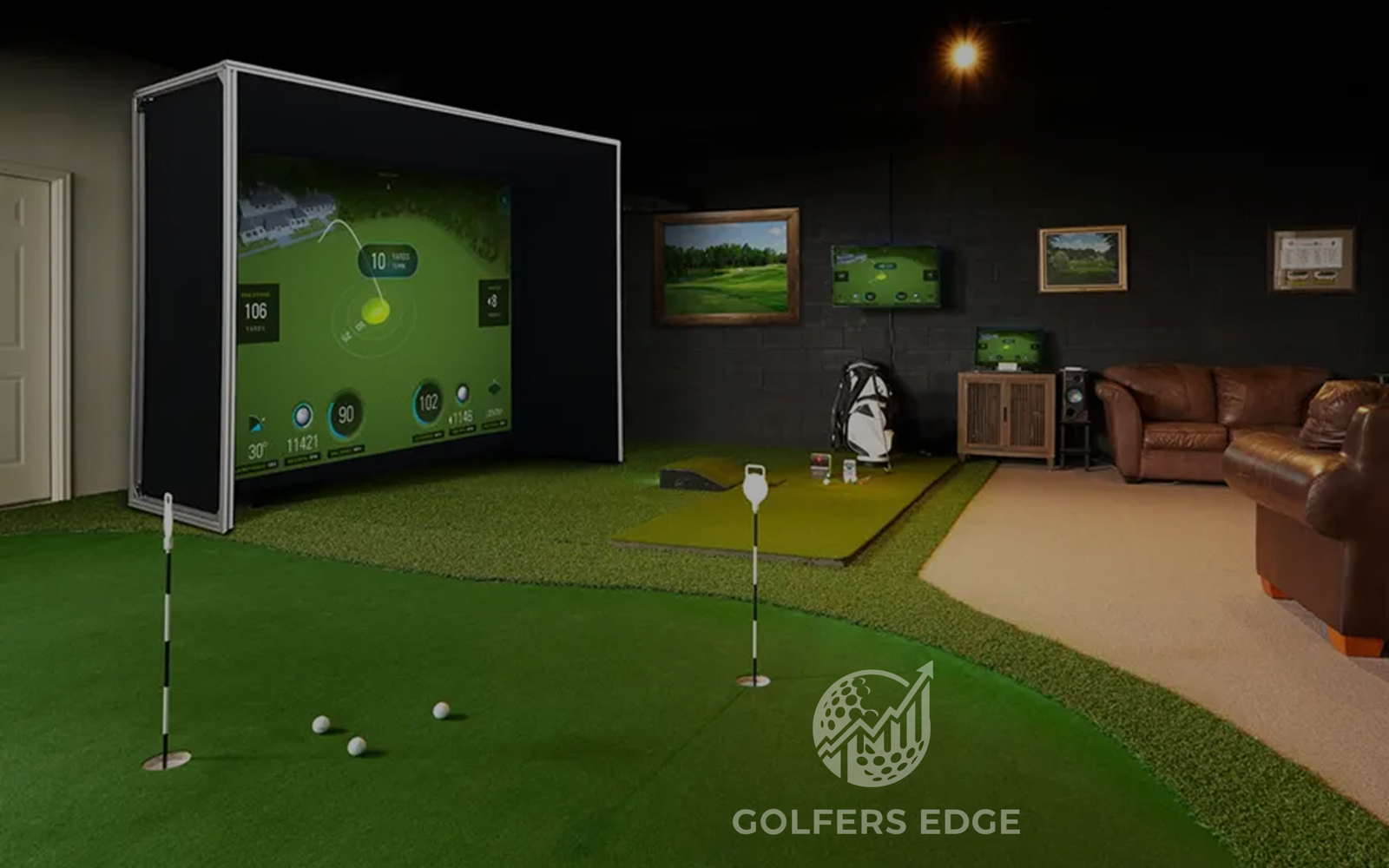
I always tell golfers to start by defining their primary use case. If you’re building a home simulator where you’ll hit thousands of shots per year, investing in quality makes sense. The SkyTrak Plus or Garmin R50 will serve you well for years.
Range warriors who want data at the driving range should lean toward camera-based systems. I take my Garmin R50 to the range regularly, and it provides reliable feedback in outdoor conditions. The R10 works as a more portable, budget-friendly alternative.
Think about your improvement goals too. If you’re working with a coach who uses TrackMan, matching that system creates consistency in your data. I’ve found that having compatible systems between lessons and effective practice sessions accelerates improvement.
Frequently Asked Questions
- Is TrackMan worth the extra cost over Garmin R50?
- For professional fitters and teaching pros, yes. TrackMan's 26 data points and unmatched accuracy justify the premium. For home use, the R50 delivers 90% of TrackMan's value at 25% of the cost.
- Can SkyTrak Plus work outdoors reliably?
- SkyTrak Plus works outdoors but performs best indoors. I've found it struggles in direct sunlight and prefers controlled lighting conditions. For dedicated outdoor use, choose the Garmin R50 or TrackMan instead.
- What's the minimum ceiling height for a launch monitor?
- SkyTrak Plus works in 8-foot ceilings, while TrackMan and R50 need 9-10 feet minimum. I've used all three in my 9.5-foot garage. Lower ceilings limit club selection but allow productive practice with irons and wedges.
- How accurate are budget launch monitors under $1000?
- Budget options like the Voice Caddy SC4 Pro deliver carry distances within 2-3% of premium units. Spin rate and launch angle accuracy varies more. For tracking improvement trends rather than exact numbers, they work great.
- Do I need a subscription for launch monitor software?
- SkyTrak Plus requires subscriptions for simulation play, costing $100-300 annually depending on packages. TrackMan and Garmin R50 include basic features free, with optional premium subscriptions. Budget devices typically work standalone without ongoing costs.
Looking for an edge on the PGA Tour? Golf Agent Pro delivers AI-powered insights for every tournament.