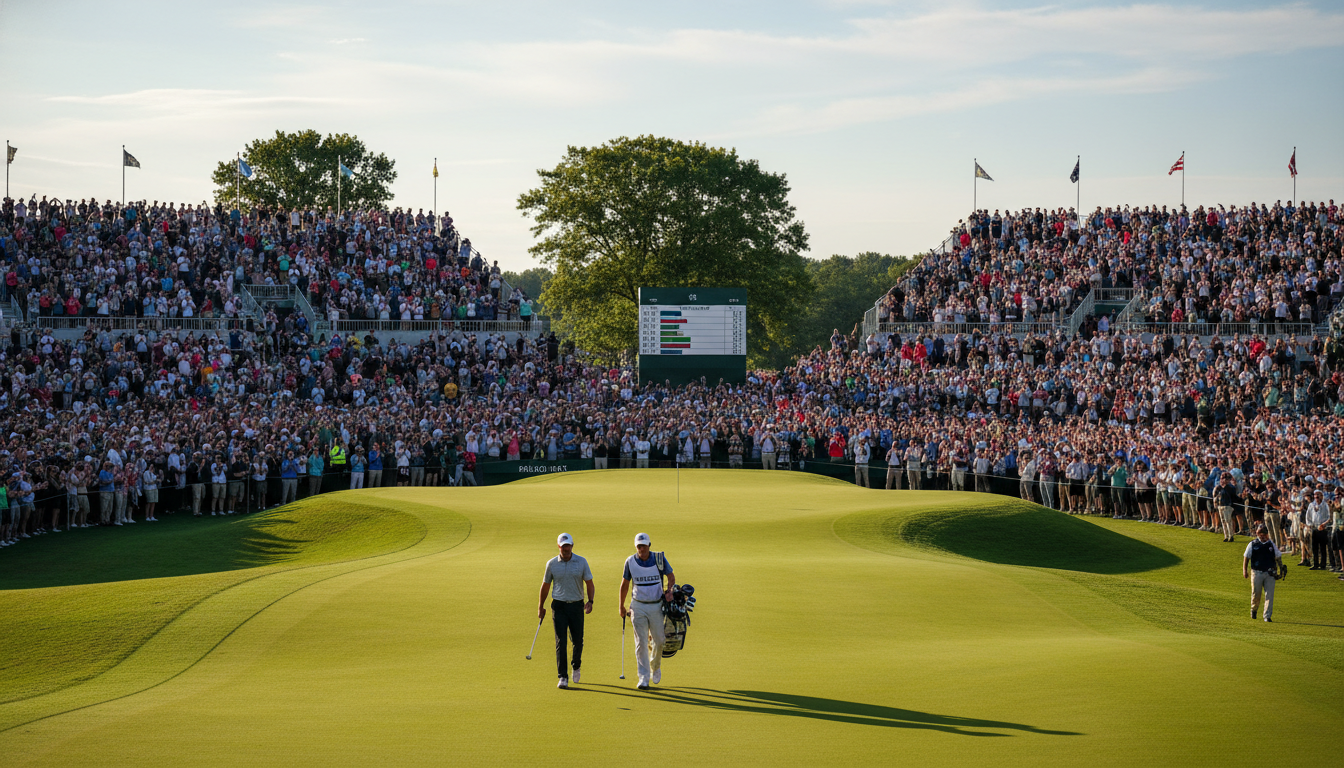


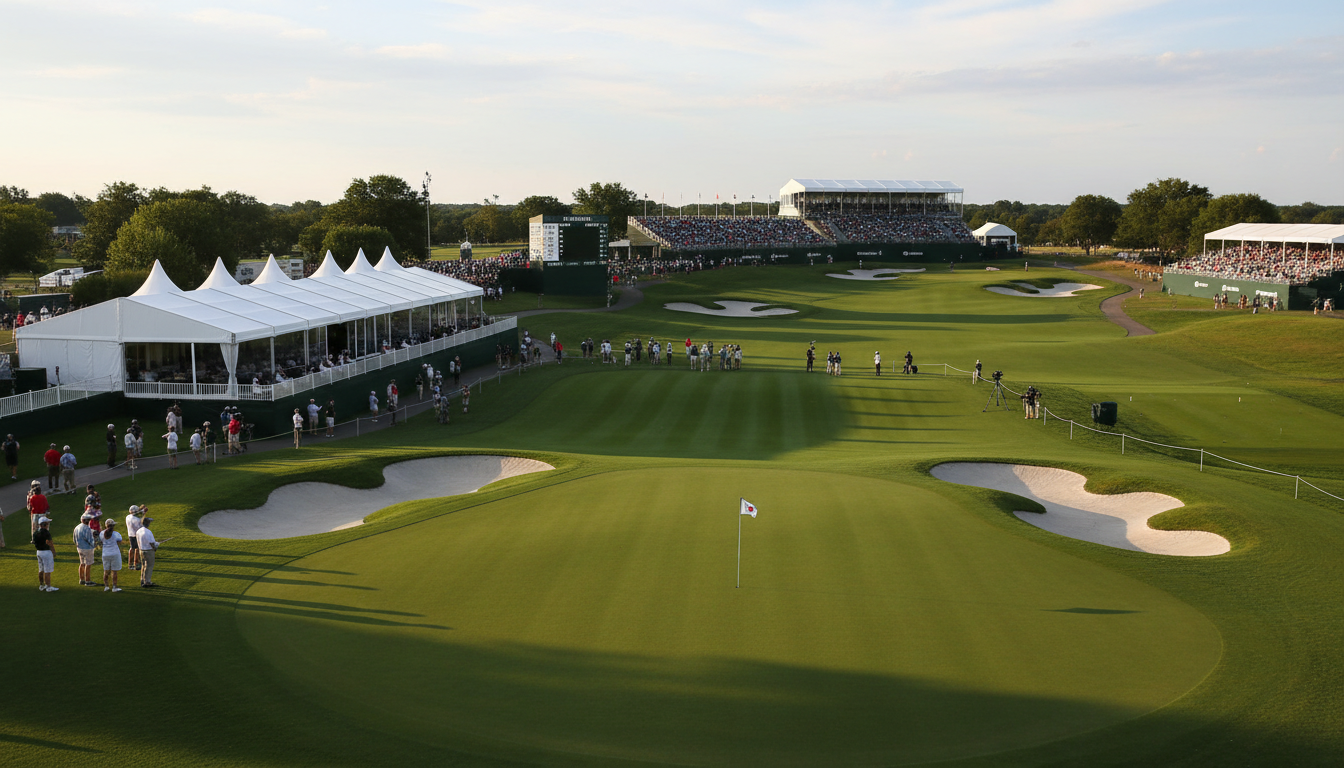
Matt Fitzpatrick sits at -14 through 36 holes, but the real story at Harbour Town isn’t who’s leading - it’s where the sportsbooks are getting the weekend odds completely wrong. As our Wednesday preview highlighted, this course rewards precision ball-strikers and course-fit specialists, and Friday’s fireworks confirmed exactly that thesis.
What makes this weekend’s betting landscape fascinating is the dramatic shift between pre-tournament expectations and Friday’s reality. Viktor Hovland trails by one shot at -13 after rounds of 64-65, while Scottie Scheffler - the pre-tournament favorite at 14.8% win equity - sits seven back at -7. The DataGolf model has recalibrated significantly, and the value plays have shifted with it.
This Week’s Betting Landscape
The outright market tells an interesting story about Friday’s action. Fitzpatrick opened the week around +4200 on DraftKings and now sits at +112 after posting 65-63. The model gives him 45.7% implied win probability, which suggests his current price offers modest value even as the favorite.
Hovland at +305 carries 19.3% model equity - a significant edge over the implied 24.7% the books are pricing in. Harris English at +1850 (3.9% model) represents the classic “hot putter variance play” after gaining 3.85 strokes putting through two rounds.
What jumps out to me is the clustering behind the leaders. Patrick Cantlay (+1750), Ludvig Åberg (+1550), and Sepp Straka (+2600) all sit at -9, just three shots back entering the weekend. The model sees Cantlay and Åberg with virtually identical 4.4% win equity, making Åberg’s longer price the clear value between those two.
That breakdown covers the pre-tournament course fit analysis, but Friday’s strokes gained data has added crucial context to who’s actually executing the game plan at Harbour Town.
Value Plays: Where the DataGolf Model Disagrees
The most glaring model-versus-market discrepancy sits with Scottie Scheffler at +1325 on BetMGM. Despite sitting seven shots back, the DataGolf model still prices him at 4.6% win equity - significantly higher than the 7.0% implied by his current odds. That’s a 65% edge in the model’s favor.
I’m not buying Scheffler as a pure value play despite the model math. Seven shots is a massive deficit at Harbour Town, where scoring volatility is lower than bomb-and-gouge tracks. But it highlights how much respect the baseline skill ratings command even when facing a deficit.
Si Woo Kim at +3600 (2.3% model equity) versus implied 2.7% represents the kind of marginal edge that adds up over a full season. Kim gained 2.54 strokes total through two rounds with balanced contributions across all categories. His +0.81 SG:APP and +0.66 SG:ARG profile perfectly for Harbour Town’s demand for precision.
Robert MacIntyre at +3700 carries 2.0% model equity against 2.6% implied - not technically value, but close enough that his unique profile deserves attention. MacIntyre gained an absurd +2.14 strokes around-the-green through 36 holes while losing -0.80 approaching. That scrambling variance won’t sustain, but it’s kept him at -8 and in contention.
The Cameron Young situation at +31000 illustrates why course fit matters more than baseline skill. Young sits at -4, eight shots back, but the model gives him just 0.4% win equity despite his elite 2.112 SG:Total skill rating. Harbour Town simply doesn’t reward his specific skill set (long hitting, high variance) the way wider, easier courses do.
Russell Henley at +8600 with 1.0% model equity represents the definition of value hunting. He gained just 1.54 strokes total through two rounds - decidedly mediocre - but his baseline fit for this course (2.04 predicted SG in the pre-tournament model) suggests positive regression is coming. As our analysis on why course history matters in golf betting shows, Henley’s +0.23 course-fit adjustment and +0.14 course-history bonus create meaningful edges.
R1/R2 Recap and Weekend Storylines
Friday’s second round produced the weekend’s defining narrative: Matt Fitzpatrick’s 63. He gained 2.54 strokes putting on a course where his career baseline sits at just +0.245 per round. That variance cut both ways - it vaulted him to a one-shot lead, but it’s also the most likely category to regress negatively over 36 more holes.
Fitzpatrick’s real edge came from approach play. His +2.04 SG:APP through two rounds ranks first in the field and aligns with his career strength (0.795 SG:APP baseline). When you combine elite iron play with a hot putter at a precision course, you get -14 through 36.
Hovland’s -13 came via an entirely different formula. He gained 3.14 strokes putting - the highest in the field - while losing -0.16 off the tee. Harbour Town’s narrow fairways typically punish wayward driving, but Hovland’s scrambling (77.8%) and approach play (+1.17 SG:APP) kept damage contained. I’m skeptical this formula sustains, but the one-shot deficit makes him a legitimate win threat regardless.
The cut fell at -1, meaning players like Shane Lowry (-3), Max Homa (-2), and Jordan Spieth (-1) all survived to the weekend but face significant deficits. As our live betting strategy piece explained, the key to weekend value often hides in players 5-15 shots back whose current odds don’t reflect their baseline skill edge.
Patrick Cantlay’s Friday 64 (gaining 3.04 strokes total) moved him to T4 at -9. What’s notable: he gained 1.65 strokes approaching and 0.87 off the tee while adding just 0.41 putting. That’s sustainable ball-striking that suggests he’s not relying on variance to contend.

Get the Edge on Every Tournament
AI-powered predictions, data-driven analysis, and expert picks delivered before every PGA Tour event.
Try Golf Agent ProStrokes Gained Breakdown
Harbour Town’s strokes gained profile through two rounds confirms what the course setup suggested: approach play and putting dominate outcomes here. The leaders’ SG:APP numbers tell the story - Fitzpatrick at +2.04, Rickie Fowler at +2.19, Gary Woodland at +2.03, and Michael Brennan at +2.56.
Off-the-tee performance matters less than predicted. Kurt Kitayama leads the field at +1.19 SG:OTT, but several contenders have gained minimally or even lost strokes driving. Hovland (-0.16 SG:OTT) and Harris English (-0.07 SG:OTT) both sit in the top three despite below-average tee-to-green driving.
The putting variance is extreme, which creates weekend betting risk. Harris English gained 3.85 strokes on the greens - an absurd number that ranks first in the field by a wide margin. Hovland’s 3.14 and Fitzpatrick’s 2.54 both represent significant outliers relative to their career baselines. Regression favors fading hot putters and backing elite ball-strikers who haven’t putted well yet.
Collin Morikawa sits at -7 despite losing -0.93 strokes putting through two rounds. His +0.92 SG:APP and +1.15 SG:ARG represent elite execution tee-to-green. If the putter wakes up even moderately, he’s a legitimate top-5 threat from five shots back.
Andrew Novak at -6 presents a fascinating profile. He gained 2.67 strokes approaching - third-best in the field - but lost -0.98 around the green and gained exactly zero putting. That’s an incredibly narrow execution band that suggests both upside (if putting normalizes) and downside (if approach variance regresses).
Scottie Scheffler’s -7 position came with disappointingly neutral strokes gained across all categories: +0.45 OTT, +0.27 APP, +0.40 ARG, +0.93 PUTT. For a player with a 2.735 baseline SG:Total, these are underperformance numbers. The seven-shot deficit reflects that mediocrity, but his skill ceiling creates weekend upside if execution clicks.
Matchup Analysis
The Russell Henley (+135) versus Scottie Scheffler (-160) matchup on BetMGM offers fascinating analytical tension. Both players sit at -6 entering the weekend. The DataGolf pairing model prices this at Henley +141 / Scheffler -141, suggesting Scheffler’s -160 line represents slight overpricing.
I like the Henley side here despite the model essentially calling it even. Scheffler’s career dominance creates public betting pressure that inflates his matchup lines. Henley gained 0.93 strokes putting through two rounds (matching his 0.328 career baseline almost exactly), while Scheffler’s putting has been neutral. At a course where Henley has a +0.23 course-fit adjustment versus Scheffler’s -0.14, the longer price provides value.
Shane Lowry (-110) versus J.J. Spaun (-110) represents a different bet entirely. Both missed the cut - Lowry at -3, Spaun didn’t make the leaderboard - so this matchup prices their respective finishes among the weekend casualties. The DataGolf model favors this essentially even at +103 / -103, confirming the books have this one right.
Xander Schauffele (-125) versus Cameron Young (-104) creates an interesting test case for course fit versus baseline skill. Schauffele sits at -5, Young at -4. The model prices this dead even (+103 / -103), but the books give Schauffele a clear edge. I’m not sure either side offers value here - both players have underperformed their baselines through two rounds, and neither profiles as an elite Harbour Town fit.
The Gary Woodland (-105) versus Wyndham Clark (-115) matchup highlights putting variance risk. Woodland sits at -7 after gaining exactly 0.01 strokes putting through two rounds - essentially league average. Clark sits at -6 after gaining 1.25 strokes on the greens. The DataGolf model favors Woodland at +111 / -111, suggesting Clark’s slight favorite status is overpriced. I think that’s right - Woodland’s +2.03 SG:APP (versus Clark’s -0.36) represents more sustainable skill execution.
Key Stats to Watch
Hole 15 - the par-4 finishing 4.720 average through two rounds - has emerged as the week’s toughest test. Just 33 birdies against 6 bogeys and 2 doubles over 82 attempts. Weekend leaders will face this hole with tournament outcomes on the line Sunday. Players who can consistently make par here gain significant strokes relative to the field.
Greens in regulation percentage separates contenders from pretenders at Harbour Town. Patrick Cantlay leads at 75.0% GIR, followed by Kurt Kitayama (83.3%) and Scottie Scheffler (75.0%). The correlation between high GIR rates and low scores is nearly perfect here - there’s minimal room for scrambling magic when you’re constantly missing greens.
Scrambling percentage matters less than most courses because Harbour Town’s greens are so accessible for elite ball-strikers. Harris English leads at 88.9%, but several contenders sit below 80%. The ability to save par after missed greens represents variance, not skill edge, at this venue.
Driving accuracy splits have been less predictive than expected. Corey Conners leads the field at 85.7% fairways hit through two rounds but sits at just -6. Meanwhile, Hovland hit just 50% of fairways and trails by one shot. The fairways are narrow enough that elite iron players can recover from light rough, which reduces the penalty for wayward drives compared to true target golf courses.
Get the Full Breakdown
The weekend odds present clear edges where the DataGolf model disagrees significantly with sportsbook pricing, and understanding strokes gained as the stat that predicts winners helps identify those discrepancies. For complete betting cards with model-driven picks, live strokes gained tracking, and detailed matchup analysis for every PGA Tour event, check out Golf Agent Pro.