

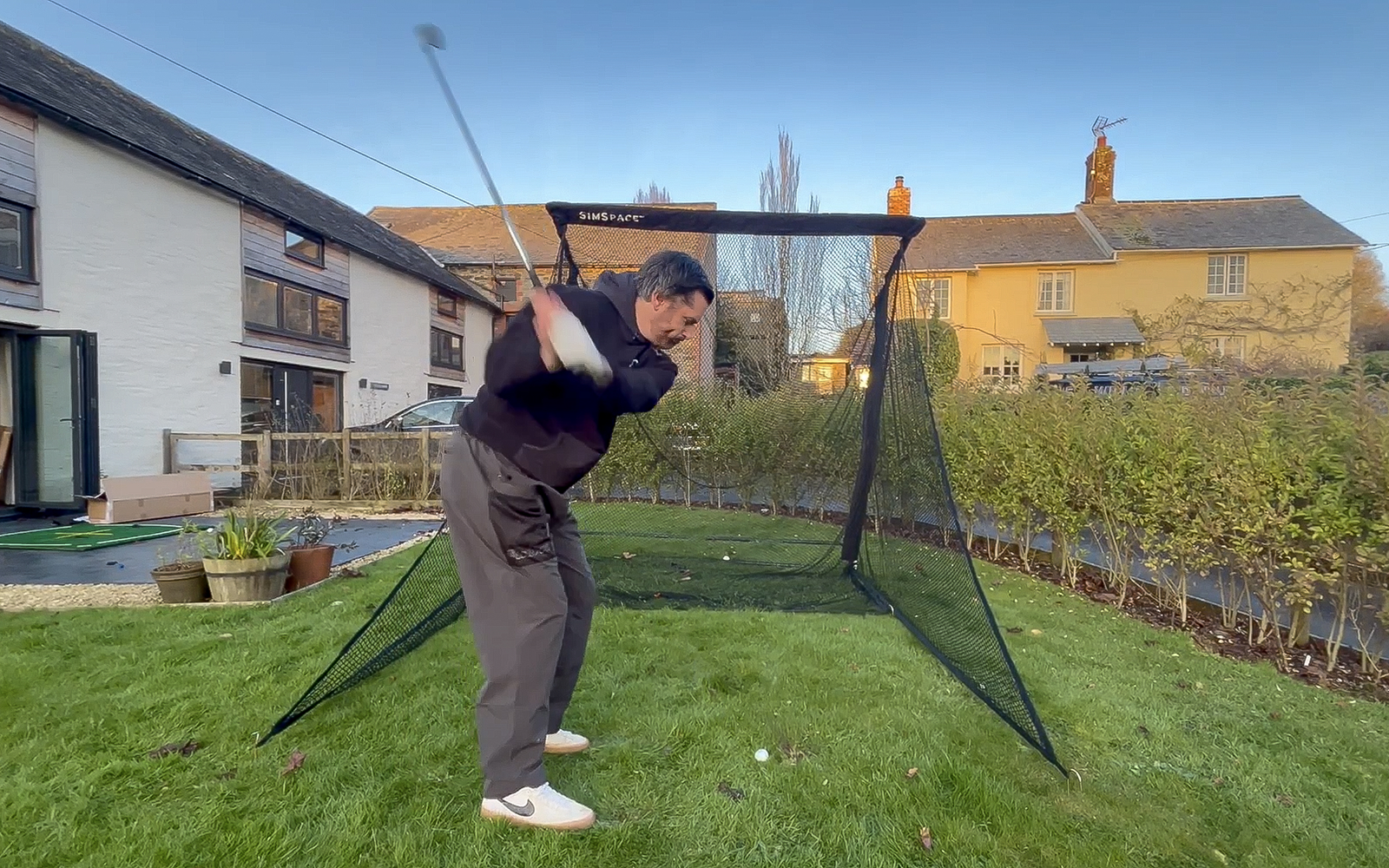
Practicing golf at home isn’t just convenient. It’s one of the fastest ways to lower your scores without paying range fees or fighting crowds. Whether you have a sprawling backyard or just a living room corner, you can build an effective practice routine that addresses every part of your game.
The best part? You don’t need thousands of dollars in equipment. With smart choices and a clear plan, you can create a home golf setup that delivers real improvement for a fraction of what you’d spend on lessons and range time.
Essential Equipment for Home Golf Practice
Start with the basics: a quality practice net, hitting mat, and training aids that match your skill level. A good impact net (7-10 feet wide) handles full swings safely and sets up in minutes. Look for models with a target panel to work on accuracy, not just ball striking.
Hitting mats matter more than most golfers realize. Cheap mats cause wrist pain and give false feedback. Invest in a mat with realistic turf that allows a divot pattern and doesn’t punish heavy strikes. The Fiberbuilt Flight Deck and Country Club Elite are proven options that replicate real conditions.
Training aids should solve specific problems in your swing. Alignment sticks cost under $20 and fix more issues than any expensive gadget. Add a swing plane trainer or impact bag if you struggle with path or compression. Skip gimmicks that promise miracles.
This video walks through practical equipment choices that won’t break the bank:
The key takeaway is matching equipment to your space and goals, not buying everything at once.
Setting Up Your Backyard Practice Area
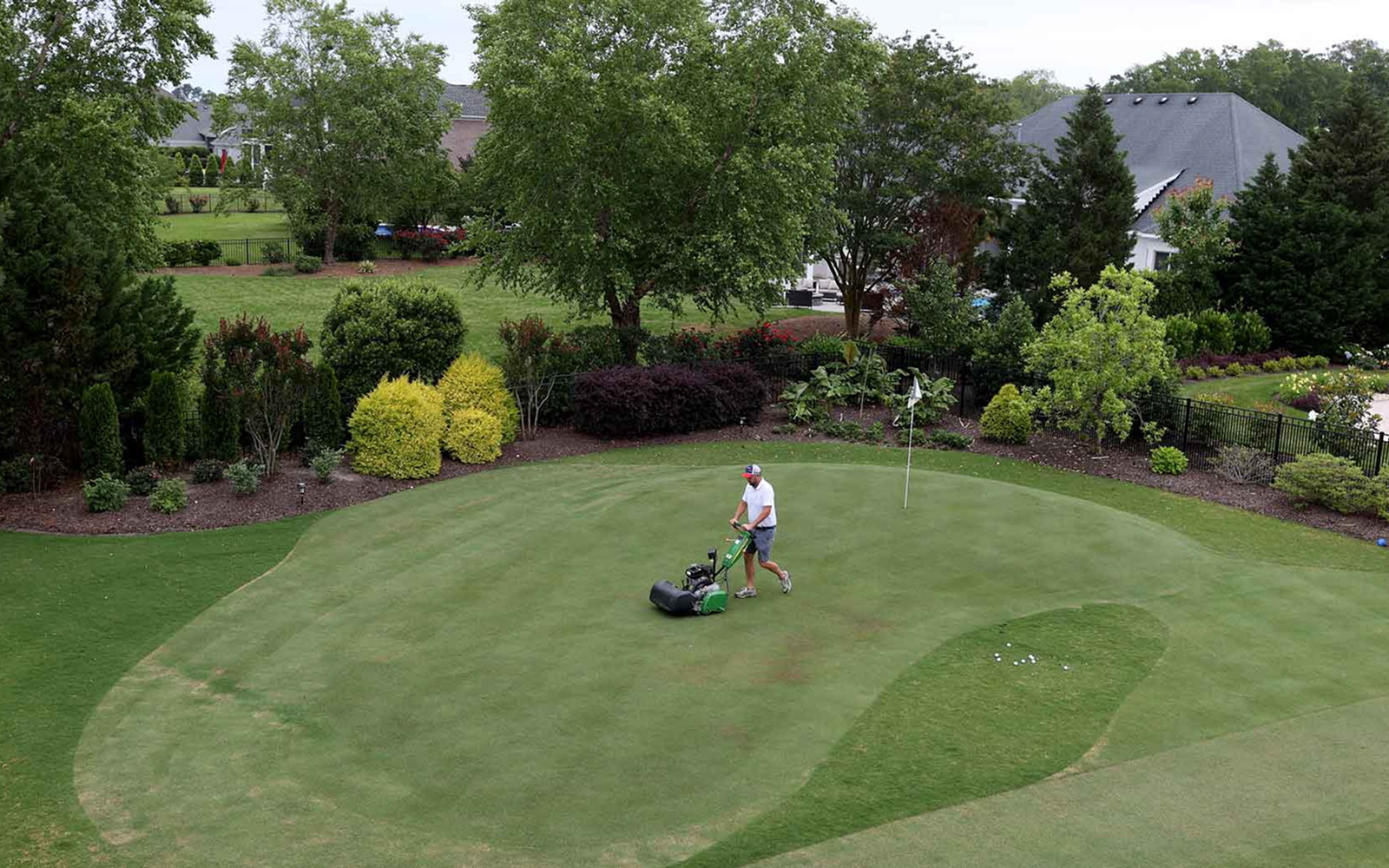
Outdoor practice beats indoor setups for realism and variety. If you have 20-30 yards of space, you can create a legitimate short game area with a hitting zone, chipping target, and putting green. Measure your available space before buying anything.
Position your net or target at the far end, then work backward. You need 12-15 feet of safe hitting distance for full swings. Add artificial turf strips or build a DIY tee box for under $200 to create a dedicated hitting station that drains well and stays level.
Safety comes first. Ensure no balls can escape into neighbors’ yards or windows. Use extra netting on the sides if needed. Check local regulations about golf practice, some HOAs have restrictions worth knowing before you invest time and money.
Indoor Practice: Maximizing Small Spaces
You can practice meaningful aspects of your game in a 10x10 space. Focus on putting, chipping motion (into a net), and swing fundamentals with alignment drills. Ceiling height matters, anything under 8 feet limits full swing work but still allows short game practice.
Set up a putting mat with varied break patterns. Cheap mats teach nothing, look for models with realistic speed (stimp 9-10) and contours that mimic course conditions. Practice 3-footers relentlessly, Tour players make 96% from this distance while 15-handicappers make 50%.
Use impact bags, foam balls, or “Almost Golf” balls for safe indoor swinging. These tools let you work on compression, weight shift, and rotation without destroying your home. Record your swing with a phone mounted on a tripod for instant feedback.
Bryson DeChambeau shares advanced indoor practice methods that don’t require a simulator:
His emphasis on purposeful repetition and specific drills shows how champions practice when space is limited.
Short Game Practice That Actually Works
Your backyard or garage can become a short game laboratory. Set up multiple targets at different distances (10, 20, 30 yards) using hula hoops, towels, or cheap flags. Practice landing your ball in specific zones, not just hitting it near a target.
Work on trajectory control by hitting high, medium, and low shots to the same target. This builds creativity and touch that translates directly to course play. Use different clubs for the same distance to understand how loft affects spin and roll.
Mastering when to chip versus pitch around the green is crucial, so try the “three club challenge”: hit 10 balls each with your sand wedge, pitching wedge, and 9-iron to a 20-yard target. Track which club gives you the tightest dispersion and build confidence with that option.

Get the Edge on Every Tournament
AI-powered predictions, data-driven analysis, and expert picks delivered before every PGA Tour event.
Try Golf Agent ProPutting Practice Routines for Home
Create gates with tees placed 1 inch wider than your putter on both sides of the ball. Stroke putts through the gates from 3 feet, focusing on starting the ball on your intended line. This drill reveals any face rotation issues instantly.
The “ladder drill” builds distance control fast. Place tees at 3, 6, 9, 12, and 15 feet from a hole or target. Hit one ball to each distance, trying to stop it within 6 inches. Repeat until you complete a perfect round without missing the target zone.
Practice your pre-shot routine on every putt, even at home. Tour players hole more putts because their routine is identical under pressure. Time yourself, aim at specific intermediate spots, and commit to each stroke like it matters for a tournament.
Full Swing Practice Without a Course
Net practice builds swing consistency when you focus on process over results. Work on tempo with a metronome app set to 75-80 bpm. Take the club back on one beat, swing through on the next. Smooth tempo fixes more swing flaws than any mechanical thought.
Film your swing from face-on and down-the-line angles. Compare your positions to a Tour player with your body type. Look for major differences in setup, backswing width, or hip rotation, not tiny details that don’t matter for your skill level.
Use impact spray or tape on your clubface to track strike quality. Consistent center contact matters more than swing aesthetics. If you’re hitting toe or heel shots regularly, adjust your setup distance from the ball before changing your swing path.
Training Aids Worth Buying
Alignment sticks provide 20+ drills for under $20. Use them for swing path, ball position, hip rotation, and target alignment. Stick two in the ground parallel to your target line and suddenly your setup flaws become obvious.
The Orange Whip builds tempo and transition timing through weighted resistance. Swing it daily for 20 reps and you’ll feel the difference in your driver swing within a week. It’s one of the few training aids used by Tour players regularly.
Impact bags teach proper compression and forward shaft lean. Hit 25-30 balls into the bag before each practice session to groove the feeling of hands ahead of the clubhead at impact. This single fundamental separates single-digit handicaps from higher handicappers.
Drills for Specific Problem Areas
Slicers should practice with alignment sticks forming a gate 3 feet past the ball, angled 5 degrees right of target (for righties). Swing through without hitting the outside stick. This forces an in-to-out path that reduces slice spin.
If you struggle with fat shots, place a towel 4 inches behind your ball. Make swings without touching the towel, focusing on ball-first contact. This drill builds confidence and proper low point control that translates immediately to the course.
For better lag and power, practice the “pump drill.” Take your normal backswing, pump down halfway twice while feeling the club load, then complete your swing. This exaggerated move trains the proper sequence and wrist retention through impact.
Creating a Practice Schedule That Works
Consistency beats intensity for home practice. Commit to 20 minutes daily rather than 2-hour weekend marathons. Your brain learns skills through repetition spaced over time, not marathon sessions that cause fatigue and sloppy reps.
Structure each session with a warm-up, skill work, and challenge component. Spend 5 minutes on tempo swings, 10 minutes on your weakest area, and 5 minutes competing against yourself with scoring games. Track your results to measure progress.
Alternate between full swing, short game, and putting across the week. Monday and Thursday for full swing fundamentals, Tuesday and Friday for chipping and pitching, Wednesday and Saturday for putting. Sunday becomes your pressure practice day with score-keeping games.
Budget-Friendly Setup Options
You can start practicing golf at home for under $300. A basic net ($150), foam practice balls ($25), alignment sticks ($15), a small putting mat ($50), and a hitting mat remnant ($50) create a functional setup. Add equipment as your budget allows and needs become clear.
DIY solutions work surprisingly well. Use old blankets or heavy tarps as makeshift nets for short shots. Create chipping targets with cardboard boxes at various distances. Build a simple putting surface with outdoor carpet and plywood for authentic break practice.
Watch for used equipment on Facebook Marketplace or Craigslist. Many golfers buy home setups with enthusiasm, use them twice, then sell for half price. Patient shoppers can build premium practice areas for budget prices with minimal effort.
This video demonstrates creating an effective practice area without major investment:
The creative solutions shown prove you don’t need country club resources to build serious practice capability at home.
Measuring Your Progress
Track meaningful metrics, not just how practice feels. For putting, measure your make percentage from 5, 10, and 15 feet over 20 attempts. Test monthly and watch your numbers improve with consistent practice.
Use video comparison to see swing changes over time. Take the same angle shot every two weeks and build a library. Actual visual proof of improvement motivates better than any other feedback method.
Create performance standards for each practice area. Can you chip 7 out of 10 balls into a 3-foot circle from 20 yards? Can you hit 15 consecutive putts through your alignment gate? Set targets, achieve them, then raise the bar.
Frequently Asked Questions
- How much space do I need to practice golf at home effectively?
- You need just 10x10 feet for putting and short game practice. For full swing practice with a net, 12-15 feet of depth is ideal, though some compact nets work in 8-10 feet.
- What's the best golf net for home practice under $200?
- The Rukket Haack Golf Net and Spornia Golf Net are top choices under $200, offering 7-10 foot widths and quick setup. Both handle full swings safely and include target systems for accuracy work.
- Can I actually improve my golf game practicing at home?
- Yes, studies show focused home practice improves scores faster than random range sessions. Putting practice alone can save 3-5 strokes per round since 40% of shots happen on the green.
- How often should I practice golf at home to see improvement?
- Practice 20 minutes daily for faster improvement than 2-hour weekend sessions. Daily repetition builds muscle memory and skill retention that occasional long practices cannot match.
- What golf training aids are worth buying for home practice?
- Alignment sticks ($15-20), a quality putting mat ($50-100), and an Orange Whip ($100) provide the best value. These three tools address fundamentals that impact every part of your game.
Looking for an edge on the PGA Tour? Golf Agent Pro delivers AI-powered insights for every tournament.