

Every golfer dreams of having that pristine, professional look in their own backyard. The good news? Achieving golf course quality grass isn’t reserved for country clubs with million-dollar maintenance budgets. With the right techniques and consistent effort, you can transform your lawn into a surface that rivals your favorite fairways.
The secret lies in understanding what separates championship turf from average yards. Professional superintendents follow specific protocols for mowing height, fertilization schedules, and watering patterns. These same principles scale down perfectly for residential applications when you know which shortcuts work and which ones compromise quality.
Understanding Golf Course Grass Types
The foundation of any golf course lawn starts with selecting the appropriate grass species for your climate. Cool-season grasses like bentgrass and Kentucky bluegrass dominate northern courses, thriving in temperatures between 60-75°F. These varieties create that dense, carpet-like texture you see on Tour broadcasts.
Warm-season options including bermudagrass and zoysia rule southern layouts. Bermudagrass can handle temperatures above 95°F while maintaining aggressive growth and self-repair capabilities. TifTuf bermuda, specifically bred for drought tolerance, has become the gold standard for fairways across the Sun Belt.
For home applications, you’ll want to match your grass selection to your maintenance commitment level. Bentgrass delivers that ultra-smooth putting surface but requires mowing every other day during peak growth. Tall fescue offers more forgiveness with deeper roots and better shade tolerance, making it ideal for yards with mixed sun exposure.
The Science Behind Lawn Striping Golf Patterns
Those stunning stripes you admire aren’t created by different grass heights or special seed varieties. The effect comes from light reflecting off grass blades bent in opposite directions. When blades lean toward you, they appear darker. When bent away, they catch more sunlight and look lighter.
Creating professional stripes requires a mower with a roller attachment behind the cutting deck. The roller bends grass in the direction you’re traveling, setting the pattern. This comprehensive lawn care guide walks through the complete process from equipment selection to pattern design.
Here’s what you need to know about striping your lawn like a Tour venue. First, grass must be healthy and at least 2.5 inches tall to hold a visible stripe. Stressed or thin turf won’t bend properly. Second, alternate your mowing pattern each session to prevent grain development, which creates a permanent lean direction that’s difficult to reverse.
This video demonstrates the exact roller technique professionals use to create those eye-catching patterns. The key takeaway is maintaining consistent speed and overlap to avoid gaps in your striping pattern.
Mastering the Perfect Mowing Height
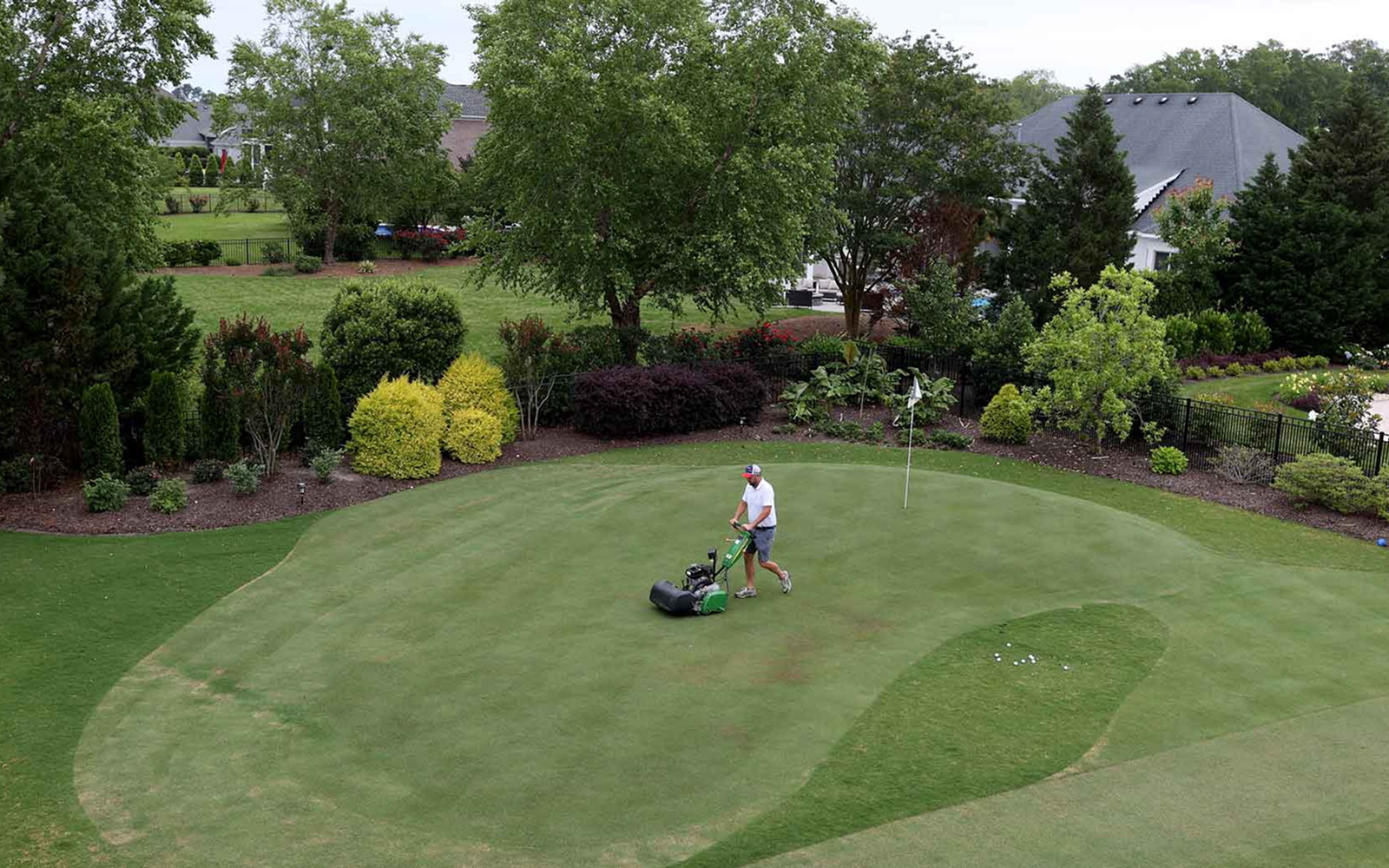
Professional courses maintain different heights for distinct playing surfaces. Greens get cut at 0.125 inches using specialized reel mowers. Fairways typically sit between 0.5 and 0.75 inches. Rough varies from 2 to 4 inches depending on setup difficulty.
For your backyard golf course look, aim for 2.5 to 3.5 inches with a quality rotary mower. This height promotes deeper root growth while providing enough blade surface for photosynthesis. Never remove more than one-third of the grass blade in a single mowing session, as this stresses the plant and opens opportunities for weed invasion.
Mowing frequency matters more than most homeowners realize. During peak growing season, you should be cutting every 3-4 days to maintain consistent height without scalping. Sharp blades are non-negotiable since dull mowers tear rather than cut, leaving brown tips that ruin your golf quality grass appearance.
Watch how proper equipment and technique transform an average lawn into championship-caliber turf. The difference between DIY results and professional appearance often comes down to these fundamental mowing practices.
Fertilization Schedules That Deliver Results
Golf courses apply nutrients on precise schedules based on soil tests and growth patterns. Your home lawn needs 3-5 pounds of nitrogen per 1,000 square feet annually, split across multiple applications. Spring feeding jumpstarts growth after dormancy. Summer applications maintain color and density during stress periods. Fall fertilization builds root reserves for winter survival.
The timing of these applications directly impacts your results. Apply your heaviest nitrogen dose in early fall when grass actively stores energy for spring green-up. A lighter spring feeding in April or May supports initial growth without pushing excessive top growth that requires constant mowing.
Slow-release fertilizers win for homeowners who want golf course results without weekly applications. These formulations feed grass gradually over 8-12 weeks, preventing the surge-and-crash cycle of quick-release products. Look for fertilizers with at least 50% slow-release nitrogen on the ingredient label.

Get the Edge on Every Tournament
AI-powered predictions, data-driven analysis, and expert picks delivered before every PGA Tour event.
Try Golf Agent ProIrrigation Strategies for Championship Turf
Water management separates amateur lawns from professional surfaces. Golf courses water deeply and infrequently, typically applying 1-1.5 inches per week during growing season. This encourages roots to grow 6-8 inches deep, creating drought-resistant turf that stays green through heat stress.
The worst mistake homeowners make is frequent shallow watering. Daily 10-minute sessions keep moisture in the top inch of soil, training roots to stay shallow where they’re vulnerable to heat and traffic damage. Instead, water 2-3 times weekly for 30-45 minutes per zone, allowing soil to partially dry between sessions.
Early morning irrigation between 4-8 AM minimizes evaporation loss and gives grass blades time to dry before nightfall. Wet grass overnight creates perfect conditions for fungal diseases like brown patch and dollar spot. Install a rain sensor on your irrigation system to prevent watering during precipitation events.
Equipment Essentials for Home Course Maintenance
You don’t need a $50,000 triplex mower to achieve professional results, but you do need quality tools. A 21-inch rotary mower with adjustable height settings and a striping kit attachment covers basic cutting needs. Reel mowers create a superior cut quality but require more physical effort and frequent sharpening.
Core aeration equipment, either rented or hired out, becomes essential for compacted lawns. Annual aeration in early fall punches holes that allow water, air, and nutrients to reach root zones. Top-dressing with compost after aeration fills holes and improves soil structure over time.
A spreader that provides consistent application rates prevents the striped fertilizer burns you sometimes see. Broadcast spreaders work better than drop spreaders for larger areas, offering more uniform coverage with less effort. Calibrate your spreader annually using manufacturer guidelines to ensure accurate application rates.
This breakdown reveals specific maintenance secrets that superintendents use to keep grass thick and green through challenging conditions. The soil health component often gets overlooked by homeowners focused only on what happens above ground.
Weed Control Without Compromising Quality
Dense, healthy grass naturally crowds out most weed species. When your turf reaches 85-90% coverage, weeds struggle to establish. Pre-emergent herbicides applied in early spring prevent crabgrass and other annual weeds before they germinate, buying you four months of protection.
Post-emergent spot treatments handle breakthrough weeds without blanket spraying your entire lawn. Identify problem areas and target them specifically rather than treating zones where grass is thriving. This selective approach reduces chemical use while maintaining that uniform appearance.
Hand-pulling works surprisingly well for isolated weeds in otherwise healthy turf. Remove the entire root system to prevent regrowth. The temporary bare spot fills in quickly when surrounding grass is vigorous. This manual approach fits perfectly with organic maintenance programs that avoid synthetic chemicals.
Dealing with Common Lawn Diseases
Even professionally maintained courses battle fungal diseases during stress periods. Brown patch appears as circular dead zones 6 inches to several feet across, typically during hot, humid weather. Dollar spot creates small bleached spots about silver dollar size across the lawn.
Prevention beats treatment every time with turf diseases. Proper watering practices that avoid overnight moisture eliminate most fungal pressure. Adequate nitrogen levels keep grass growing vigorously enough to outpace minor infections. Good air circulation from annual dethatching reduces humidity at the soil surface.
When diseases do appear, identify them correctly before applying fungicides. Your local extension office provides diagnostic services, often at no cost. Many lawn problems that look like disease actually stem from cultural issues like compaction, poor drainage, or incorrect mowing height - the same fundamentals that matter whether you’re practicing golf at home or maintaining championship turf. Treating symptoms without addressing root causes wastes time and money.
Frequently Asked Questions
- What grass height should I maintain for a golf course look?
- Maintain your lawn between 2.5-3.5 inches for the best golf course appearance. This height balances aesthetic appeal with healthy root development and stress tolerance.
- How often do golf courses mow their grass?
- Golf courses mow greens daily, fairways 3-5 times weekly, and rough 1-2 times weekly. For home lawns, mowing every 3-4 days during peak season delivers professional results without overwhelming your schedule.
- Can I create lawn stripes without special equipment?
- Visible stripes require a roller attachment behind your mower deck to bend grass blades in alternating directions. Some mowers include striping kits, or you can purchase universal attachments that fit most models.
- What's the best fertilizer schedule for golf quality grass?
- Apply 3-5 pounds of nitrogen per 1,000 square feet annually, split into 3-4 applications. Heavy fall feeding builds root reserves, light spring feeding jumpstarts growth, and summer applications maintain color during stress.
- How much should I water my lawn weekly?
- Apply 1-1.5 inches of water per week during growing season, split into 2-3 deep watering sessions. This encourages deep root growth rather than shallow roots that result from frequent light watering.
Looking for an edge on the PGA Tour? Golf Agent Pro delivers AI-powered insights for every tournament.