


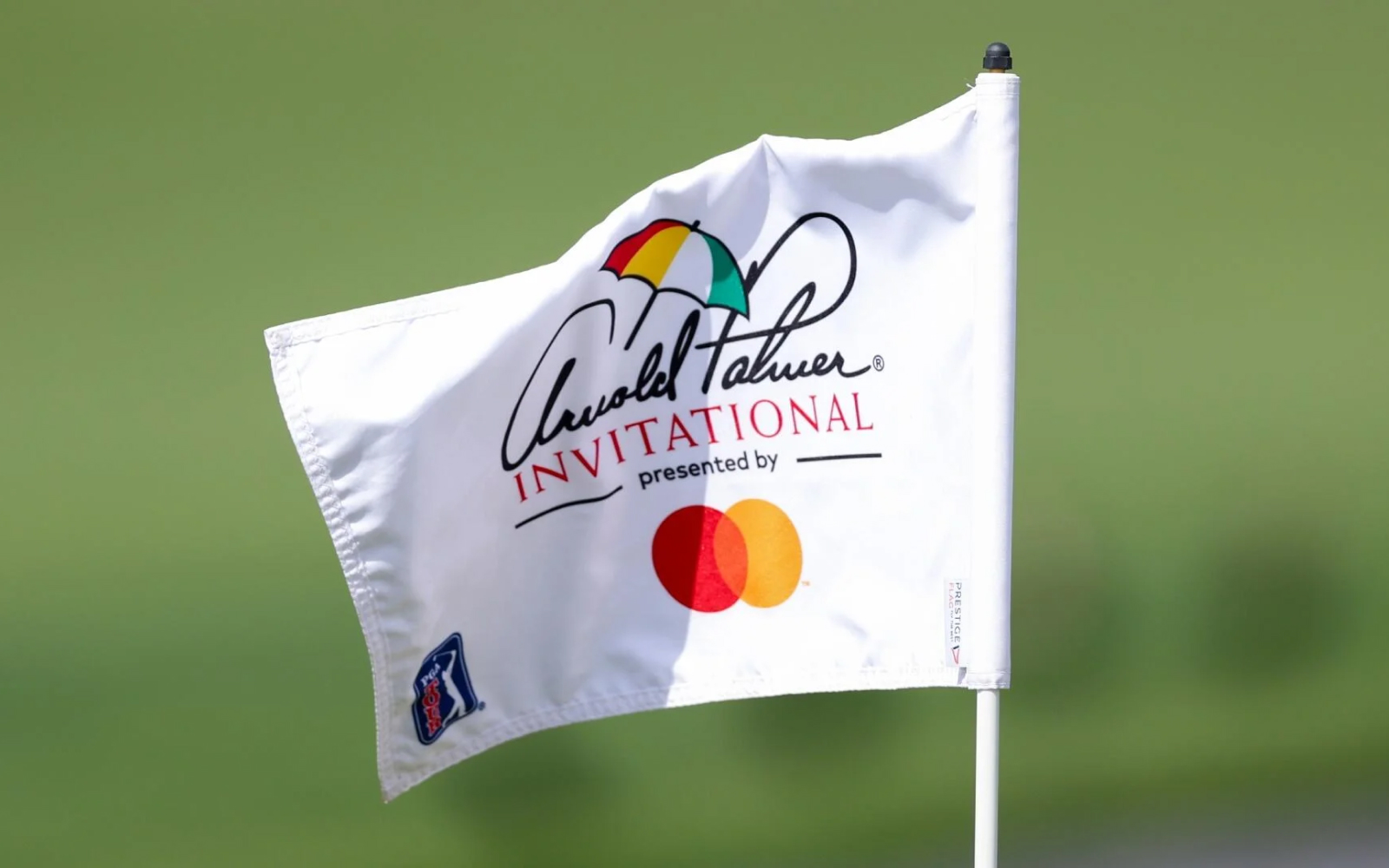
Daniel Berger’s opening 63 at Bay Hill just blew up every outright ticket in the country. He’s now -13 through 36 holes, six shots clear of second place, and the DraftKings odds board looks completely different than it did when we published our Arnold Palmer preview earlier this week. The DataGolf model gave Berger a 14.1% win probability heading into the weekend, which converts to roughly +608 implied odds. He’s currently +530 on most books, meaning there’s still microscopic value if you believe the model over the market.
What’s more interesting to me is how the live tournament strokes gained data is reshaping the weekend narrative. Berger’s gaining 2.63 strokes approach through two rounds, which tracks with his recent ball-striking form, but he’s also gaining 2.23 putting. That’s the scary part for anyone chasing him because Bay Hill greens don’t typically allow that kind of sustained hot-putter performance across 72 holes.
This Week’s Betting Landscape
The cut line fell at +2, which is brutal for a tournament that typically plays this firm and fast. Scottie Scheffler barely survived at -3 heading into the weekend. The DataGolf model had Scheffler at 15.7% to win pre-tournament, the highest projection in the field. Now his live win probability sits at just 9.8% (roughly +919 implied), yet DraftKings has him at +600. That’s a massive market inefficiency worth exploring.
Collin Morikawa is -7 at T3 alongside Ludvig Aberg and Sahith Theegala. Morikawa’s live DataGolf win probability is 10.7%, which converts to about +835 implied odds. DraftKings has him at +690. The model likes him more than the market does, likely because his approach work this week (+2.48 SG:APP through R2) suggests he’s got the right tools to chase down Berger if the putter cools off.
Xander Schauffele at +1500 on FanDuel looks interesting given his -5 position and 5.0% DataGolf win probability (roughly +1900 implied). That’s a pretty significant overlay, though I’m skeptical of Xander’s weekend putting reliability at Bay Hill specifically.
Value Plays: Where the Model Disagrees
The biggest model discrepancy I’m seeing is Cameron Young at +1100 on most books. The DataGolf model gives him a 7.2% win probability, which implies roughly +1281 odds. He’s sitting -4 at T9, six shots back, but his SG numbers this week tell a story: +1.92 strokes gained off-the-tee and a pedestrian +0.23 SG:APP. He’s also gaining just 0.17 strokes putting, which means his approach play is underperforming his baseline 0.381 SG:APP season average.
If Young’s irons wake up over the weekend, he’s got the distance and GIR rate (77.8% through R2) to make a legitimate run. The model sees more upside here than the sportsbooks are pricing in, especially with five guys clustered between -5 and -7 who could easily falter.
This DFS and betting breakdown from NineToFive Golf covers the key course-fit stats and why approach play variance creates opportunity on a course like Bay Hill. The takeaway: ball-strikers with inconsistent putting weeks are actually prime bounce-back candidates on Bermuda greens that can turn ice-cold or scorching hot round-to-round.
Scottie Scheffler at +600 is another model disagreement worth noting. The live DataGolf model has him at 9.8% to win (roughly +919 implied), but he’s still being bet like a 14.3% favorite based on DraftKings pricing. I think the model is undervaluing Scheffler’s ability to go low when he needs to. His R1 70 and R2 71 are both misleading because he’s gaining 0.90 strokes off-the-tee and 0.32 SG:APP, which are modest but stable. He’s putting neutral (+0.18), which for Scottie is basically a guarantee he’s about to explode for a 65 or 66 when he finally catches a few lipouts.
Kurt Kitayama at +2600 with a 3.5% DataGolf win probability (roughly +2787 implied) is borderline dead-even with his DraftKings number. He’s -1 through 36 holes after a rough R2 74, but his live SG data shows +1.09 strokes OTT and -0.55 SG:APP. The model still likes his baseline strokes gained profile (0.677 SG:APP season-long), and as the 2023 Arnold Palmer winner, his course history adjustment (+0.02 in the course fit model) gives him a slight edge. Not screaming value, but not a bad lottery ticket at this number.
Strokes Gained Breakdown
Bay Hill’s defining characteristic this week has been approach play separation. Daniel Berger leads the field at +2.63 SG:APP through two rounds, with Collin Morikawa right behind him at +2.48. Si Woo Kim, who’s sitting at -2, has gained 1.63 strokes approach despite losing 1.40 strokes putting. That’s the blueprint for a weekend charge if he can just get to neutral on the greens.
What jumps out to me in the live tournament data is how much the putting variance is dictating leaderboard position. Akshay Bhatia is -8 despite losing 1.98 strokes off-the-tee because he’s gained 3.97 strokes putting. That’s an unsustainable pace on Bermuda greens that are playing firm and grainy. The regression risk is massive here.
Conversely, Chris Gotterup is -4 despite losing 0.97 strokes on the greens. He’s gained 1.33 strokes approach and 1.01 around-the-green, which are the sticky skills that hold up under weekend pressure. The DataGolf model gives him a 2.9% live win probability, which implies roughly +3345 odds. DraftKings has him at +2800, so there’s a slight edge if you believe in his ball-striking floor.
The course fit analysis shows Si Woo Kim with a +0.06 course-fit adjustment, the highest of any player in the top 25 on the leaderboard. His baseline SG:Total of 1.578 combined with elite approach work (0.949 SG:APP season-long) makes him a perfect Bay Hill archetype. The problem is he’s a terrible putter (-0.256 SG:PUTT baseline), and this week he’s already at -1.40 strokes on the greens. He’d need to flip that to even neutral to have a realistic chance.

Get the Edge on Every Tournament
AI-powered predictions, data-driven analysis, and expert picks delivered before every PGA Tour event.
Try Golf Agent ProR1/R2 Recap and Weekend Storylines
Daniel Berger’s 63-68 start has him at -13, six clear of second place, and his live SG:Total of +6.59 through 36 holes is legitimately elite. What’s concerning for the field is that his approach play (+2.63 SG:APP) is his best skill, not his putting. If he’s gaining 2.23 on the greens on top of ball-striking this clean, he’s going to be very hard to catch unless the putter goes stone cold.
Akshay Bhatia posted a second-round 66 to move to -8, but his accuracy off-the-tee is just 32.1% and he’s losing nearly two full strokes OTT (-1.98). That’s a weekend disaster waiting to happen at Bay Hill, where missing fairways into thick Bermuda rough makes par-saves a grind. His 90.5% scrambling rate through R2 is masking serious problems.
The three-way tie at -7 (Ludvig Aberg, Sahith Theegala, Collin Morikawa) sets up an interesting dynamic. Aberg’s gaining strokes in every category except putting (+1.34), which is solid but not dominant. Theegala’s gaining 1.73 around-the-green, the second-best ARG performance in the field, which gives him a margin for error if his approach work regresses slightly. Morikawa’s the purest ball-striker of the three (+2.48 SG:APP), but his putting (+1.01) has been just okay.
Rory McIlroy is lurking at -4 after a second-round 68, and his live SG data is fascinating: +1.54 strokes off-the-tee (best in the top 15), but -0.89 SG:APP. He’s hitting GIRs at 63.9%, which is fine, but for Rory that’s below his standard. If his irons click over the weekend, he’s got the firepower to post back-to-back 67s and put serious pressure on Berger.
Scottie Scheffler made the cut at -3, but his opening 70-71 does not reflect how well he’s actually played tee-to-green. He’s gaining 0.90 strokes OTT and 0.32 SG:APP, which are modest but clean. He’s just been putting neutral (+0.18), and historically that’s when Scottie is most dangerous because he’s not relying on a hot flatstick to score. The weekend could get ugly for anyone in front of him if he goes 66-65 like he’s capable of.
Matchup Analysis
One matchup that stands out from the weekend pairings data is Kurt Kitayama (-102) vs Pierceson Coody (+152) in the 8:30 AM ET Saturday pairing. The DataGolf model has Kitayama at -102, which is basically a pick’em with the market. Kitayama’s live SG:Total is just +0.59, but his baseline strokes gained profile (1.26 SG:Total, 0.677 SG:APP) and his 2023 course history (he won this thing) give him a clear skill edge. Coody’s baseline SG is 1.296, which is competitive, but he doesn’t have Kitayama’s course-specific equity. I like Kitayama’s side of this number.
Looking at the broader matchup board, Matsuyama (-120) vs Henley (+100) on DraftKings is mispriced according to the DataGolf model, which has this matchup at -140 Matsuyama, +140 Henley. Matsuyama’s at even-par through 36 holes, while Henley’s at -5. The market is pricing Matsuyama’s skill edge (1.374 SG:Total baseline vs Henley’s 1.324), but it’s ignoring the positional disadvantage. Henley’s also the defending champ here and has a +0.18 course history adjustment in the DataGolf fit model. I think Henley at +100 is the play, even though the model slightly favors Matsuyama’s baseline talent.
Key Stats to Watch
Hole 6 difficulty is going to be a massive factor this weekend. It’s playing as the hardest hole on the course at 4.819 strokes average through R2, yielding just one eagle, 20 birdies, and five bogeys-or-worse. The par-5 6th is typically a birdie opportunity, but firm conditions and tricky pin positions are turning it into a par-hold. Players who can take advantage of this hole will pick up half a shot on the field every round.
Scrambling percentage variance is huge at Bay Hill. Akshay Bhatia’s 90.5% scrambling rate through R2 is elite, but historically those rates regress hard on weekend rounds when pin positions get tucked and rough grows thicker. Cameron Young, by contrast, is scrambling at just 41.7% despite hitting 77.8% of greens. That GIR rate is elite, and if he can just get to 60% scrambling, he’s a legitimate threat to go low.
SG:Approach sustainability is the stat I’m watching most closely. Daniel Berger’s +2.63 SG:APP is fantastic, but can he maintain that pace against tougher weekend pin positions? Collin Morikawa’s +2.48 suggests yes, because his baseline 0.928 SG:APP is one of the best on tour. Si Woo Kim’s +1.63 SG:APP is also notable because his season-long 0.949 number says this is perfectly in-range for him. Those are the guys I trust to hold their approach form under pressure.
Putting regression candidates are easy to spot: Akshay Bhatia (+3.97 SG:PUTT), Harry Hall (+1.65), and Daniel Bennett (+1.28) are all playing well above their baseline putting stats. The weekend will sort out who’s genuinely hot versus who got lucky with a few lip-ins. My money’s on regression for all three.
Get the Full Breakdown
This breakdown scratches the surface of what’s available in the data. For complete model-driven picks, real-time strokes gained updates, and advanced matchup analysis for every PGA Tour event, check out Golf Agent Pro. The app provides betting cards, confidence scores, and proprietary predictions that go beyond what any public model offers. For those new to tournament betting strategy, our guide on golf betting for beginners breaks down how to approach outrights, top-10s, and matchup markets effectively.