

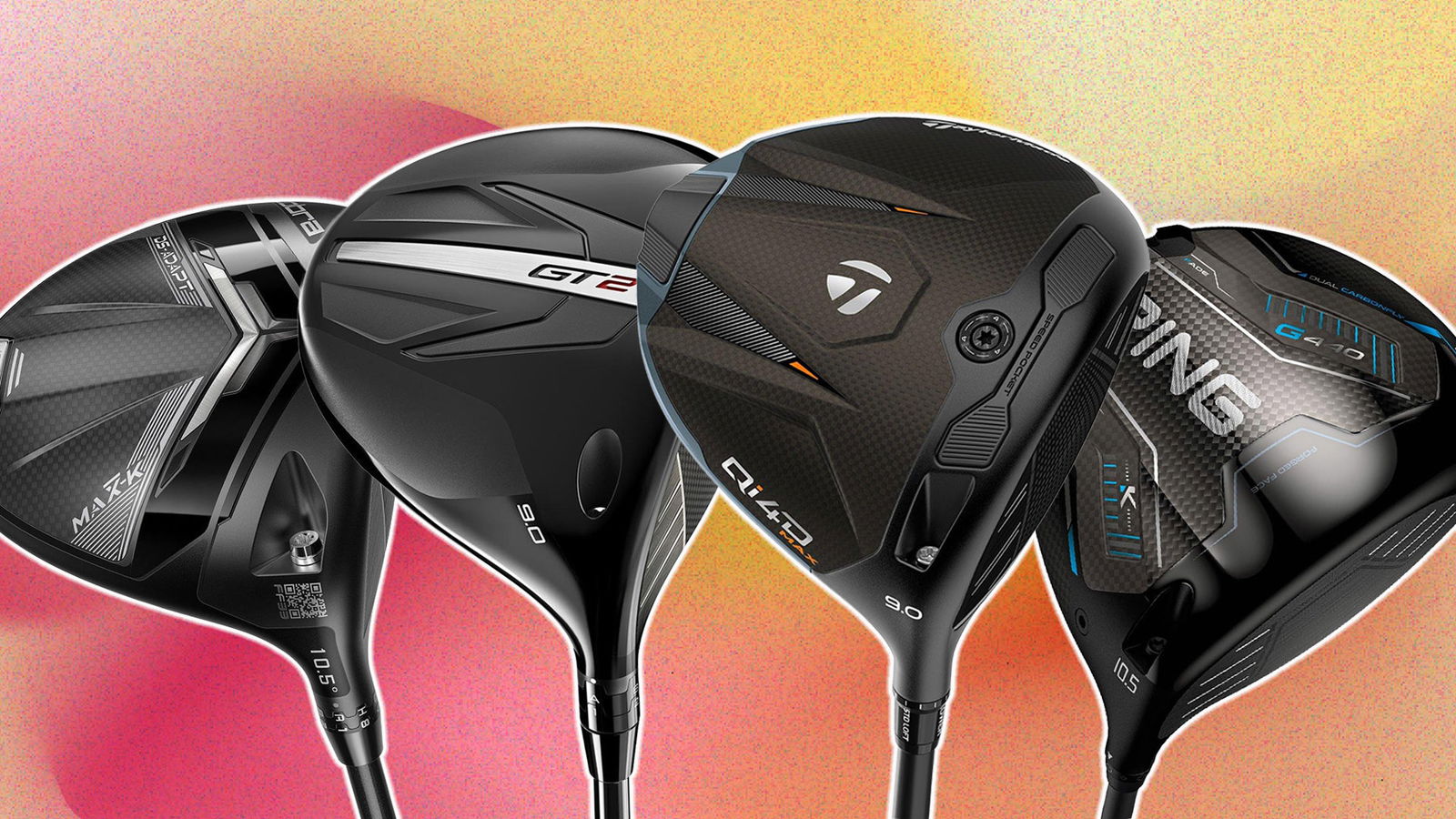
The driver market in 2026 has delivered some genuinely impressive technology for mid handicappers, and the improvements aren’t just marketing hype. If you’re carrying a handicap between 10 and 20, this year’s lineup offers clubs that can add 15-20 yards while keeping your misses on the course instead of in the woods.
What makes 2026 different is how manufacturers have finally cracked the code on balancing forgiveness with ball speed. Previous generations forced you to choose between distance and accuracy, but the latest designs use advanced materials and smarter weight distribution to give you both. Let’s dive into what makes these drivers special and which ones deserve a spot in your bag.
What Mid Handicappers Actually Need in a Driver
Mid handicappers face a unique challenge because your swing is consistent enough to benefit from performance features, but inconsistent enough that you still need serious forgiveness. You’re not looking for a blade-style driver that rewards perfect contact, but you also don’t want a club that sacrifices distance for safety.
The data shows that mid handicappers miss the center of the face by 0.5 to 0.8 inches on average. That might not sound like much, but without proper perimeter weighting, those misses cost you 20-25 yards and significant accuracy. The best drivers for your game maintain 85-90% of center-face ball speed even on off-center hits.
Another critical factor is launch angle optimization. Most mid handicappers swing between 90-100 mph and need a driver that launches the ball high enough to maximize carry distance without ballooning. The sweet spot is typically 12-14 degrees of launch with 2,200-2,600 rpm of spin.
The PING G440 K: Maximum Forgiveness Without Compromise
The PING G440 K has emerged as the forgiveness champion of 2026, and the testing data backs up that claim. PING engineered this driver with an extremely high MOI (moment of inertia) exceeding 9,500, which means the clubhead resists twisting on off-center hits better than virtually any driver on the market.
This review breaks down exactly why the G440 K performs so well for mid handicappers, with real launch monitor data showing how it maintains ball speed across the face. The key takeaway is how this driver keeps your misses playable while still delivering impressive distance.
What sets the G440 K apart is PING’s Carbonfly wrap technology that saved 15 grams of weight compared to previous models. That saved weight went low and back in the head, creating a higher launch with less spin. Mid handicappers testing this driver reported gaining an average of 12 yards while cutting their dispersion pattern by 30%.
The adjustable hosel offers eight positions, but most mid handicappers will find success with the standard or slightly draw-biased settings. The stock shaft, PING’s Alta Quick 45, works well for moderate swing speeds and helps generate a higher launch without excessive spin.
TaylorMade Qi4D: Smart Technology Meets Real Performance
TaylorMade’s Qi4D driver brings artificial intelligence into club design in a way that actually benefits your game. The company used machine learning to analyze thousands of impact locations and optimize the face design for real-world performance, not just center hits.
The result is a driver with what TaylorMade calls “expanded sweet zone” technology. The face features variable thickness patterns that specifically target the heel and toe areas where mid handicappers tend to miss. Independent testing shows the Qi4D maintains 92% of center-face ball speed on heel hits, compared to 85-87% for competitors.
The club’s 60X Carbon Twist Face is 20% lighter than previous titanium faces, allowing engineers to redistribute weight for better forgiveness. TaylorMade positioned a 50-gram weight low and back, creating a launch profile that helps mid handicappers achieve optimal trajectory. Testing shows average launch angles of 13.2 degrees with 2,400 rpm of spin for 95 mph swing speeds.
This first look at multiple 2026 drivers gives you a great comparison of how the Qi4D stacks up against its competitors. Notice how the testers discuss the sound and feel differences, which matter more than many golfers realize.
Callaway Quantum: Distance Without the Trade-offs
Callaway’s Quantum driver represents a significant leap in their Jailbreak technology, now in its fourth generation. The new design uses vertical bars that connect the crown and sole more efficiently, stiffening the body while allowing the face to flex more at impact.
What makes the Quantum special for mid handicappers is Callaway’s A.I.-designed Flash Face SS26. The face pattern optimizes ball speed across a larger area than previous designs, with particular attention to low-face strikes. Since many mid handicappers tend to hit slightly low on the face, this design feature translates to real-world distance gains.
The Quantum also features adjustable perimeter weighting with a 15-gram sliding weight on the sole. Mid handicappers can position this weight toward the heel for draw bias or more centered for straight ball flight. The ability to fine-tune your shot shape without changing clubs makes this driver remarkably versatile.
Callaway’s proprietary Hazardous Black shaft comes in multiple flex options, and fitting data suggests most mid handicappers perform best with the regular or stiff flex depending on swing speed. The shaft’s mid-kick point helps generate a high launch without excessive spin.
Titleist GT2: Tour-Level Performance Made Accessible
Titleist’s GT2 driver brings professional-grade technology to the mid handicap market without the unforgiving nature of tour drivers. The “2” designation indicates this is the more forgiving version in Titleist’s GT lineup, and it delivers impressive stability without sacrificing distance.
The GT2 features Titleist’s new Seamless Thermoform Crown that reduces weight by 20 grams compared to traditional crown construction. That saved weight moved to a high-density tungsten weight positioned low and forward, creating a penetrating ball flight that maximizes roll after landing.
What mid handicappers appreciate about the GT2 is its sound and feel at impact. While forgiveness and distance matter most, the premium feedback from this driver builds confidence on the tee. The club produces a solid, muted sound that feels powerful without the harsh crack of some competitors.
Titleist’s CNC-milled face ensures consistent thickness patterns across the hitting area, with particular attention to maintaining ball speed on heel and toe misses. Testing data shows the GT2 loses only 8-10 yards on misses 0.75 inches from center, compared to 15-20 yards for less forgiving designs.
Cobra LTDx LS Max: Customization for Every Swing
Cobra’s LTDx LS Max driver stands out for its extensive adjustability, giving mid handicappers the ability to dial in their optimal launch conditions. The club features both loft adjustment (1.5 degrees range) and three weight port positions that dramatically alter ball flight characteristics.
The PWR-COR weighting system places significant mass behind the face in an H-shaped design that increases ball speed across the face. Cobra’s testing shows this configuration maintains 90% of center-face speed on misses up to 0.8 inches off-center, right in the range where mid handicappers need help.
This comprehensive testing video ranks the most forgiving drivers of 2026 using actual launch monitor data. Pay attention to how they measure forgiveness, not just distance, when evaluating each driver.
The LTDx LS Max also features Cobra’s A.I.-designed H.O.T. Face technology that optimizes the coefficient of restitution across the entire face. For mid handicappers, this means more consistent distance even when you don’t catch it pure. The face design particularly benefits low-face strikes, which tend to cost the most distance.
Understanding Launch Monitor Numbers for Your Driver
When testing drivers, knowing which numbers matter helps you make better decisions. Ball speed is king because it directly correlates to distance, but you need to look at ball speed consistency across different strike locations.
For mid handicappers with 95 mph swing speeds, optimal launch conditions typically include 135-140 mph ball speed, 13-14 degrees launch angle, and 2,200-2,600 rpm backspin. Your smash factor (ball speed divided by clubhead speed) should be 1.45 or higher on center strikes.
Dispersion matters more than single-shot distance. A driver that averages 250 yards with a 40-yard dispersion pattern causes more problems than one averaging 245 yards with 25-yard dispersion. During fitting sessions, pay attention to your tightest cluster of shots rather than your longest single bomb.
Spin rate deserves special attention because too much spin kills distance while too little causes inconsistent landing angles. The 2026 drivers excel at managing spin across the face, but understanding how the wrong shaft is costing you distance remains crucial for optimizing your spin numbers.
Shaft Selection: The Hidden Distance Factor
Your driver shaft influences launch, spin, and consistency just as much as the clubhead itself. Most stock shafts in 2026 drivers work well for mid handicappers, but understanding your swing profile helps you make informed choices.
If you have a smooth, slower tempo (under 95 mph), regular flex shafts typically perform best. The extra loading and unloading of the shaft helps generate clubhead speed and optimal launch. Swing speeds between 95-105 mph generally benefit from stiff flex, while faster swingers need extra stiff.
Shaft weight matters too. Lighter shafts (50-60 grams) help generate clubhead speed but may reduce control. Heavier shafts (60-70 grams) provide more stability and control but might cost a few mph of speed. Most mid handicappers find their sweet spot between 55-65 grams.
Kick point (where the shaft flexes most) affects launch angle and spin. Mid-kick shafts offer versatile performance for most mid handicappers, while low-kick designs help increase launch for those struggling to get the ball airborne.
The Forgiveness Factor: What It Really Means
Forgiveness isn’t just marketing speak when it comes to these 2026 drivers. Engineering advances have created measurable improvements in how clubs perform on off-center hits.
Modern forgiveness comes from three main factors: high MOI (resistance to twisting), perimeter weighting (maintaining ball speed away from center), and optimized face design (ball speed across the entire hitting area). The best 2026 drivers excel in all three areas.
Real-world testing shows that top-tier forgiving drivers maintain 15-20 more yards on mishits compared to less forgiving designs. For mid handicappers who miss the center regularly, that difference adds up to 1-2 strokes per round. The math is simple: fewer penalty strokes and longer approach shots equal lower scores.
The beauty of 2026’s driver technology is that forgiveness no longer comes at the expense of distance or feel. You’re getting the best of all worlds, which makes upgrading from older technology a legitimate game-improvement opportunity.
Distance Technology That Actually Works
Distance claims in driver marketing often seem exaggerated, but 2026’s technology has delivered measurable gains. The key innovations involve lighter, stronger materials that allow better weight distribution and optimized face designs that maximize ball speed.
Carbon fiber crowns have become standard across premium drivers, saving 15-25 grams that manufacturers reposition low in the clubhead. This weight migration creates higher MOI and better launch characteristics without requiring you to change your swing.
Face technology has evolved beyond simply making the face thinner. Variable thickness patterns, A.I.-designed sweet zones, and advanced materials work together to maintain ball speed across larger areas. For mid handicappers, this means your decent swings produce results closer to your perfect swings.
Aerodynamic shaping has also improved, reducing drag during the downswing. While this might only add 1-2 mph of clubhead speed, that translates to 2-4 yards of extra distance. Combined with other improvements, the cumulative gains are real and significant.

Get the Edge on Every Tournament
AI-powered predictions, data-driven analysis, and expert picks delivered before every PGA Tour event.
Try Golf Agent ProAdjustability: How Much Do You Really Need?
Modern drivers offer various adjustability features, but mid handicappers should focus on practical benefits rather than overwhelming options. Loft adjustment typically offers 1-2 degrees of range, which helps optimize launch conditions without buying a new club.
Weight positioning systems provide more significant adjustability. Being able to shift weight toward the heel promotes a draw, while center or heel-ward positioning favors a fade. For mid handicappers fighting a consistent miss, this adjustability proves genuinely useful.
However, don’t get paralyzed by options. Most mid handicappers perform best with relatively straightforward settings: standard or slightly draw-biased weighting with loft adjusted to achieve proper launch conditions. Start simple and only experiment if you’re consistently missing in one direction.
Getting professionally fitted remains more valuable than having extensive adjustability. A fitter can dial in your optimal settings and help you understand which adjustments might help as your swing evolves.
Sound and Feel: Why They Matter More Than You Think
While performance metrics dominate driver discussions, sound and feel influence your confidence and swing. The best 2026 drivers have engineered acoustics that provide satisfying feedback without harsh or tinny sounds.
Premium drivers use sound-dampening materials and specific crown constructions to produce deeper, more muted impact sounds. This acoustic tuning isn’t just about preference; research shows that confidence-inspiring sound leads to more aggressive swings and better performance.
Feel refers to the feedback transmitted through the shaft and grip at impact. Better-feeling drivers help you understand strike quality and make faster swing adjustments. The 2026 drivers discussed here all deliver premium feel that rivals drivers costing significantly more.
Don’t underestimate these subjective factors when choosing a driver. If a club doesn’t feel or sound right, you won’t swing it confidently, and performance will suffer regardless of the technology inside.
Testing and Fitting: Making Your Decision
Before buying any 2026 driver, get fitted at a facility with launch monitor technology. Three to four swings isn’t enough to evaluate a driver; you need at least 8-10 swings with each option to see consistent patterns.
During fitting, pay attention to your tightest shot cluster rather than your longest single shot. Consistency matters more than occasional bombs for mid handicappers trying to shoot lower scores. A driver that keeps you in play delivers better results than one with more distance but wider dispersion.
Try multiple shaft options with your preferred clubhead. The right shaft can make a mediocre clubhead perform well, while the wrong shaft makes even the best clubhead struggle. Most fitters can test 3-4 shaft options without making the session overwhelming.
Finally, compare new technology against your current driver. The difference should be clear and significant. If you’re not seeing meaningful gains in distance or dispersion, your money might be better spent on lessons or other equipment.
Price vs. Performance: Finding Your Sweet Spot
The 2026 drivers discussed here range from $500 to $650, which represents significant investment. However, consider that drivers typically last 4-6 years, making the annual cost more reasonable.
Premium drivers provide measurable performance benefits for mid handicappers. The forgiveness, distance, and consistency gains translate to lower scores that justify the cost for serious golfers. If you play 25+ rounds per year, upgrading to current technology makes financial sense.
That said, last year’s models offer excellent value, and the same logic applies when evaluating whether a $50 dozen premium golf ball is worth it for your game. The 2025 versions of these drivers perform nearly as well as 2026 models but cost $200-300 less as new models hit the market. For budget-conscious mid handicappers, buying previous-generation technology provides 90% of the performance at 60% of the cost.
Used drivers offer another value option, though inspect them carefully for face wear and structural integrity. A well-maintained driver from 2024 or 2025 serves mid handicappers well and costs significantly less than new options.
Making Your Final Choice
Choosing among these excellent 2026 drivers comes down to your specific needs and preferences. If maximum forgiveness tops your priority list, the PING G440 K delivers unmatched stability. Those seeking customization will appreciate the Cobra LTDx LS Max’s adjustability.
The TaylorMade Qi4D offers the best blend of forgiveness and distance for most mid handicappers, while the Callaway Quantum provides exceptional value with its proven technology. The Titleist GT2 suits golfers who prioritize feel and want tour-level engineering in a forgiving package.
Whatever you choose, these 2026 drivers represent the best technology available for mid handicappers. The combination of forgiveness and distance helps you play better golf without requiring swing changes, and that’s exactly what equipment should do.
Looking for an edge on the PGA Tour? Golf Agent Pro delivers AI-powered insights for every tournament.
Frequently Asked Questions
- What is the best driver for a mid handicapper in 2026?
- The best drivers for mid handicappers in 2026 balance forgiveness with ball speed, maintaining 85-90% of center-face performance on off-center hits. Top models feature advanced perimeter weighting and materials that add 15-20 yards while keeping misses playable for golfers with 10-20 handicaps.
- How much should I spend on a driver as a mid handicapper?
- Mid handicappers should expect to spend between $400-600 for a quality 2026 driver that offers the right balance of forgiveness and distance. Premium models with the latest technology may cost more, but last year's models often provide excellent value at reduced prices.
- Do mid handicappers need a high MOI driver?
- Yes, mid handicappers benefit significantly from high MOI (moment of inertia) drivers because they miss the center of the face by 0.5-0.8 inches on average. High MOI designs with perimeter weighting help maintain ball speed and accuracy on these off-center strikes, preventing the 20-25 yard distance loss that occurs with less forgiving drivers.
- What loft should a mid handicapper use on a driver?
- Most mid handicappers perform best with driver lofts between 9.5 and 11.5 degrees, depending on swing speed and attack angle. Golfers with slower swing speeds (under 95 mph) typically need more loft (10.5-11.5 degrees) to optimize launch angle and maximize distance.